
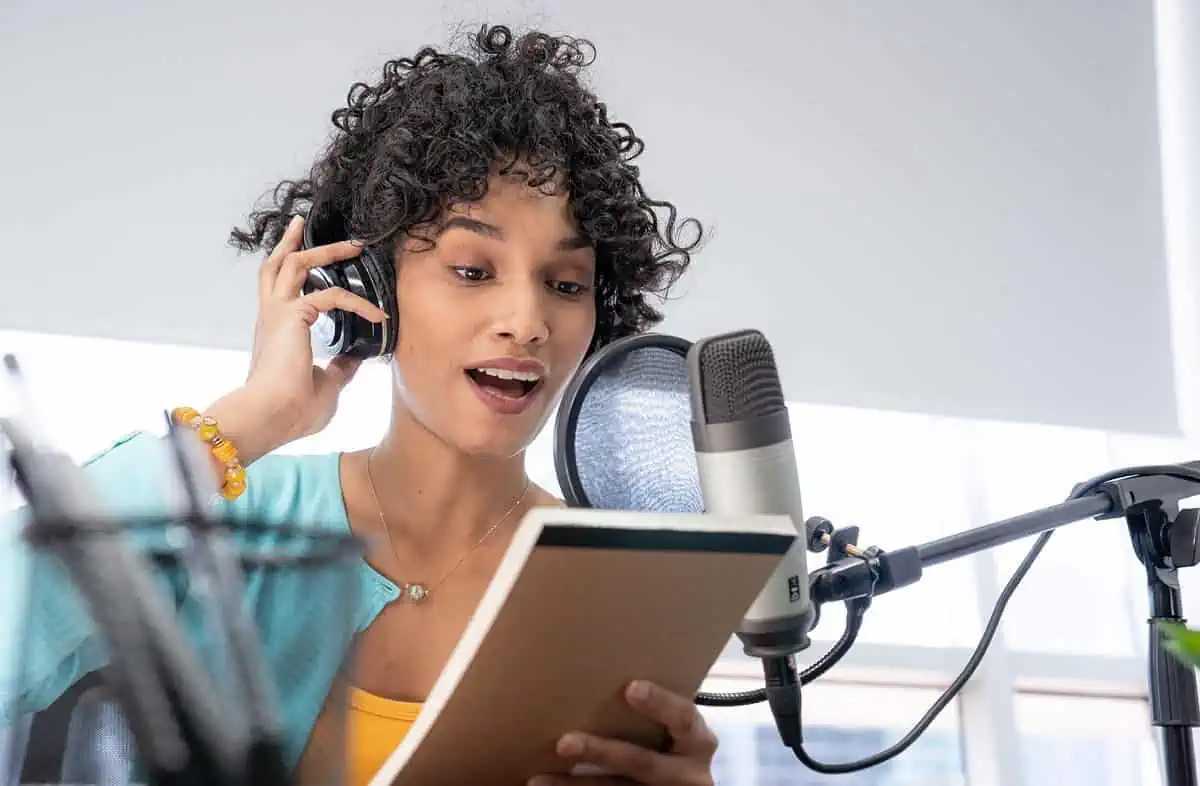

Transcribing podcasts is similar to transcribing other types of audio and video content, but it requires careful attention to speaker accuracy, terminology, and formatting. There are several ways to transcribe a podcast audio file, from do-it-yourself methods and AI tools to working with professional podcast transcription services.
If you provide podcast hosting services or regularly conduct interviews, choosing the right transcription solution supports accessibility, SEO, and content repurposing. For episodes involving legal topics or sensitive discussions, providers that also offer legal transcription services can help ensure a higher standard of accuracy and confidentiality.
In This Article, You’ll Know How:
- Podcast transcription methods are compared, including manual, AI, and professional services, and how to choose the right option for your needs.
- Transcripts improve accessibility, SEO, and content repurposing, helping you grow your audience and maximize each episode.
- Audio quality impacts transcript accuracy, and why professional transcription strengthens credibility and protects your brand.
Why Transcribing Your Podcast Audio Makes “Cents”
Let’s cover some of the advantages of podcast transcription. If you have a podcast or blog where you share your thoughts on topics such as personal development, health and fitness, relationships, motivation, etc., providing a podcast transcript can be incredibly beneficial for your audience.
Many businesses also use podcasting to acquire new customers and keep remote employees informed about important company issues.
Transcribing your podcast does more than create a written record. It improves accessibility, strengthens SEO, expands your audience, and increases the long-term value of your content.
| Advantage | Why It Matters |
| Accessibility | Individuals with hearing challenges rely on written text to access information. A transcript ensures your content is inclusive and compliant with accessibility standards. |
| Learning Preferences | Search engines index text, not audio. Publishing transcripts helps Google recognize relevant keywords and improve your topic’s rankings. |
| Search Engine Optimization (SEO) | Search engines index text, not audio. Publishing transcripts helps Google recognize relevant keywords and improve rankings for your topic. |
| Content Repurposing | Transcripts can be reused for blog posts, email campaigns, social media captions, and video descriptions, maximizing your content investment. |
| Topic Navigation | Adding timestamps allows readers to quickly locate specific discussions or key insights within an episode. |
| Audience Growth | Providing written versions of episodes helps reach a broader audience, including those who prefer reading or cannot listen in certain environments. |
| Professional Credibility | Accurate transcripts reflect attention to detail and strengthen your brand’s authority, especially when created through professional transcription services. |
Whether you choose in-house tools or professional support, investing in accurate podcast transcripts strengthens accessibility, visibility, and long-term content value. For organizations that cover legal topics, regulatory discussions, or formal proceedings, working with providers experienced in court transcription services can offer an added layer of precision, consistency, and documentation integrity.
The Importance of Podcast Audio & Production
We touched on the importance of audio quality when discussing automatic transcription. The better the audio quality, the easier it is to transcribe an audio file. Experienced, professional transcribers work quickly and efficiently. They use quality equipment and can type fast with few or no errors.
Simultaneously, an experienced podcast host and a content creator understand that using quality microphones and mixers will improve sound quality. Podcast episodes recorded in a quiet, indoor studio typically produce high-quality audio. If a podcast host records episodes in noisy environments, such as restaurants, clubs, or outdoors, where there’s wind and other background noise, it can significantly impact audio quality.
Therefore, before transcribing the audio files, have a professional audio engineer edit each audio file to eliminate or reduce any loud or intrusive noises. Good-quality audio files will ultimately produce high-quality podcast transcripts.
How To Transcribe Your Podcast Episode
There are three primary ways to transcribe a podcast episode: manual transcription, automatic AI tools, or professional human transcription services. The right choice depends on your budget, timeline, and accuracy requirements.
Option 1: Manual Transcription
The least expensive but most time-consuming option is transcribing the episode yourself. This involves listening carefully and typing every word using video or audio editing software.
Basic steps for manual transcription:
- Record and edit your podcast episode
- Upload the audio file into editing or word processing software
- Play, pause, and rewind frequently while typing the dialogue
- Proofread carefully for speaker identification, punctuation, and formatting
Keep in mind that transcribing one hour of audio can take four or more hours, depending on audio quality and the number of speakers. For many creators, that time is better spent producing new content.
Option 2 and 3: Automatic vs Professional Transcription
If manual transcription is not practical, the next decision is whether to use automatic AI transcription software or invest in professional human transcription services. While both options convert audio into text, they differ significantly in accuracy, quality control, turnaround expectations, and overall reliability.
The comparison below outlines the key differences to help you determine which solution best fits your podcast goals.
| Feature | Free / AI Transcription | Professional Human Transcription |
| Cost | Low or free | Per audio minute pricing |
| Speed | Immediate draft output | Based on the selected turnaround time |
| Accuracy | Varies, often struggles with accents, multiple speakers, or background noise | Typically, 99% accuracy when performed by experienced transcriptionists |
| Editing Required | Significant proofreading and corrections | Minimal editing needed |
| Confidentiality | Depends on platform terms | Often includes confidentiality standards and secure file handling |
| Best For | Rough drafts or internal notes | Public-facing content, legal discussions, or brand-critical material |
When deciding between AI and professional transcription, consider how the final transcript will be used. For internal drafts, automated tools may be sufficient. However, for public-facing content, legal discussions, or official documentation, professional services provide the accuracy and accountability required. This is especially true for organizations that rely on government transcription services, where precision, security, and documentation standards are critical.
Why Podcasters and Organizations Choose Ditto
Choosing a transcription provider is about more than converting audio to text. Accuracy, security, experience, and support all matter when your content represents your brand.

- Accuracy: Ditto delivers up to 99% accuracy through experienced human transcriptionists, offering both verbatim transcription and clean read formats to ensure polished, reliable transcripts for podcast episodes and professional recordings.
- Confidentiality and Compliance: Our security protocols are CJIS, FINRA, and HIPAA compliant, helping safeguard sensitive information. This is especially important for podcasts that discuss legal matters, healthcare topics, or confidential business discussions.
- Experience: Since 2010, Ditto has provided transcription services across legal, academic, healthcare, media, and corporate sectors, bringing proven expertise to every project.
- Human Transcriptionists: We work exclusively with skilled, US-based human transcriptionists. No AI tools are used in our workflow, preserving context, tone, and speaker nuance.
- Flexible Turnaround Times: From standard delivery to 24-hour rush services, we offer turnaround options to meet your production schedule.
- Transparent Legal Transcription Prices: Our legal transcription prices and podcast transcription rates are competitive and clearly structured, allowing clients to plan their budgets without sacrificing quality.
- Dedicated Customer Support: Our support team assists you throughout the entire process, from file submission to final delivery, ensuring your transcript meets your specifications.
The Benefits of Professional Transcription
Transcription is no longer limited to courtrooms or captioning. From podcasters and marketing teams to law firms and corporate organizations, professional transcription improves workflow efficiency, documentation accuracy, and long-term content value.
All that’s required is choosing the right provider.
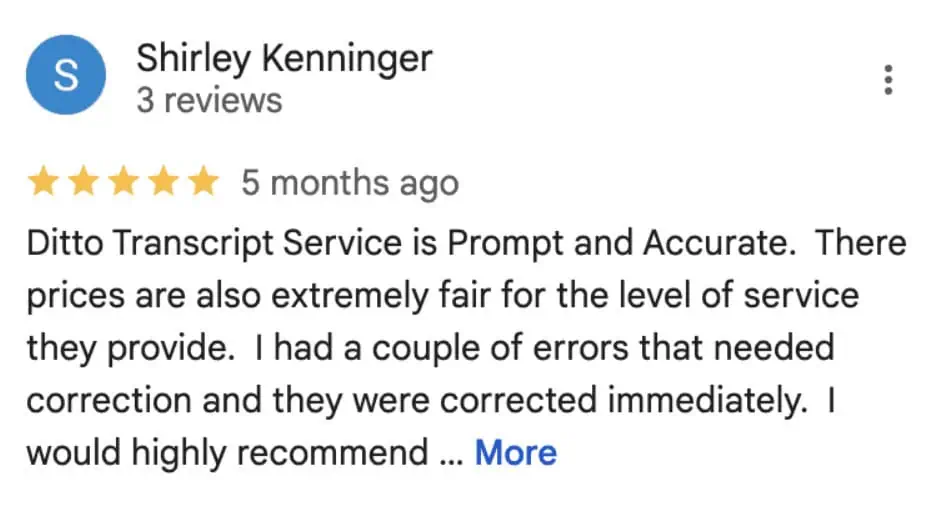
If you’d like to see how Ditto performs in real-world applications, we encourage you to review our client testimonials and learn why professionals across industries continue to trust our services.
Ditto Transcripts is a Denver, Colorado-based FINRA, HIPAA, and CJIS-compliant transcription services company that provides fast, accurate, and affordable transcripts for individuals and companies of all sizes. Call (720) 287-3710 today for a free quote.