


Ethics play a significant role in journalism. However, journalism is not a one-man job. Journalists can enlist the help of other professionals, like transcriptionists, to make their work easier. Certain news professionals turn to these solutions to keep their reporting on point. They use transcripts to double-check quotes, give credit where it’s due, and so on. However, an underlying issue that isn’t well discussed is the ethics of using a transcription service company in journalism.
Some reporters now have to deal with privacy issues and getting the green light from sources. They can also not ignore the concerns about biases sneaking into the final transcripts. This is why partnering with professionals who specialize in legal transcription services can make a difference—they’re trained to handle sensitive information with confidentiality, precision, and neutrality, which helps uphold journalistic integrity.
So, what do journalists need to look for in an ethical transcription service provider to maintain their integrity while outsourcing the task?
In this article, you’ll learn how:
- Ethical transcription practices uphold journalistic integrity, ensuring accuracy, neutrality, and confidentiality in reporting.
- Human transcriptionists deliver 99%+ accuracy, far exceeding automated tools and preventing misquotes or misinformation.
- Ditto Transcripts combines experience, transparency, and strict security standards to provide ethically sound transcription services that align with the core principles of responsible journalism.
Why Are Accurate Transcripts Crucial in Journalism?
The short answer is accurate records form the backbone of reliable journalism.
Reporters can rely on precise transcripts of interviews and statements to maintain their credibility. These accounts enable news outlets to present information accurately by providing audiences with the raw material to form their own opinions.
Transcripts also serve as crucial tools for fact-checking, which helps journalists uphold high standards of accuracy. Sticking closely to original statements prevents misinterpretations that could skew public understanding.
Another important reason is that, in the high-stakes world of news reporting, these detailed records safeguard against misinformation, ensuring that journalism fulfills its role in responsibly informing the public. In the same way that court transcription services preserve every word of legal proceedings for accuracy and accountability, journalists rely on clear, precise transcripts to maintain transparent and trustworthy reporting.
Essential Transcripts For Journalism
Here are the most common transcription applications in journalism.
| Types | Description |
| Interview Transcripts | Ensures accurate quoting and context preservation, preventing misrepresentation of sources. |
| Press Conference Transcripts | Provides a complete record of public statements for thorough analysis and reporting. |
| Court Proceeding Transcripts | Documents the official record of legal arguments, testimonies, and rulings for precise legal reporting. |
| Media Event Transcripts | Captures the nuances of conversations and perspectives from multiple participants in discussions or debates. |
Beyond these common applications, journalists can also benefit from deposition transcription services, which provide access to accurate written records of legal testimonies. These transcripts complement court proceeding materials, helping reporters cover complex legal stories with precision and context.
Ethics And Considerations in Transcription Services for Journalism
Let’s focus on the most significant and actionable considerations for ethical transcription in journalism.
| Ethical Principle | Key Points |
| Ensuring Precision and Upholding Journalistic Standards | Journalists must partner with trustworthy transcription providers who handle sensitive information discreetly and transcribe with total accuracy. Transcribers should remain neutral—recording exactly what’s said without personal input—to protect both reputations and reporting integrity. |
| Proper Source Citation and Fact-Checking Processes | Giving credit where it’s due is essential. Journalists must clearly identify who said what, verify the accuracy of quotes, and review recordings before publishing. This ensures factual reporting, prevents plagiarism, and upholds credibility. |
| Safeguarding Personal Information and Obtaining Necessary Permissions | Consent is non-negotiable. Interviewees should be informed, especially in sensitive cases. When dealing with leaked or anonymous material, journalists and transcriptionists must weigh public interest against potential harm, documenting permissions to maintain ethical standards. |
| Mitigating Prejudice and Maintaining Editorial Independence | Reporters must guard against bias—avoiding quote manipulation or selective editing. Reliable transcription services provide unaltered records, and journalists should always cross-check transcripts with the original audio to preserve message integrity. |
| Promoting Openness and Taking Responsibility for Content | Transparency about transcription methods and tools builds public trust. Journalists must review, fact-check, and correct any errors quickly. Accountability systems—like editorial reviews—ensure published material meets the highest journalistic standards. |
Just as journalists rely on ethical transcription practices to maintain accuracy and accountability, professionals offering trial transcription services uphold the same principles in the courtroom—ensuring every spoken word is faithfully documented to preserve integrity, transparency, and trust in the legal process.
Factors To Consider When Choosing a Transcription Service Provider
We must also tackle the important factors when choosing a media transcription provider after discussing the ethical considerations.

- Accuracy: The repercussions of transcript inaccuracy can be heavy and far-reaching. Journalism transcripts, especially verbatim ones, can sometimes be used in court hearings and other legal proceedings. This means that errors could lead to misinterpretations and have the potential to significantly—and negatively—impact an ongoing court case. Typical accuracy guarantees for automated solutions reach only 61.92%, while human transcription achieves over 99%. That means human-completed transcripts rarely contain major errors. Verbatim transcription, even with jargon, is done cleanly and can be confidently used in any court case, ensuring every word is precise and reliable.
- Affordability: High-quality transcription comes at a price, but a cost-effective provider knows how to balance pricing with quality. Choosing a fly-by-night transcription provider that employs sneaky tactics, such as hidden fees or discretionary charges, is a quick way to waste money. Reliable transcription companies deliver fast, accurate results without inflated costs. They’re transparent about pricing and willing to discuss adjustments if needed. Reputable transcription partners, such as Ditto Transcripts, also allow clients to pay per project without requiring long-term contracts. Pricing starts at $1.50 per audio minute, with multiple turnaround options for every budget. Check our legal transcription prices to know more.
- Experience: Some companies may lure clients with low prices that reflect their lack of experience, often resulting in inaccurate and low-quality transcripts. These providers may not understand the nuances of journalism, fail to include timestamps, or skip proofreading altogether. In the end, poor transcripts cost more time, money, and effort to fix. A seasoned provider, like Ditto Transcripts, with over a decade of experience, guarantees precision, fast turnaround, and flexibility across various formats. Clients can also request sample transcriptions to evaluate quality before committing.
- Flexibility and Expanded Services: Customization and adaptability are crucial when selecting a transcription service, particularly for media organizations with diverse requirements. A reliable provider should be able to handle varying workloads, support multiple audio formats, add timestamps, speaker labels, and digital signatures, and accommodate both rush and bulk jobs. This flexibility ensures that every project—no matter how complex—meets specific client requirements efficiently.
- Confidentiality and Security Measures: Strong privacy and data protection protocols are vital in transcription. Reliable providers utilize secure servers, advanced encryption, and controlled access systems that require individual user credentials and track activity. These safeguards protect sensitive data and ensure the confidentiality of recordings, interviews, and client communications.
- Ability to Certify Transcripts: Transcriptions from depositions, custody hearings, conference calls, client meetings, witness statements, and interviews are common in journalism and can also be used as legal evidence. However, transcripts must be certified to be admissible in court. Certification requires that the transcriptionist meet specific legal standards and be able to testify under oath if necessary. Automated and offshore transcription services cannot provide certification. Ditto Transcripts offers certified transcripts upon request, meeting all court requirements.
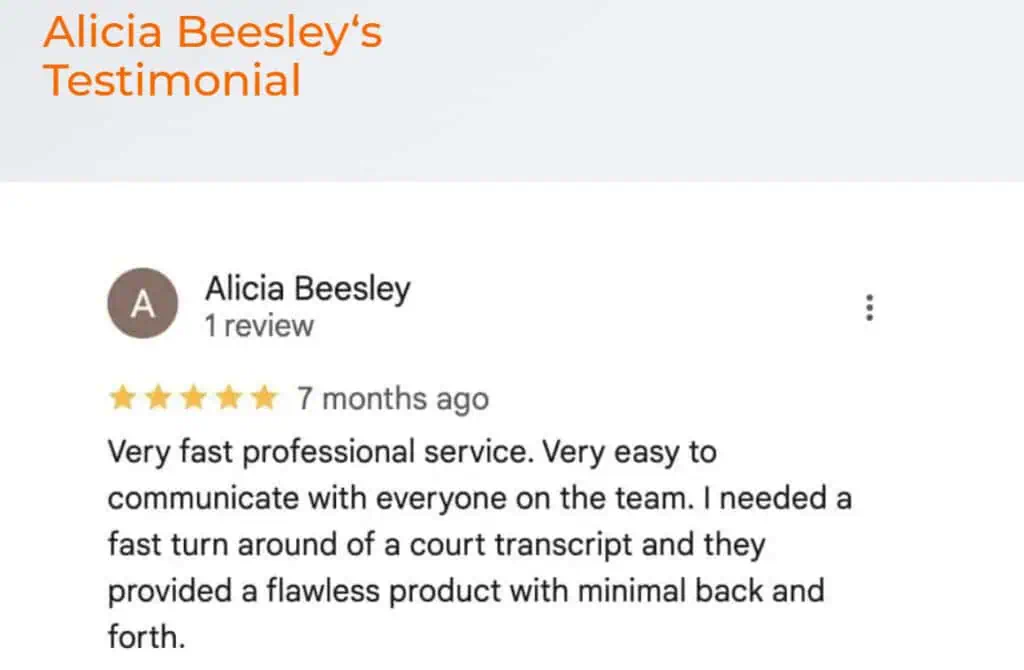
- Top-of-the-Line Customer Service: Outstanding transcription service goes beyond accuracy—it includes responsive and dependable customer care. Clients often have follow-up questions or need adjustments, so it’s essential to work with a provider that offers quick, professional support. Ditto Transcripts ensures prompt responses through multiple communication channels, so clients are never left waiting. Don’t believe us? Here’s what client testimonials say:
Follow The Ethics Of Journalism Transcription Services With Ditto
Don’t waste time looking for cheap transcription providers when you already have the best.
Ditto Transcripts has extensive knowledge of media and its terminologies, can work within any timeline, and provides the highest levels of quality. Our transcription process ensures that we deliver 99% accuracy all the time. We don’t do automated transcription, and everyone on our staff—transcribers, transcription editors, and customer service managers—is an expert in the field.
Ditto Transcripts is a Denver, Colorado-based FINRA, HIPAA, and CJIS-compliant transcription services company that provides fast, accurate, and affordable transcripts for individuals and companies of all sizes. Call (720) 287-3710 today for a free quote.