


You publish an hour-long interview. A week later, someone asks about a guest’s exact words, and you realize several useful ideas never made it beyond the recording. Now you’re replaying the episode, hunting for one sentence.
Podcasters use podcast transcription services to create a written record of their episodes. When the words are easy to find, they’re easier to put to work. A reliable transcript can help turn one episode into articles, videos, social posts, and other content without re-recording everything.
In this article, you’ll know:
- Which podcast episodes and moments are worth repurposing.
- How to turn recordings into blog posts, social clips, newsletters, and guides.
- Why accurate transcripts support accessibility, search visibility, and content creation.
- How to choose between in-house, automated, and professional human transcription.
- How to preserve a guest’s meaning when adapting quotes and excerpts.
Why Repurpose Podcast Content?
Creating a good podcast takes time. You prepare questions, coordinate with guests, record, edit, and promote. Leaving all that work to one release day leaves useful material behind.
Repurposing gives the same ideas more chances to reach people who prefer different formats. Someone who skips a long interview might read its key takeaways or watch a 45-second clip. You also spend less time searching for new topics because the original recording already contains something worth sharing.
Evergreen episodes are especially useful. A discussion about building healthier work habits, for example, could support a blog post today and a newsletter months later, as long as the advice remains accurate. Time-sensitive news episodes need closer review before being reused.
Which Podcast Episodes Are Worth Repurposing?
Some formats naturally lend themselves to new content. Rather than repurposing every minute, start with the parts that offer a clear takeaway.
| Podcast content | Best repurposing opportunities |
| Expert interviews and Q&A | Quote graphics, blog posts, follow-up questions |
| How-to discussions | Checklists, tutorials, short clips |
| Research and data analysis | Infographics, explainers, newsletters |
| Personal stories and case studies | Social posts, articles, email features |
| Related episodes in a series | E-books or downloadable guides |
Choose material based on what your audience would find useful, not how many posts you can extract. A single strong explanation is worth more than ten clips without context.
Turn Podcast Episodes Into Blog Posts
Start with a question the episode answers well. Then use the transcript to find the relevant explanation, quotes, and examples. You don’t need to turn the entire conversation into an article.
Say a marketing guest explains how small businesses can improve customer retention. That exchange could become a blog post with a practical checklist, additional context, and a link to the full interview. Attribute the guest’s ideas accurately and verify any statistics before republishing them.
For search visibility, give the page a descriptive title, useful headings, and original written context. Google can index video content, so it’s inaccurate to say recordings are invisible to search engines. However, text on a page helps Google understand what that page covers. A transcript supports discoverability; it doesn’t guarantee rankings.
Create Social Media Posts and Short Video Clips
The most shareable moments aren’t always the loudest. Look for a surprising answer, an actionable tip, or a brief story that makes sense without the whole episode.
Turn a quote into a graphic for LinkedIn or Instagram, or pair a strong exchange with a short video for YouTube Shorts, TikTok, or Reels. Audiograms, which combine recorded speech with a simple visual or waveform, can also work for audio-only podcasts.
Check every excerpt against the original recording. A clip that removes an important qualification can change the speaker’s meaning, while inaccurate captions can introduce mistakes that weren’t in the conversation. Shorter content should make an idea easier to understand, not misrepresent it.
Use Infographics, Newsletters, and E-Books
Some insights are easier to follow visually. If your guest walks through a process or compares several findings, make an infographic that presents the steps or data clearly. Keep the source and date attached to statistics so the graphic doesn’t lose context.
A newsletter can highlight one lesson, include a short guest quote, and direct readers to the episode. This works particularly well between releases, when you want to stay in touch without sending another full-length recording.
Have several episodes about the same subject? Bring them together into an e-book or downloadable guide. A personal finance series, for instance, could become a beginner’s guide organized by topic rather than episode date. Expand where necessary and remove repeated explanations instead of pasting multiple transcripts together.
A good format should make the idea easier to grasp, not merely give it a new design.
Keep the Conversation Going With Q&A Sessions
Listeners often have questions the original episode didn’t answer. Collect them through comments or email, then host a follow-up livestream or record a shorter Q&A episode.
The new answers can become additional posts, clips, or a written FAQ. This keeps the conversation active while helping you discover which topics deserve a deeper episode next.
Why Podcast Transcripts Matter for SEO and Accessibility
A searchable transcript lets you locate a quote without listening to an entire episode again. It also gives readers an alternative way to access the conversation and provides text you can adapt into other formats.
The World Wide Web Consortium explains that transcripts support access to prerecorded audio for deaf and hard-of-hearing audiences, among others. For video podcasts, synchronized captions serve a different function and should be checked separately. Transcripts are especially helpful when someone wants to skim, search, or return to a specific passage.
If you feature researchers or technical specialists, accurate names and terminology matter when turning interviews into written work. That’s also why academic transcription services are used for research interviews and recorded discussions.
The transcript is the source document, though it still needs context and editing before publication.
How Should You Transcribe a Podcast?
In-house transcription gives you direct control, though typing and checking a long interview takes time you could use for editing or publishing.
Automatic transcription is quick and useful for rough searches or early drafts. Accuracy varies by tool and recording, particularly when speakers overlap or use unfamiliar names. In Ditto’s own comparison of AI transcription tools, the systems tested averaged 61.92% accuracy. That figure describes Ditto’s test, not every AI tool or recording.
Professional human transcription offers a more dependable final document when quotations and details must be checked. Decide what you need first: clean transcription for readable show notes or verbatim transcription services when hesitations, repeated words, and interruptions must be preserved.
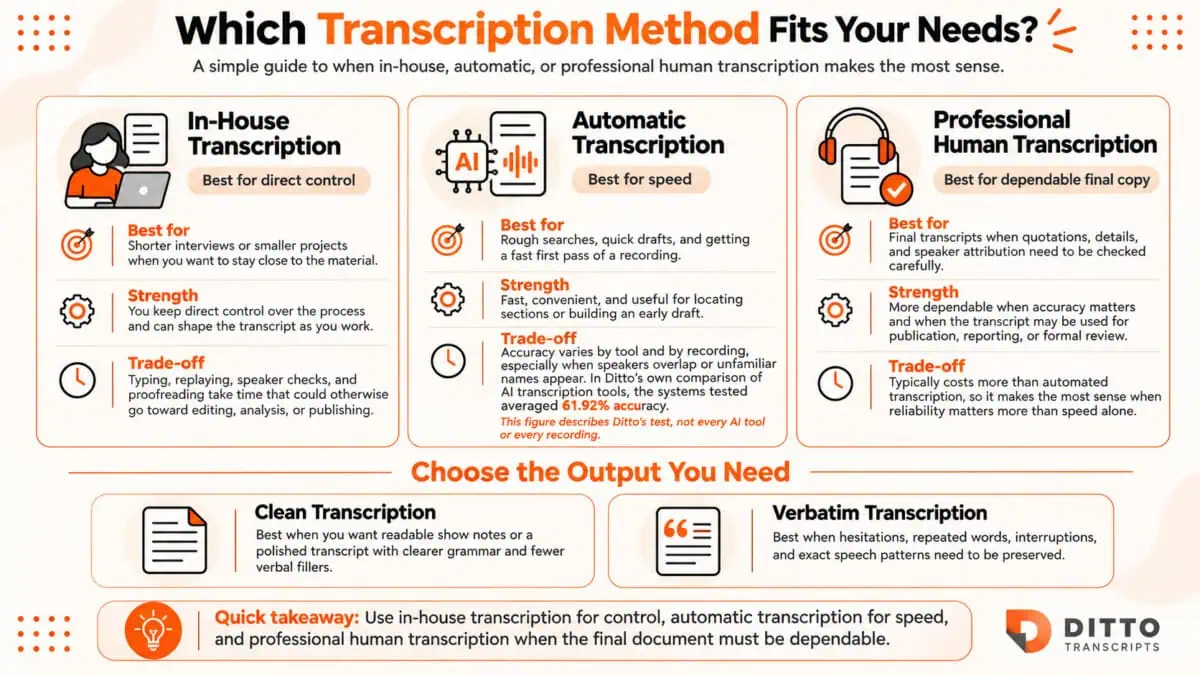
The right method depends on whether you need a quick reference or publication-ready text.
A simple workflow helps: record clear audio, obtain and check the transcript, mark the strongest passages, create a few content assets, and schedule them over the following weeks. Keep timestamps so your editor can find each moment quickly.
Why Choose Ditto Transcripts for Podcast Repurposing?
At Ditto Transcripts, we understand that a podcast doesn’t stop being useful when the recording ends. One interview might support a blog post, a newsletter, and several clips, yet those pieces need an accurate source.
Here’s what Ditto brings to the table:
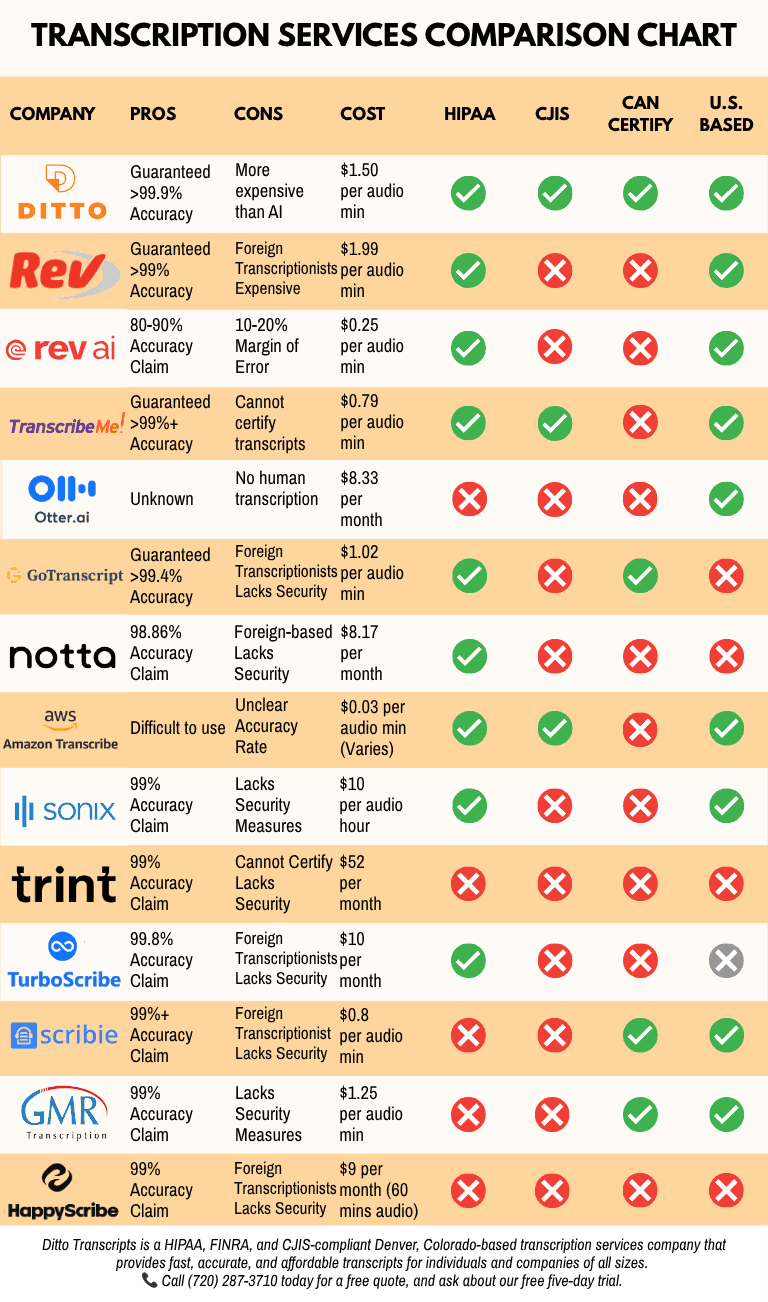
- Human accuracy: Our U.S.-based transcriptionists provide a 99% accuracy guarantee for human-transcribed files.
- Flexible formats: Choose a readable transcript or request more detailed verbatim coverage based on how the recording will be used.
- Experience with complex audio: Multiple speakers, names, and specialized terminology receive human attention rather than being left to an unchecked automated draft.
- Transparent legal transcription prices: Ask for a podcast-specific quote based on your recording and turnaround needs.
- Client testimonials: Read our testimonials to see what customers say about working with Ditto.
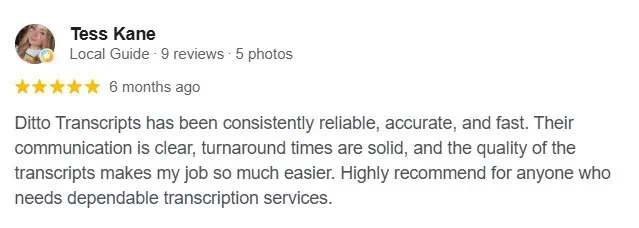
Ditto’s podcast service confirms its human transcription approach and accuracy guarantee.
The goal isn’t to manufacture more content. It’s to make the useful parts of your podcast easier to find, verify, and share.
Make Every Episode Work Beyond Release Day
You don’t need to repurpose everything at once. Start with one blog post, a few social excerpts, or an email highlighting the episode’s strongest idea. Check the transcript, preserve the speaker’s meaning, and give readers a reason to listen to the full conversation.
One episode can remain useful long after publication, as long as you have an accurate record to work from.
Ditto Transcripts is a Denver, Colorado-based transcription company serving individuals and organizations nationwide. Call (720) 287-3710 to discuss your recording or request a quote.