
For years, governments have moved their public services online. Today, the public can watch real-time or recorded meetings, such as city council and board sessions; check court updates online; and even use digital portals for non-contact services.
That digital shift of public information has helped the vast majority, although not to its fullest extent. For example, people with disabilities may have “access” to the content. However, there could still be communication barriers, which often occur when videos are not captioned, audio is not transcribed, or digital content is not searchable.
That is why the ADA Title II rule matters. State and local governments must make digital content meet WCAG 2.1 Level AA, including captions for audio and video. It also makes legal transcription services important for professionals who need accurate captions and records.
The Deadline Moved, Yet the Work Did Not
The Department of Justice has been lenient, extending the original deadline for larger public entities or those with a total population of 50,000 or more from April 24, 2026, to April 26, 2027, a one-year allowance to improve compliance. Meanwhile, smaller public entities and special district governments have more time, until April 26, 2028.
While the deadline is moved, the clock is still ticking, and the responsibility remains.
The rule took effect on April 20, 2026, and the new deadlines are already in place. The public comment period closed on June 22, 2026. However, as of early July 2026, the rule still had not been finalized. The Department may also review certain parts of the rule again, including requirements affecting K-12 schools.
Why Captions Are Not Optional Anymore
In movies, captions are not readily available, though they are handy to have. When the audio is unclear, there are thick accents, or the audience is unable to follow, these captions make it easier to understand what is being said. In government communication, that is very helpful too.
In reality, government announcements, especially those related to public safety, must be delivered to everyone. However, if it is only delivered verbally, people who are deaf or hard of hearing, or those with low hearing ability in the community, might not get the message. Put simply, captions make information inclusive.
Other government videos include:
- Public hearings
- City council meetings
- Court announcements
- Public safety updates
- School board meetings
- Training videos
- Community event recordings
- Instructional videos for public services
If they are inaccessible, some residents are effectively left out, which is a major issue. Accessibility is not only about compliance. It is also about whether people can use the public services that are supposed to be available to them.
Why Waiting Until 2027 Is Risky
For governments, the delay is a breather. It means more time to work on their deficiencies. However, that is not a reason to relax, especially as government content piles up very quickly.
Sometimes, pressure can be a good motivator for compliance. Waiting for a year could mean another 52 weeks of delay for a recorded meeting, legal instructions, announcements, or other government digital services. And the longer the public waits, the bigger the backlog – simply because these cases do not slow down. Hopefully, that is not the case.
Aside from the waiting time, a case’s complexity varies.
Some recordings have good audio, while others could be extremely poor. When that happens, the accuracy of its documentation is at risk, especially when the work is rushed. And when a caption has changed a name, missed a number, or dropped a keyword that can confuse the viewer, the record becomes weak or even inadmissible.
For public content, “close enough” is not a safe standard.
AI Captions Can Help, Though They Are Not the Final Answer
There is no question that AI capabilities are advancing the fastest in almost every field, including captioning. However, Speed does not automatically guarantee accuracy. In fact, some common errors found in automated captions include:
- Names of people and places
- Legal terminology
- Medical terminology
- Technical language
- Accents
- Crosstalk
- Background noise
- Speaker identification
- Numbers, dates, and addresses
- Negations such as “not,” “no,” or “never”
These may seem simple to fix. Still, with thousands of recordings, each file could take minutes to hours to fix, so correcting every single error in a legal or public safety context could take a long time and become a serious problem.
In a large volume of work, AI is only helpful to a certain extent – and that is creating the first draft. The final output must always pass the review of a trained professional.
The Vendor Problem: Governments Cannot Simply Outsource Responsibility
If not AI, then passing the audio to a third-party service provider and then outsourcing it fixes the problem, right? No, not automatically.
Outsourcing work is helpful because it can reduce labor costs or tap professionals who are experts in their respective fields. This is nothing new as state and local governments outsource work for websites, video platforms, learning systems, court portals, public meeting software, and other digital services.
Though passing the government’s work to third-party providers does not exempt them from responsibility. Specifically, the extent of access that these outsourced vendors have is a major concern. The last thing a government wants is to breach confidentiality or leak data, which is why its contracts usually include a clause requiring the vendor to take responsibility for any issues arising from the project they built.
Transcription and captioning providers, that part of the agreement is crucial because government partners need vendors that understand accuracy, confidentiality, formatting, and accessibility.
Only a limited number of government transcription services genuinely support agencies that need captions and transcripts prepared carefully, not rushed at the last minute.
Courts Have Their Own Accessibility Challenge
Courts are also not exempt from complying with the requirement to make public records digitally available.
That includes court websites, forms, PDFs, digital services, and public-facing information, and online services such as e-filing, e-pay, case lookup tools, court-produced documents, and other digital materials.
For courts, accessibility is not only an IT issue. It is connected to public trust and access to justice.
People use court websites to understand deadlines, find forms, read instructions, look up case information, and follow official updates. If those materials are hard to access, the justice system becomes harder to use.
As they say: “Justice delayed is justice denied.”
Court transcription services can help courts and legal professionals preserve accurate spoken content, especially when recordings need to be turned into readable transcripts, captions, or records for public use.
This is especially important when exact wording matters. Court-related content often includes names, case details, legal terms, dates, and procedural instructions. These are not details that should be left to unchecked automation.
Accurate Captions Start With Accurate Transcripts
A strong captioning process usually starts with a strong transcript.
Captions are not only words placed on a screen. They must follow the audio timing, identify important sounds as needed, and accurately reflect the spoken content.
For some content, a clean transcript is enough. For other recordings, verbatim transcription services may be the better option because the exact wording, pauses, repetitions, and speaker changes matter.
This can be especially useful for hearings, meetings, interviews, investigations, and formal proceedings where the way something was said may be important – and missing that could completely change its intended meaning.
The point is not that every government video needs the same type of transcript. The point is that every public entity needs to think carefully about the purpose of the content, the people who need to access it, and the required level of accuracy.
What Public Entities Should Be Doing Now
The safest approach is not to wait for the final months before the deadline.
Public entities should already be asking basic questions:
- How many videos and audio files do we have online?
- Which videos are most important for public access?
- Which recordings need captions first?
- Which vendors are responsible for digital content?
- Do our contracts require accessibility compliance?
- Do humans review our captions?
- Do we have a process for future videos?
- Do we have a budget for captioning and transcription?
This planning matters because accessibility is not a one-time cleanup project. Public entities keep creating new content. Every new meeting, training, hearing, announcement, or public update can add to the workload.
The earlier governments build a process, the easier it becomes to keep up with it.
Why Clients Choose Ditto for Government Captioning and Transcription
By now, it is clear that the deadline extension is not a reason to pause. It is a chance to prepare before the pressure becomes urgent.
At Ditto Transcripts, we help public agencies, legal professionals, businesses, and organizations turn audio and video recordings into accurate, readable, and professionally prepared transcripts. For government videos, public meetings, court-related recordings, and accessibility projects, accuracy is not only a preference. It is the foundation of a usable record.
Here is what we, at Ditto, offer:
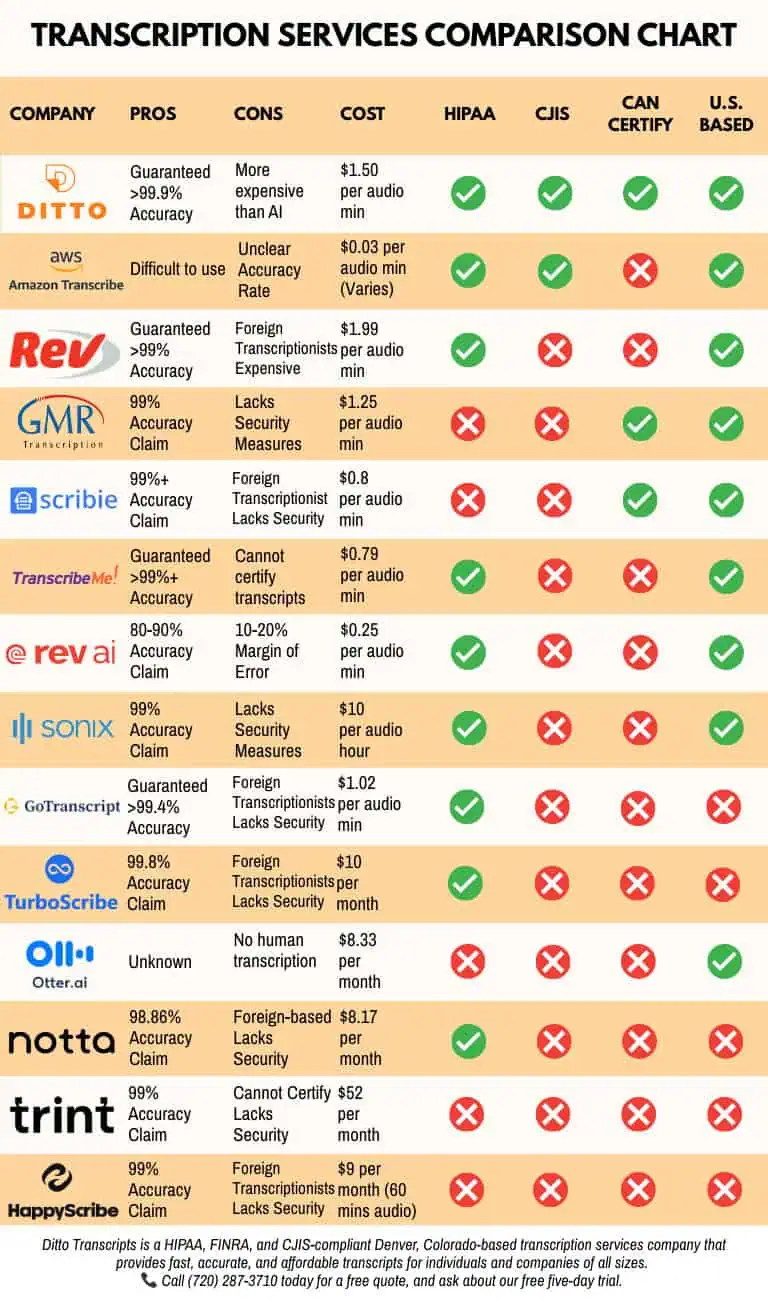
- Accuracy: Unlike AI-only alternatives, Ditto guarantees 99.9% accuracy in completed transcripts.
- Human transcriptionists: Ditto uses trained professionals who can understand complex audio, speaker changes, accents, technical terms, and difficult recordings.
- Government and legal experience: Ditto supports government, legal, law enforcement, medical, academic, financial, and business transcription needs.
- Support for difficult recordings: Public meetings, hearings, multi-speaker recordings, unclear audio, and technical language often require human judgment that automated tools alone cannot provide.
- Secure handling: Ditto Transcripts is HIPAA-, CJIS-, and FINRA-compliant. Confidentiality and data protection are handled with serious care.
- Flexible legal transcription pricing: Clients can review pricing and general transcription options based on turnaround time, project needs, and file complexity.
- No long-term contract: Ditto does not require confusing contracts or hidden commitments. Send one project or ongoing work, and we will help you get the transcript you need.
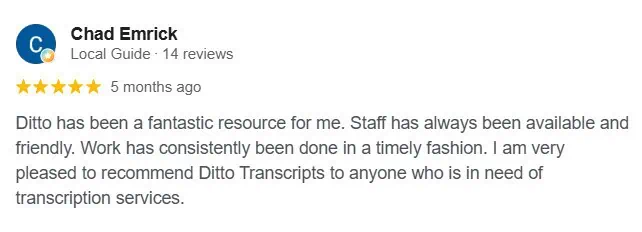
- Client testimonials: Our testimonials show how clients describe the quality, accuracy, and reliability of our transcription services.
The Deadline Is Closer Than It Looks
The ADA Title II deadline extension gives governments more time, although it does not reduce the work required.
Videos still need captions. Audio still needs transcripts. Public content still needs to be accessible. Vendors still need to be reviewed. Courts, schools, agencies, and local offices still need a practical plan.
The rule may still shift; however, the direction is clear. Government communication is becoming more digital, and digital public services need to work for everyone.
That means accurate captions are no longer something to add later. They are part of the record.
Ditto Transcripts is a Denver, Colorado-based transcription services company that provides fast, accurate, and affordable transcripts for individuals and companies of all sizes and is FINRA-, HIPAA-, and CJIS-compliant. Call (720) 287-3710 today for a free quote.