


Financial transcription is the process of converting finance-related audio or video recordings into written documents. These recordings may include earnings calls, investor meetings, analyst interviews, accounting discussions, board meetings, webinars, or corporate presentations.
For businesses and financial professionals, transcripts make important information easier to review, store, search, and share. They also help preserve accurate records of decisions, statements, figures, and discussions that may need to be referenced later. Financial transcription is especially useful for banks, investment firms, accounting firms, public companies, consultants, researchers, and corporate teams. Some organizations may also need legal transcription services when financial recordings are connected to audits, litigation, investigations, contracts, claims, or regulatory reviews.
In this article, you’ll learn:
- What is financial transcription
- What types of financial recordings are commonly transcribed
- Why accuracy and confidentiality matter
- Why AI transcription is risky for finance-related files
- How Ditto Transcripts supports accurate financial transcription
What Is Financial Transcription?
Financial transcription turns recorded financial conversations, presentations, calls, and dictations into written text. The final transcript can be used for documentation, analysis, compliance support, research, internal communication, publication, or legal review.
Unlike general transcription, financial transcription often involves numbers, percentages, currencies, ticker symbols, company names, industry terms, and technical language. A single incorrect figure, decimal, or speaker label can change the meaning of a transcript.
That is why financial transcription should be handled carefully. The goal is not only to capture what was said. It is to create a transcript that is accurate, organized, and usable.
How Does the Financial Transcription Process Work?
The process usually starts when a client sends an audio or video file to the transcription provider. The file might be a meeting, earnings call, conference, interview, webinar, dictated report, or phone conversation.
A transcriptionist then listens to the recording and converts the spoken content into written text. Depending on the client’s needs, the transcript may include speaker labels, timestamps, special formatting, clean transcription, or verbatim detail.
After the transcript is completed, the document is reviewed for accuracy, formatting, readability, and consistency. The final transcript is then delivered in the requested format.
Turnaround time depends on the length of the recording, audio quality, number of speakers, formatting needs, and deadline. Many financial transcription projects can be completed within a few business days, with faster turnaround available when needed.
At Ditto Transcripts, clients can also request secure file handling and storage options for sensitive financial recordings and completed transcripts.
What Is Financial Transcription Used For?
Financial transcription supports many business, finance, accounting, investor relations, and research needs. It gives organizations a written record that can be reviewed without replaying the full recording.
Common financial transcription projects include:
| Recording or Document | How Transcription Helps |
| Earnings calls | Records executive comments, analyst questions, and financial results |
| Annual meetings | Documents shareholder discussions, updates, votes, and leadership remarks |
| Investor presentations | Preserves strategy, forecasts, performance notes, and market commentary |
| Analyst interviews | Captures financial insights, recommendations, and sector discussions |
| Board meetings | Records decisions, planning, concerns, and financial updates |
| Market research interviews | Helps teams review customer, investor, or industry feedback |
| Webinars and seminars | Turns finance-related presentations into searchable documents |
| Press conferences | Records public statements, media questions, and company responses |
| Telephone conversations | Documents call for records, review, or legal needs |
Financial transcription may also overlap with government transcription services when recordings involve public finance, agency budgets, audits, grants, hearings, investigations, or public-sector reporting.
Why Financial Transcription Accuracy Matters
Accuracy is one of the most important parts of financial transcription. Finance-related recordings often include dollar amounts, dates, percentages, account details, fund names, forecasts, stock symbols, and performance figures.
If those details are transcribed incorrectly, the transcript can become misleading or unreliable. An inaccurate financial transcript may lead to confusion, compliance concerns, poor internal decisions, extra review time, reputational risk, or legal complications.
This is why professional financial transcription requires careful listening, context, research, and quality review. Transcriptionists must pay attention to both language and numbers.
Benefits of Financial Transcription
Financial transcription gives businesses and professionals a practical written record of important audio and video content.
Better Recordkeeping
Transcripts help companies preserve meetings, calls, interviews, and presentations in a searchable format. Instead of listening to a long recording again, teams can scan the transcript for decisions, figures, questions, names, and action items.
This is helpful for investor relations, accounting review, executive reporting, compliance checks, market research, and internal documentation.
Easier Review and Analysis
Financial professionals often need to compare statements, review trends, confirm figures, or quote specific comments. A written transcript makes this work faster and easier.
Transcripts can also help teams prepare reports, summarize meetings, review investor questions, analyze market discussions, or document major business decisions.
Improved Accessibility
Transcripts make financial content easier to access for people who are deaf or hard of hearing. They also help people who prefer reading over listening or need to review content in a quiet setting.
Written transcripts are also useful when recordings include accents, fast speech, technical terms, or multiple speakers.
Cost Efficiency
Hiring in-house transcription staff can be expensive, especially when transcription needs change from month to month. Outsourcing financial transcription gives companies flexibility without adding full-time payroll costs.
At Ditto Transcripts, general transcription rates start at $1.50 per audio minute, with final pricing based on audio quality, turnaround time, number of speakers, formatting needs, and file difficulty.
Legal transcription prices and other specialty rates may vary depending on the recording type, urgency, and project requirements. Ditto explains all the pricing options before any work begins, so clients know what to expect.
Confidentiality and Security
Financial records often contain sensitive information, including revenue details, forecasts, investor discussions, client information, acquisition plans, and internal strategy.
A financial transcription provider should use secure workflows for file upload, handling, delivery, and storage. Ditto Transcripts supports clients that need confidentiality-focused transcription and compliance-conscious file handling.
Scalability
Transcription needs often change quickly. A company may need one transcript this month and dozens during earnings season, audit preparation, litigation, or market research.
Outsourcing allows businesses to scale transcription support up or down without hiring, training, or managing additional staff.
Why AI Is Risky for Financial Transcription
Automated transcription tools are fast. However, financial transcription requires more than speed. AI transcription tools offer only 61.92% accuracy, and performance can drop further when recordings include technical language, numbers, multiple speakers, background noise, accents, or poor audio quality.
AI transcription can struggle with:
- Dollar amounts
- Percentages and decimals
- Ticker symbols
- Company names
- Speaker identification
- Financial terminology
- Cross-talk
- Accents and fast speech
These problems matter because financial transcripts depend on exact wording and precise figures. A missing decimal, an incorrect percentage, or a misheard company name can make a transcript unreliable.
AI may be useful for rough internal notes. However, financial records, earnings calls, investor communications, audit files, legal reviews, and compliance-related recordings should be handled by trained human transcriptionists.
For recordings that require every pause, interruption, repeated phrase, or sound to be preserved, clients may also need verbatim transcripts rather than cleaned-up transcripts.
Common Challenges in Financial Transcription
Financial transcription can be more complex than it seems. Some recordings are clear and simple, while others require repeated listening and careful review.
Common challenges include poor audio quality, multiple speakers, overlapping speech, technical and financial language, heavy use of numbers, and confidential information. Meetings and calls may include executives, analysts, investors, moderators, guests, and other participants. Speakers may interrupt one another, use abbreviations, or refer to figures quickly.
For academic transcription services involving finance research, business interviews, economics studies, or market analysis, accuracy and consistency are also important for later review, coding, and citation.
What to Look for in a Financial Transcription Provider
Choosing the right financial transcription provider matters because the work involves accuracy, confidentiality, and specialized terminology.
A strong provider should offer:
- Human transcriptionists
- Financial or business transcription experience
- Secure upload and delivery
- Clear pricing
- Flexible turnaround options
- Speaker labels and timestamps when needed
- Verbatim or clean transcript formats
- Quality review
- Support for difficult audio
- Transparent communication before work begins
The provider should also explain what is included in the price and when additional charges may apply.
Why Clients Choose Ditto for Financial Transcription
Financial transcription requires accuracy, security, and attention to detail. Clients need transcripts they can review, share, store, and rely on.
At Ditto Transcripts, we support businesses, financial institutions, accounting firms, investor relations teams, consultants, researchers, law firms, government agencies, and organizations that need accurate financial records.
Clients choose Ditto because we offer:
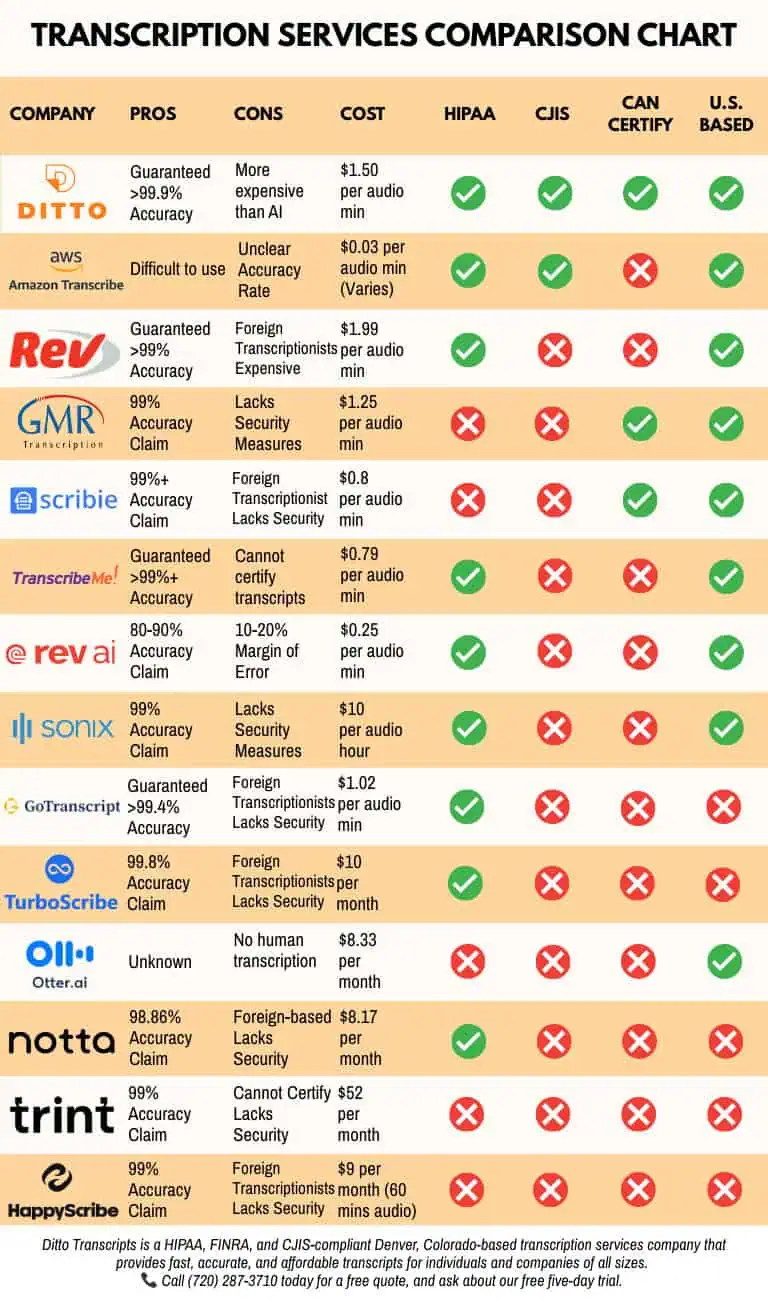
- Human transcriptionists: We use trained professionals who understand context, speaker flow, terminology, numbers, and formatting.
- Financial transcription experience: Ditto supports earnings calls, meetings, interviews, reports, webinars, presentations, market research, and other finance-related recordings.
- Secure handling: Sensitive files are handled through confidentiality-focused workflows designed to help protect client recordings and transcripts.
- Compliance support: Ditto works with clients who need HIPAA-, CJIS-, and FINRA-compliant transcription support.
- Transparent legal transcription pricing: We explain transcription rates, turnaround options, add-ons, and file requirements before work begins.
- Flexible turnaround: Clients can choose delivery options based on urgency, file length, audio quality, and project requirements.
- No long-term contract required: Clients can use Ditto for a single file, a single project, or ongoing transcription needs without unnecessary commitments.
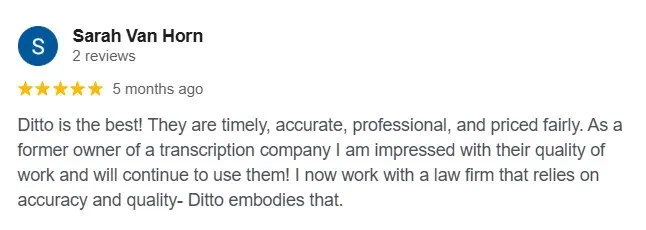
Our clients choose Ditto because they need accurate financial transcripts, clear communication, and dependable service. Still comparing providers? Read our client testimonials to learn more about working with Ditto.
Get Accurate Financial Transcription With Ditto
Financial transcription helps businesses and financial professionals preserve important recordings in a clear, searchable, and usable written format.
Whether you need transcripts for earnings calls, investor meetings, analyst interviews, accounting discussions, market research, webinars, board meetings, or compliance review, accuracy matters. Automated transcription may be fast; however, finance-related content requires human judgment, careful listening, and quality review.
Ditto Transcripts provides fast, accurate, secure, and affordable financial transcription for individuals, companies, financial professionals, researchers, agencies, and organizations of all sizes.
Ditto Transcripts is a Denver, Colorado-based transcription services company that provides fast, accurate, and affordable transcripts for individuals and companies of all sizes and is FINRA-, HIPAA-, and CJIS-compliant. Call (720) 287-3710 today for a free quote.