


Sometimes, the detail that wins a client’s trust is small: morning light in the bedroom, a south-facing pool, or enough space for a home office. Clients notice when an agent remembers what matters to them. With the required permission, recording and transcribing consultations turn those comments into searchable information for future recommendations.
The same attention to detail is valuable when a transaction may later require real estate transcription services. An accurate transcript allows an agent to locate what was discussed, prepare an approved recap, and organize relevant material for attorney review.
In this article, you will learn how real estate transcription can help professionals:
- Capture client preferences, questions, and next steps
- Improve follow-up before and after closing
- Create useful records for training, marketing, and transaction review
- Choose between automated and human transcription
- Evaluate a professional transcription company
What Is Real Estate Transcription?
Real estate transcription is the process of converting recorded property-related speech into written text. Source material may include buyer consultations, seller interviews, property walkthroughs, inspection discussions, appraisal notes, team meetings, market updates, webinars, and transaction reviews.
Suppose a buyer says natural morning light matters more than an oversized yard. A transcript can preserve that preference alongside the client’s budget, preferred location, timeline, and financing concerns.
Real estate transcription requires more than general typing ability. Recordings may contain addresses, parcel numbers, legal descriptions, repair estimates, and specialized terms such as easement, encumbrance, ingress, and egress. An incorrect number, street name, or negative statement can change the record’s meaning.
A transcript should support the real estate workflow. It should not replace signed contracts, required disclosures, official transaction documents, or professional legal advice.
Common Uses of Transcription for Realtors
| Use case | How the transcript can help |
| Client consultations | Preserves buyer or seller priorities, concerns, and decisions |
| Property walkthroughs | Creates searchable notes from recorded tours and observations |
| Inspection discussions | Organizes comments about defects, repairs, and follow-up questions |
| Market updates | Turns recorded analysis into client summaries, articles, or scripts |
| Team meetings | Documents listing updates, assigned tasks, and deadlines |
| Training sessions | Builds reusable examples for new agents and support staff |
| Transaction reviews | Helps teams revisit negotiations, timelines, and unresolved issues |
| Client testimonials | Converts approved video or audio reviews into website-ready text |
How Transcription Helps Realtors Stay in Touch With Clients
Capture the Details Clients Care About
Taking notes during a conversation can divide an agent’s attention. A recording allows the agent to focus on the client, ask better follow-up questions, and review important details later. The transcript can then be used to update the customer relationship management system with confirmed preferences and next steps.
A useful post-call process includes:
- Highlighting property requirements and deal breakers
- Recording commitments made by the agent or client
- Adding deadlines and follow-up dates to the CRM
- Sending an approved recap when clarification is needed
A transcript should not be treated as proof that a client accepted a term or waived a right. Important decisions still belong in the appropriate transaction documents.
Improve Follow-Up and Client Communication
Clients should not have to repeat the same information in every conversation. Before a call or showing, an agent can review a previous transcript for questions, family needs, preferred neighborhoods, communication preferences, and unresolved concerns.
Transcripts can also make post-transaction communication more personal. Instead of sending a generic message, an agent can follow up about a renovation plan discussed during the property search, a neighborhood event near the purchased home, or a future investment goal mentioned at closing.
The value comes from using the information thoughtfully and contacting clients with a relevant reason.
Reduce Repetitive Listening and Searching
A one-hour recording is difficult to scan. A transcript allows the user to search for an address, price, repair estimate, deadline, or speaker name in seconds.
It can also make internal handoffs easier when an assistant, transaction coordinator, or team member needs approved information from a previous conversation.
Turn Approved Recordings Into Marketing Content
Recorded market updates, webinars, property tours, and educational videos can support a variety of content types. A transcript may become the foundation for:
- A local market article
- A frequently asked questions page
- Social media captions
- Video captions
- Podcast or video show notes
- An email newsletter
Agents should remove private client information, verify property details, and obtain any necessary permission before publishing material taken from a recording.
Search engine optimization should improve clarity and discoverability without forcing keywords into every paragraph.
Strengthen Training and Quality Review
Transcripts can turn conversations involving experienced agents into practical training material. New team members can study how senior professionals ask discovery questions, explain market conditions, address objections, and confirm next steps.
Managers can also review selected transcripts for missed follow-ups, unclear explanations, or inconsistent processes.
Training examples should be anonymized when possible. Teams may also use verbatim transcription when the exact wording, hesitation, or phrasing used during a conversation is relevant to the lesson.
Support Record-Keeping and Legal Review
Accurate transcripts can help organize what was said during a negotiation. On the other hand, they do not automatically become admissible evidence. Authentication, relevance, hearsay rules, and other legal requirements may affect whether a recording or transcript can be used in court.
Recording consent must also be considered. Federal and state requirements can differ, particularly when participants are located in different jurisdictions. Realtors should confirm the applicable rules and obtain clear permission when appropriate.
When a dispute progresses into formal discovery, deposition transcription services may be needed for sworn testimony and attorney use. These projects have different procedural, certification, and formatting requirements from routine client-meeting transcripts.
Court transcription services may also be used for hearings and other judicial recordings. A privately prepared transcript should not be represented as an official court record unless it has been accepted under the applicable court procedures.
Brokerages should also maintain a written record-retention policy covering:
- The types of recordings and transcripts retained
- Where files are stored
- Who may access them
- How long they are kept
- When and how they are deleted
- What happens when litigation is anticipated
Why Realtors Should Not Rely on Unchecked AI Transcription
Automated speech recognition can produce a quick draft, though street names, legal descriptions, accents, overlapping speakers, background noise, and dollar amounts can reduce accuracy.
If an automated transcript is only 61.92% accurate, it requires substantial correction before it can be trusted. A missed word may change whether a buyer wants a property with or without a particular feature. A wrong digit can affect a price, date, address, measurement, or repair estimate.
AI may still support low-risk workflows when a person checks the output against the recording. For client commitments, legal review, published content, and other high-impact uses, human transcription and quality control provide a stronger safeguard.
Why Choose Ditto Transcripts as Your Transcription Partner?
At Ditto Transcripts, we do not skimp on quality. Realtors need accurate documents, responsive service, flexible formatting, secure file handling, and turnaround options that fit active transactions.
Clients choose Ditto for:
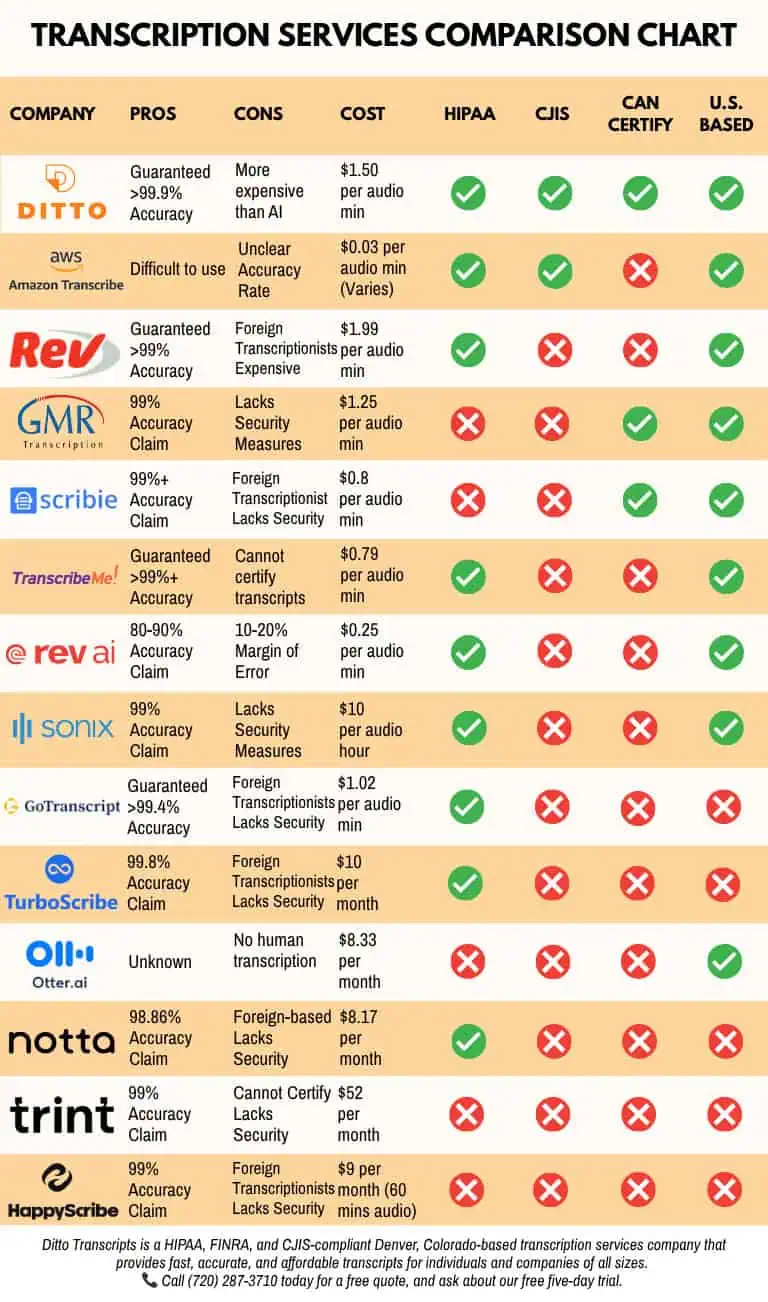
- Human-reviewed accuracy: Ditto offers a 99% accuracy guarantee for qualifying human transcription projects.
- U.S.-based transcriptionists: Projects are completed by vetted American transcriptionists who understand context, accents, multiple speakers, addresses, and specialized terminology.
- Flexible formatting: Clients can request speaker labels, timestamps, clean-read text, custom templates, or verbatim formatting when every spoken word must be retained.
- Multiple turnaround options: Rush, standard, and extended delivery options are available, with faster service offered for qualifying projects.
- Transparent pricing: Real estate transcription rates generally range from $1.50 to $5.00 per audio minute, depending on the recording category, requested turnaround, audio quality, speaker count, and formatting requirements. A project minimum and additional charges may apply.
- Security-focused workflows: Ditto offers HIPAA- and CJIS-compliant workflows and uses vetted U.S.-based personnel. Clients should confirm the specific security and compliance requirements for their files before starting a project.
- Responsive customer support: Clients have access to phone and email support, account assistance, and customized service without being required to maintain a long-term contract.
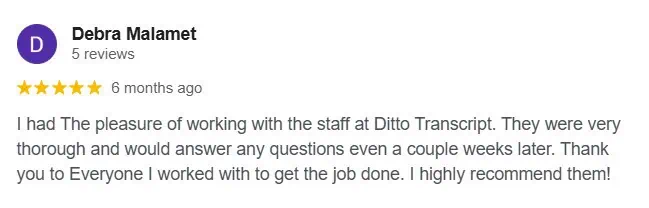
- Client feedback: Ditto’s testimonials discuss experiences involving accuracy, turnaround time, formatting, responsiveness, and project pricing.
Use Accurate Records to Build Better Client Relationships
Real estate transcription turns conversations into searchable records. It can preserve client preferences, improve follow-up, support employee training, and create a clearer history of transaction discussions.
The strongest workflow combines proper consent, accurate transcription, human review, controlled access, and a documented retention policy. Technology should make communication easier without replacing professional judgment or the need for required real estate documents.
Ditto Transcripts is a Denver, Colorado-based, HIPAA-compliant transcription company providing fast, accurate, and affordable medical transcription services—call (720) 287-3710 for a quote.