


Voice transcription apps are cheap, widely available, and easy to use, which makes automated transcription tempting for businesses, healthcare professionals, attorneys, law enforcement agencies, researchers, and other professionals. However, when recordings involve meetings, interviews, dictations, medical discussions, legal transcription services, or sensitive business information, accuracy and security matter more than convenience.
Automated tools can help with rough drafts or personal notes. For professional work, outsourcing to trained human transcriptionists usually creates a more accurate, secure, and usable transcript.
Automated Voice Transcription: Helpful, Yet Limited
Automated speech recognition has improved a lot. Today, many platforms can turn audio into text within minutes. That can be helpful when the recording is clear, the speaker is easy to understand, and the transcript is only needed for casual reference.
The problem is that professional recordings are rarely that simple.
Automated transcription tools may struggle with:
- Multiple speakers
- Accents or dialects
- Background noise
- Overlapping speech
- Poor audio quality
- Technical terminology
- Names, numbers, and locations
- Legal, medical, business, or law enforcement jargon
- Speaker identification
- Context and tone
Those issues matter. A transcript with the wrong name, number, date, medication, charge, diagnosis, or legal term may create confusion, extra review time, or more serious consequences.
For internal notes, an automated transcript may be good enough. For business, legal, medical, law enforcement, academic, or government transcription services, human review is usually the safer choice.
Why “Cheap” Transcription Can Become Expensive
Low-cost transcription looks attractive at first. You upload a file, wait a few minutes, and get text back. However, if the transcript is full of errors, someone still has to review it.
That means the true cost may include staff time spent on proofreading, correcting names and terminology, re-listening to difficult sections, fixing speaker labels, reformatting the transcript, checking unclear sections, and reworking the file before it can be shared or filed.
For a short personal recording, that may not be a big problem. For a deposition, board meeting, patient dictation, police interview, court proceeding, or client call, it can quickly become inefficient.
The transcript is only useful if people can trust it.
The Problem With Doing Transcription In-House
Some organizations avoid automated tools and try to handle transcription internally. That can work for small amounts of simple audio, though it often creates its own problems.
An office assistant, paralegal, coordinator, nurse, investigator, or manager may understand the subject matter, though that does not mean they have time to transcribe recordings accurately. Transcription requires focus, speed, listening skills, formatting consistency, and experience handling unclear audio.
In-house transcription can also pull staff away from higher-value work.
| Option | Best For | Main Concern |
| Automated transcription | Rough drafts, personal notes, simple recordings | May require heavy editing |
| In-house transcription | Small volumes of simple audio | Uses staff time and may lack transcription expertise |
| Freelance transcription | Basic projects with flexible requirements | Quality, security, and consistency may vary |
| Professional transcription service | Business, legal, medical, law enforcement, academic, and sensitive recordings | Requires choosing the right provider |
For many organizations, outsourcing offers a better balance of cost, quality, speed, and security.
Benefits of Outsourcing Voice and Audio Transcription
Outsourcing transcription is not only about saving time. It is about obtaining a transcript that is accurate, readable, secure, and prepared for its actual use.
Lower Operational Costs
Hiring, training, and managing in-house transcription staff can be expensive. Outsourcing lets organizations pay for transcription only when they need it, without adding salaries, benefits, software, equipment, training, quality control, or workload management to the internal team.
Instead of building a transcription department, businesses and agencies can send recordings to a professional provider and keep their staff focused on core work.
Better Accuracy and Subject-Matter Understanding
Professional transcriptionists do more than type what they hear. They listen for context, identify speakers, understand industry terminology, and format transcripts to make them easier to review.
This matters for court, deposition, trial, and medicolegal transcription services, as well as business meetings, academic research, medical dictation, and healthcare recordings. An experienced transcriptionist is more likely to understand terminology, catch context, and flag unclear sections appropriately.
Scalability and Flexibility
Transcription needs are not always predictable. One week, an organization may have one short recording. The next week may include hours of interviews, meetings, hearings, calls, or dictations.
Outsourcing makes it easier to scale transcription work up or down without hiring additional staff. A professional transcription company can also support various and clean-read file formats, speaker identification, timestamps, verbatim transcription, clean read transcription, certified transcripts, rush turnaround, custom formatting, and secure upload and delivery.
That flexibility is difficult to match with free tools or limited in-house resources.
What to Look for in a Voice Transcription Provider
Not every transcription company is the right fit. If your recordings include sensitive technical, legal, medical, financial, or law enforcement information, the provider should be evaluated carefully.
Accuracy
Accuracy should be the priority. A fast transcript is not helpful if it takes hours to correct.
Look for a provider that uses trained human transcriptionists, has quality control processes, and understands the subject matter in your recordings.
Turnaround Options
Deadlines matter. Some files can wait several days, while others may be needed quickly for meetings, court preparation, reports, or internal review.
A good transcription provider should offer turnaround options based on your needs, file length, audio quality, number of speakers, and formatting requirements.
Security
Security is critical when recordings include private or regulated information. Legal, medical, business, government, and law enforcement recordings may contain confidential details that should not be uploaded casually to unknown software.
Look for providers with secure file upload and delivery, controlled user access, confidentiality agreements, encryption, HIPAA compliance for healthcare files, CJIS compliance for criminal justice information, and clear handling procedures for sensitive recordings.
For healthcare, law enforcement, and court transcription services, security should never be treated as an afterthought.
Industry Experience
A general transcriptionist may be fine for simple audio. Specialized recordings require more experience.
Choose a provider that understands the type of transcription you need, whether that means medical dictation, police interviews, court hearings, business meetings, academic research, insurance calls, or legal proceedings.
Why Clients Choose Ditto for Voice Transcription Services
Voice transcription is not only about turning speech into text. It is about creating an accurate, secure, and readable record that professionals can use for business, legal, medical, academic, government, law enforcement, and personal needs.
At Ditto Transcripts, we help clients turn audio and video recordings into clear transcripts prepared by trained human transcriptionists. Our team supports many types of recordings, including meetings, interviews, calls, dictations, legal recordings, medical files, police recordings, academic research, and business documentation.
Clients choose Ditto because we offer:

- Human transcriptionists: We use trained human transcriptionists who understand context, speaker flow, tone, terminology, and the difference between a rough transcript and a professional final document.
- Industry-specific experience: Ditto supports clients across business, legal, medical, law enforcement, academic, financial, insurance, government, and personal transcription projects.
- Support for difficult audio: Our transcriptionists can work with multiple speakers, background noise, accents, low volume, overlapping speech, technical terms, and recordings that automated tools often struggle to process correctly.
- Secure handling: Sensitive recordings are handled through confidentiality-focused workflows designed to help protect client files and transcripts.
- Compliance support: Ditto works with clients who need HIPAA-, CJIS-, FINRA-, legal-, medical-, law-enforcement-, and government-compliant transcription support.
- Clear formatting: Transcripts can be prepared in readable formats that are easier to search, review, share, store, and use in professional workflows.
- Flexible turnaround options: Clients can choose turnaround times based on file length, urgency, audio quality, number of speakers, and project requirements.
- Transparent legal transcription pricing: Pricing depends on the type of transcription, turnaround time, audio quality, number of speakers, formatting, and whether the client needs verbatim, certified, or specialized transcription.
- No long-term contract required: Clients can use Ditto when they need transcription support without being locked into unnecessary long-term commitments.
Whether you need a meeting transcribed, a legal recording documented, a medical dictation prepared, a police interview reviewed, or an audio file converted into searchable text, Ditto Transcripts can help make the process accurate, secure, and manageable.
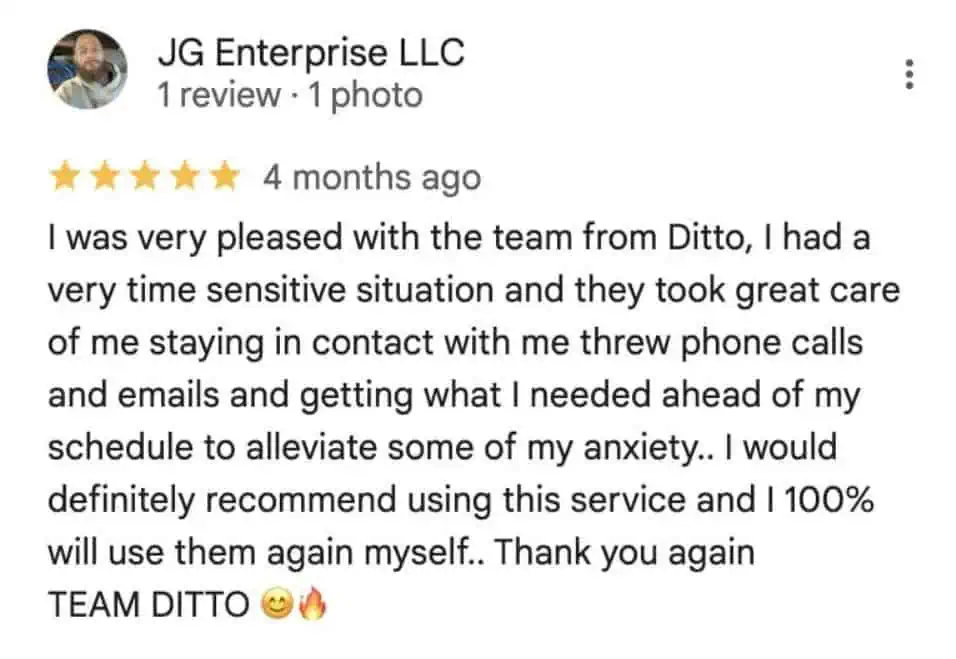
Still deciding? Here’s what one Ditto client testimonial had to say:
Make the Right Choice for Voice Transcription
Automated transcription apps are convenient, though convenience is not always enough. When recordings are important, sensitive, technical, or tied to business and legal decisions, a rough transcript can create more work than it saves.
Outsourcing to a professional human transcription service can help reduce staff workload, improve accuracy, protect sensitive information, and give teams transcripts they can actually use.
Ditto Transcripts is a Denver, Colorado-based FINRA, HIPAA, and CJIS-compliant transcription services company that provides fast, accurate, and affordable transcripts for individuals and companies of all sizes. Call (720) 287-3710 today for a free quote.