


Finding a legal case is one thing. Knowing whether that case still stands is another.
Attorneys need reliable information, whether they’re reviewing testimony through professional legal transcription services or researching legal precedents. That’s where two familiar names come in: LexisNexis and Westlaw.
Both companies offer extensive legal databases, research tools, and AI-assisted solutions. However, their products, pricing, and features differ, so the choice isn’t as straightforward as it seems.
So, which platform makes more sense for your law firm?
In this article, you’ll know:
- Who owns LexisNexis and how it differs from Thomson Reuters.
- How Lexis+ and Westlaw compare across research tools, citation checking, and AI capabilities.
- What affects subscription pricing and which features to review.
- How to choose a legal research platform for your firm.
- How accurate legal transcription supports case preparation.
Does Thomson Reuters Own LexisNexis?
No. Although they operate in similar markets, LexisNexis and Thomson Reuters are separate companies.
LexisNexis is part of RELX, formerly Reed Elsevier, a global information and analytics company. RELX also operates LexisNexis Risk Solutions, which provides data and risk-management tools to businesses, insurers, government agencies, and other organizations.
Meanwhile, Thomson Reuters is a publicly traded company controlled by Woodbridge, the Thomson family’s private investment company. According to its 2026 shareholder disclosures, Woodbridge and its affiliates owned approximately 71% of Thomson Reuters’ outstanding shares as of April 13, 2026.
The distinction is simple: RELX owns LexisNexis, while Thomson Reuters owns Westlaw. Both compete in legal research yet operate independently.
The History Behind LexisNexis and Thomson Reuters
How LexisNexis Started
LexisNexis traces its roots to the 1960s, when computer-assisted legal research was still relatively new.
In 1973, Mead Data Central introduced LEXIS, a computerized legal research service that allowed attorneys to search legal materials electronically instead of relying entirely on printed law books.
The company later introduced NEXIS, providing access to news and business information.
Reed Elsevier acquired LexisNexis in 1994, expanding its presence in legal publishing and electronic research.
Since then, the company has continued developing research tools, citation services, and legal analytics, eventually incorporating artificial intelligence into its products.
How Thomson Reuters Started
Thomson Reuters has a different history, combining two established businesses.
The Thomson Corporation grew from a publishing business established by Roy Thomson, while Reuters began in 1851 as a news and financial information service founded by Paul Julius Reuter.
Thomson deepened its presence in the legal research market after acquiring West Publishing in the 1990s. West Publishing was already known for its legal publications and Westlaw research platform.
In 2008, Thomson acquired Reuters Group, creating Thomson Reuters.
Today, the company serves legal professionals and customers in journalism, finance, tax, accounting, and other industries.
LexisNexis Products and Services
LexisNexis offers legal research, analytics, business information, and risk-management solutions. However, its most relevant product for attorneys is Lexis+.
The platform provides access to case law, statutes, regulations, legal commentary, and practical guidance.
One established feature is Shepard’s Citation Services, which helps attorneys determine whether later decisions have overturned, questioned, or otherwise affected a legal authority.
LexisNexis has also expanded its AI capabilities.
In May 2026, the company announced an expanded Lexis+ with Protégé, bringing legal research, document analysis, drafting, and citation verification into a connected platform.
Other offerings include Nexis for business and news research, Lex Machina for litigation analytics, and specialized intellectual property tools.
These products serve different needs, from solo practitioners researching a case to corporate legal departments handling complex matters.
Thomson Reuters Products and Services
Thomson Reuters provides several legal research products and AI-assisted tools designed to support attorneys throughout their work. Its offerings include Westlaw for legal research, KeyCite for citation verification, Practical Law for everyday legal guidance, and CoCounsel Legal for AI-assisted workflows.
Westlaw: Legal Research
Westlaw is Thomson Reuters’ primary legal research platform. It provides attorneys and other legal professionals with access to case law, judicial decisions, statutes, regulations, and secondary legal sources.
The platform also includes tools for analyzing legal authorities, helping attorneys research legal questions, identify relevant precedents, and prepare legal arguments.
KeyCite: Citation Verification
KeyCite helps attorneys evaluate the status and subsequent treatment of legal authorities. It allows users to determine whether a case or other authority remains valid, identify later decisions that have cited it, and examine how subsequent courts have treated those authorities.
KeyCite serves a similar purpose to LexisNexis’ Shepard’s Citation Services, helping legal professionals assess whether the authorities they intend to rely on remain appropriate for their arguments.
Practical Law: Everyday Legal Guidance
Practical Law provides resources that support routine legal work. Its offerings include practical legal guidance, document templates, checklists, and other materials designed to help legal professionals complete common tasks.
These resources help attorneys prepare legal documents, understand procedural requirements, and manage recurring legal responsibilities.
CoCounsel Legal: AI-Assisted Legal Work
Introduced in August 2026, the next generation of CoCounsel Legal brings several AI-assisted activities together within a single workflow.
The platform connects four primary functions: legal research, document analysis, drafting, and verification. This allows attorneys to move between researching legal questions, reviewing documents, preparing written materials, and checking their work within a connected environment.
Separately, Westlaw Advantage offers advanced AI capabilities specifically for legal research.
Together, these products demonstrate how Thomson Reuters combines traditional legal research, citation verification, practical guidance, and AI-assisted workflows to support attorneys throughout the legal process.
LexisNexis vs. Thomson Reuters: Key Differences
At first glance, these companies offer remarkably similar solutions.
Here’s how their major legal research products compare:
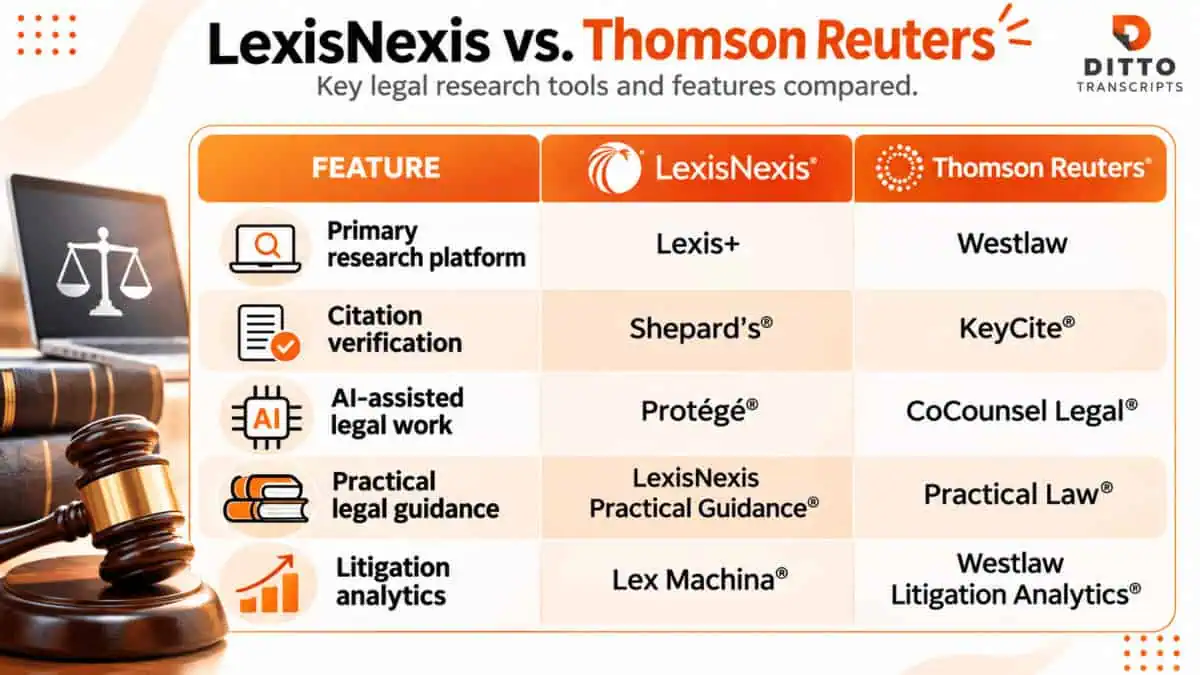
Both platforms can support legal research, citation checking, and document analysis.
The biggest differences often come down to available content, workflow preferences, and which features a subscription includes.
For example, an attorney who regularly uses Shepard’s may prefer LexisNexis, while another who relies on Westlaw’s KeyCite and Practical Law might find Thomson Reuters more convenient.
Neither preference automatically makes one platform superior.
How Much Do LexisNexis and Thomson Reuters Cost?
Both companies offer subscription-based legal research services, though pricing depends on the products and access required.
LexisNexis provides packages for solo attorneys, small firms, corporations, and government organizations. Pricing varies by content coverage, additional capabilities, and the number of users.
Thomson Reuters likewise offers multiple Westlaw packages, including Westlaw Edge and Westlaw Advantage. Costs vary depending on jurisdictional coverage, subscription length, and available research features.
For a meaningful comparison, attorneys should request quotes that match their requirements.
Consider whether your subscription includes:
- State and federal case law relevant to your practice
- Citation verification and secondary sources
- AI-assisted research and drafting tools
- Additional users and document access
A cheaper subscription isn’t necessarily better value if essential research materials require additional fees.
Review the contract terms, included content, and potential charges before committing.
Which Legal Research Platform Should You Choose?
Choosing between LexisNexis and Thomson Reuters ultimately depends on how your firm conducts research.
If you already use Lexis+ and Shepard’s extensively, switching platforms might create unnecessary disruption. The same applies to Westlaw users who rely on KeyCite and Practical Law.
Before choosing, test both platforms with a research question relevant to your practice.
Compare how easily you can locate authorities, verify citations, examine related decisions, and prepare usable research.
It’s also worth speaking with colleagues who have used both systems.
Remember, even with advanced AI research capabilities, attorneys remain responsible for verifying legal authorities and ensuring that cited information supports their arguments.
Research is only one part of case preparation. Proper documentation matters too. Accurate deposition transcription services can help attorneys review recorded testimony alongside the legal authorities they uncover.
Why Choose Ditto Transcripts for Legal Documentation?
Legal research and legal transcription share one thing in common: accuracy.
At Ditto Transcripts, we know a single incorrect word can change how legal testimony is interpreted. That’s why we provide dependable documentation attorneys can review and use with confidence.
Here’s what Ditto brings to the table:
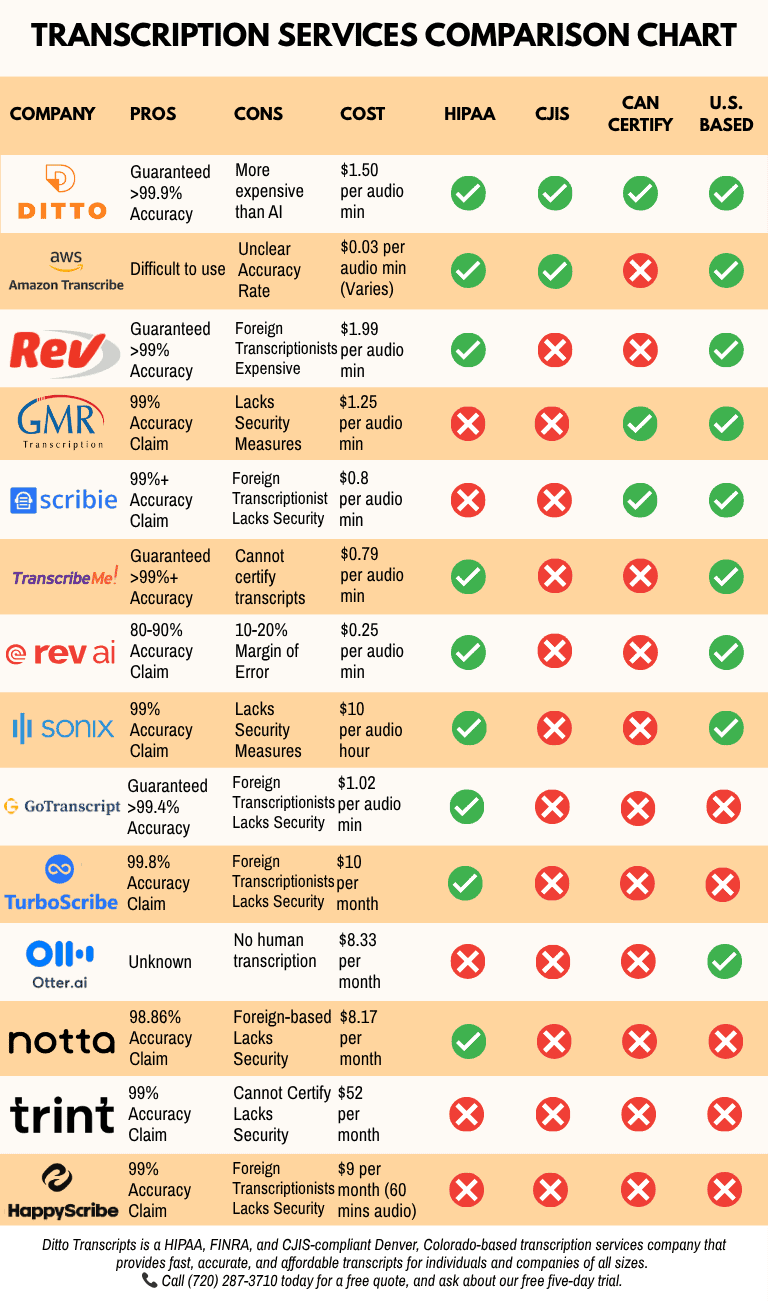
- Human accuracy: Our U.S.-based transcriptionists prepare transcripts backed by a 99% accuracy guarantee.
- Legal experience: Our team handles complex terminology across recorded depositions, hearings, witness statements, and other legal materials.
- Security: Our transcriptionists undergo background checks, and our legal transcription workflow follows CJIS security requirements.
- Flexible legal transcription prices: Our legal transcription prices start at $1.50 per recorded minute, depending on audio complexity and turnaround requirements. A $100 project minimum applies.
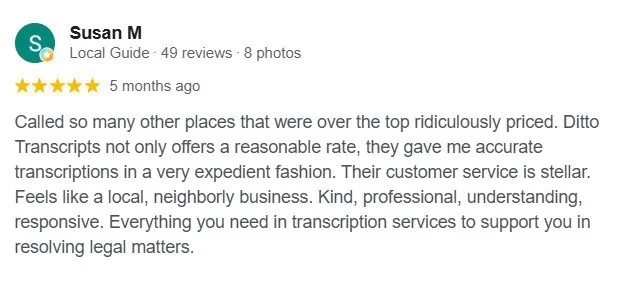
- Client testimonials: Our testimonials share customers’ experiences with our accuracy, turnaround times, and service.
We also provide court transcription services for recorded proceedings, with formatting and certification requirements discussed before work begins.
Our goal is straightforward: provide accurate, secure, professionally prepared transcripts so legal professionals can focus more on their cases.
Final Thoughts: LexisNexis or Thomson Reuters?
LexisNexis and Thomson Reuters have spent decades developing tools that help legal professionals research cases, verify information, and prepare legal documents.
Both now incorporate advanced AI capabilities, though the best choice depends on your firm’s budget, research requirements, and preferred workflow.
Whichever platform you select, accurate source information remains essential.
Ditto Transcripts is a Denver, Colorado-based transcription company that provides secure, affordable transcription services for law firms, legal departments, and government agencies nationwide. Call (720) 287-3710 to discuss your recording or request a free quote.