


Academic transcription helps schools, universities, researchers, educators, and students turn recorded audio or video into accurate written text. Lectures, seminars, interviews, webinars, conferences, administrative meetings, and research recordings can all become easier to review, search, share, and archive once they are transcribed. That matters when educational content needs to support learning, accessibility, research, and documentation. A clear transcript helps people focus less on replaying recordings and more on understanding and using the information.
What Is Academic Transcription?
Academic transcription is the process of converting educational audio or video recordings into written documents. These recordings may come from classrooms, lecture halls, online courses, research interviews, seminars, conferences, student presentations, board meetings, or administrative discussions.
Some schools try to handle transcription in-house, although that can be expensive and time-consuming. Hiring transcription staff means covering recruiting, training, salaries, benefits, equipment, software, and ongoing quality control.
Outsourcing to a professional transcription provider allows academic institutions to send recordings when needed without building a full internal transcription department.
AI Transcription vs. Human Transcription for Academic Work
AI transcription tools are easy to find and can create text quickly. They may be useful for rough drafts, simple recordings, or low-risk internal notes.
However, academic recordings are often more complicated. A lecture may include technical terms, multiple speakers, student questions, background noise, accents, fast speech, or poor audio quality. Research interviews may include sensitive details, overlapping responses, or terminology that needs to be captured carefully.
Automated transcripts can give the illusion of saving time, even though they still need to be reviewed and corrected. For important academic work, human transcription is usually the only choice as trained transcriptionists can listen for context, identify unclear sections, handle specialized terminology, and format transcripts for actual use. This is especially important for research, accessibility, institutional records, and court transcription services when academic records become connected to hearings, investigations, or official review.
Benefits of Academic Transcription
Academic transcription can support learning, teaching, research, accessibility, and administration. The value depends on how the transcript will be used.
| Benefit | How It Helps |
| Better review | Students and educators can revisit lectures, seminars, and discussions without replaying the full recording |
| Improved comprehension | Written text helps learners review difficult terms, fast explanations, and complex topics |
| Accessibility | Transcripts support students who are deaf, hard of hearing, or unable to listen to audio |
| Research support | Interview and focus group transcripts make analysis, coding, and quoting easier |
| Easier sharing | Transcripts can be distributed to students, faculty, researchers, or administrators |
| Stronger documentation | Meetings, presentations, and events can be preserved in searchable written form |
| Content repurposing | Recorded lectures, webinars, and presentations can become articles, summaries, captions, or study materials |
Getting the Whole Picture
Students often miss details while taking notes during a lecture or seminar. A professor may move quickly, classmates may ask questions, and important explanations may happen between slides.
A transcript gives students and educators a more complete record of what was said. Instead of relying only on memory or partial notes, they can search the transcript, highlight important points, and revisit sections that need more attention.
For educators, transcripts can also help with reviewing teaching materials, improving course content, and creating study resources.
Improved Comprehension and Accessibility
Transcripts make academic content easier to follow. Students can read along with a lecture, review unfamiliar words, or return to difficult sections after class.
This helps different types of learners. Some students understand material better when they hear it. Others prefer written text. Many benefit from both.
Academic transcripts can also support accessibility for students with hearing impairments, auditory processing challenges, language barriers, or different learning needs. Captions and written transcripts make educational content more inclusive and easier to use.
Research Support for Interviews and Focus Groups
Academic researchers often record interviews, focus groups, field notes, and participant discussions. Transcription makes that material easier to analyze.
Researchers can use transcripts to:
- Code responses
- Compare participant answers
- Pull accurate quotes
- Identify themes
- Review context
- Archive research material
- Share excerpts with research teams
Deposition transcription services and academic research transcription are distinct use cases, although both require careful listening, accurate speaker identification, and reliable written records for later review.
Academic Recordkeeping and Administration
Academic transcription is not limited to classroom learning. Institutions also record meetings, hearings, board discussions, committee sessions, public forums, and administrative events.
Transcripts can help preserve decisions, discussions, action items, and institutional records. This can support transparency, compliance, internal review, and documentation.
Government transcription services may also become relevant when public universities, school boards, agencies, or publicly funded institutions need searchable written records of meetings or proceedings.
Academic Recordings That Can Benefit From Transcription
Educational institutions create many types of recordings. Some support students directly, while others help faculty, researchers, and administrators.
| Academic Recording Type | How Transcription Helps |
| Lectures | Gives students searchable study material and supports review |
| Seminars | Preserves discussions, key points, and speaker insights |
| Workshops | Helps participants revisit instructions, training, and examples |
| Conferences | Makes presentations and panels easier to share and archive |
| Research interviews | Supports analysis, coding, quoting, and documentation |
| Focus groups | Helps researchers compare participant responses |
| Online courses | Improves accessibility and supports self-paced learning |
| Webinars | Creates written resources, captions, and repurposed content |
| Board meetings | Preserves decisions, discussions, and institutional records |
| Administrative discussions | Supports documentation, transparency, and follow-up |
| Language courses | Helps students review pronunciation, vocabulary, and usage |
| Student presentations | Allows review, feedback, and performance improvement |
| Multimedia content | Makes audio and video content easier to search and reuse |
Types of Academic Transcription
Different academic recordings may need different transcript styles. The best option depends on whether the transcript is for studying, research, recordkeeping, accessibility, or publication.
Verbatim Transcription
Verbatim transcription captures speech word-for-word, including false starts, filler words, repeated phrases, pauses, and interruptions when required.
This format can be useful for research interviews, focus groups, disciplinary hearings, legal review, trial transcription services, or any situation where exact phrasing matters.
Clean Read Transcription
Clean read transcripts remove unnecessary filler words, repeated phrases, and false starts while preserving the speaker’s meaning.
This style is often useful for lectures, webinars, seminars, presentations, and course materials because it is easier to read and study.
Summarized Transcription
Summarized transcripts condense long academic recordings into key points, themes, and takeaways.
This can help faculty, administrators, researchers, and students who need a high-level overview instead of a full transcript.
Time-Stamped Transcription
Time-stamped transcripts include markers that connect the written text to the original audio or video.
This is useful for lectures, interviews, video editing, accessibility work, research review, and medicolegal transcription services when academic or medical research recordings need careful reference points.
What to Look for in an Academic Transcription Provider
Academic institutions and researchers should choose a transcription provider that can handle educational content accurately and securely.
Before outsourcing academic recordings, consider whether the provider offers:
- Human transcriptionists
- Experience with academic and research content
- Support for multiple speakers
- Speaker identification
- Time stamps
- Verbatim and clean read options
- Secure file upload and delivery
- Confidentiality-focused workflows
- Flexible turnaround options
- Custom formatting
- Support for difficult audio
- Clear pricing
For research projects, privacy and accuracy matter. For lectures and online courses, readability and accessibility may matter more. A good provider should be able to match the transcript format to the recording’s purpose.
Why Clients Choose Ditto for Academic Transcription Services
Academic transcription is not only about turning lectures or interviews into text. It is about creating accurate, readable, and secure records that students, educators, researchers, administrators, and institutions can actually use.
At Ditto Transcripts, we support schools, universities, researchers, academic departments, education teams, law firms, healthcare organizations, government offices, and other professionals who need reliable transcripts of educational and research recordings.
Clients choose Ditto because we offer:
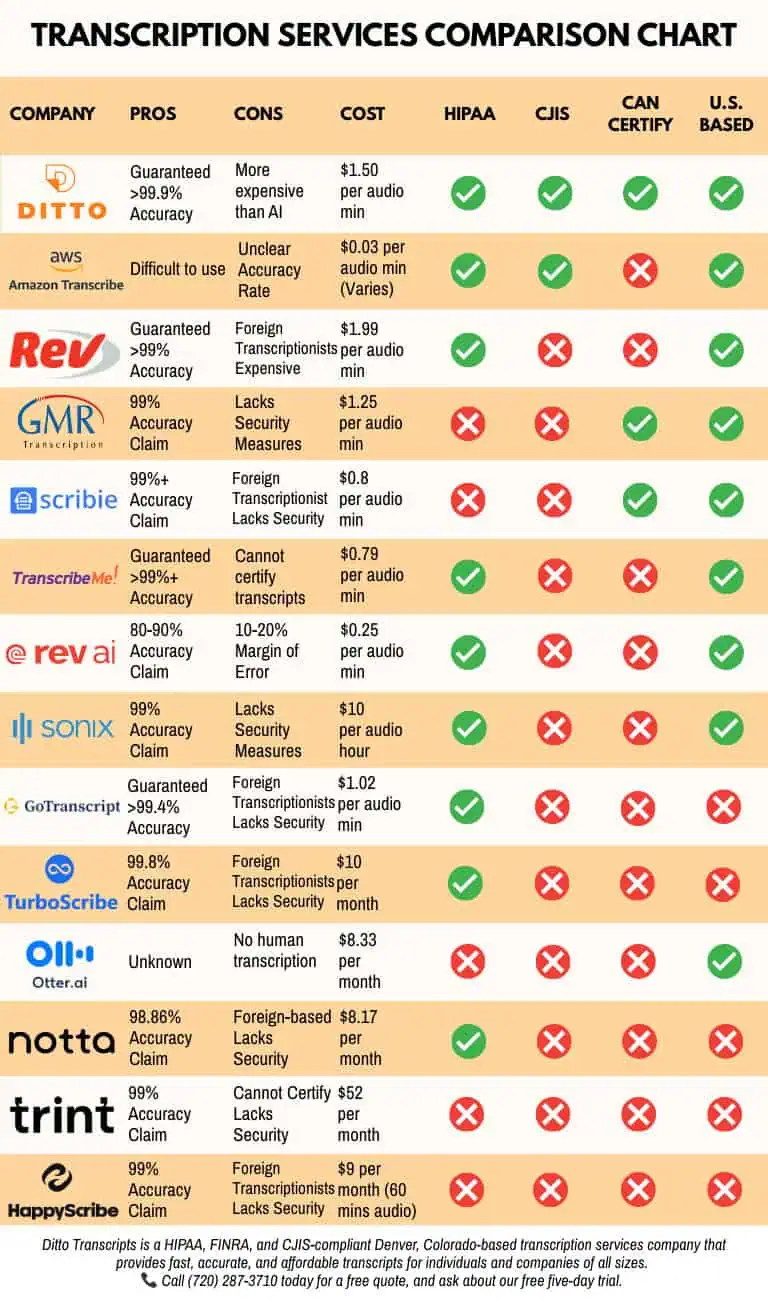
- Human transcriptionists: We use trained human transcriptionists who understand context, speaker flow, tone, terminology, and the difference between a rough transcript and a professional academic record.
- Academic transcription experience: Ditto works with educational institutions, researchers, students, faculty members, administrative teams, and professionals who need accurate transcripts for learning, research, review, and documentation.
- Verbatim transcription: When clients need every spoken word captured, Ditto can provide word-for-word transcripts that include false starts, filler words, pauses, interruptions, and other spoken details when required.
- Support for difficult audio: Our transcriptionists can work with multiple speakers, classroom noise, accents, low volume, overlapping speech, technical terms, and recordings that automated tools often struggle with.
- Research-friendly formatting: Transcripts can be prepared for interviews, focus groups, participant responses, coding, quoting, analysis, and long-term archiving.
- Secure handling: Sensitive academic recordings are handled through confidentiality-focused workflows designed to help protect client files and transcripts.
- Compliance support: Ditto works with clients who need HIPAA-, CJIS-, FINRA-, legal-, medical-, law-enforcement-, and government-compliant transcription support.
- Flexible turnaround options: Clients can choose turnaround times based on file length, urgency, audio quality, number of speakers, and project requirements.
- Transparent legal transcription pricing: Pricing depends on the type of transcription, turnaround time, audio quality, number of speakers, formatting, and whether the client needs certified, verbatim, or specialized transcription.
- No long-term contract required: Academic clients can use Ditto for one lecture, one research project, ongoing coursework, or changing transcription volumes without being locked into unnecessary commitments.
Whether you need lectures transcribed, research interviews documented, seminars converted into study material, webinars made more accessible, or administrative recordings organized for review, Ditto Transcripts can help make the process accurate, secure, and manageable.
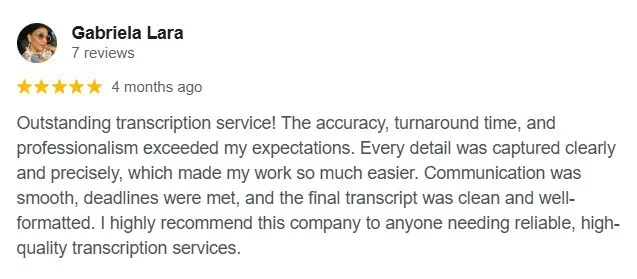
Still deciding? Here’s what one Ditto client testimonial had to say:
Academic Transcription Helps Learning Go Further
Academic transcription makes educational content easier to access, review, search, share, and preserve. Students can study more effectively, researchers can analyze recordings more accurately, and institutions can maintain better written records.
The right transcription partner can help schools, universities, researchers, and academic teams save time while improving accessibility, documentation, and usability.
Ditto Transcripts is a Denver, Colorado-based transcription services company that provides fast, accurate, and affordable transcripts for individuals and companies of all sizes and is FINRA-, HIPAA-, and CJIS-compliant. Call (720) 287-3710 today for a free quote.