


You can be excellent at your work and still struggle to land your first paying client. That’s one of freelancing’s harder lessons: having a skill and finding people willing to pay for it are two different things.
Whether you write, design, manage accounts, or pursue freelance transcription jobs from home, building trust with potential clients is essential. Finding freelance clients starts with showing people what you do, understanding what they need, and making it easy to hire you. Here’s how to build that foundation without spending all your time marketing.
In this article, you’ll learn:
- How to build a professional online presence that attracts potential clients.
- How to identify your ideal clients and understand their needs.
- How to use freelance job boards, referrals, and networking to find opportunities.
- How to create content and pitch your services to prospective clients.
- How to offer trial projects without undervaluing your work.
Build a Professional Online Presence
Before approaching clients, make sure they can find credible information about you. A polished website is useful without needing to be elaborate or expensive. A simple site featuring your services, work samples, contact details, and a clear explanation of whom you help can be enough to get started.
Your portfolio should demonstrate the results a client can expect rather than simply list your skills. If your work involves confidential material, such as medical records or private interviews, create fictional samples or use material you have permission to share to protect client information.
Social media can help, too, although you don’t need to maintain every platform. LinkedIn is a sensible starting point for many business-to-business freelancers. Visual creators might benefit more from Instagram or a portfolio community. Keep your profile current, link to your work, and make your contact details easy to locate.
Know Who You’re Trying to Reach
Marketing to everyone often means connecting with no one. The clearer you are about your ideal client, the easier it becomes to explain why your services matter.
Consider a freelance accountant who helps small business owners prepare their books. Those clients may not care about complicated accounting terminology. They care about getting organized, saving time, and avoiding preventable mistakes.
The same principle applies across industries. Researchers seeking academic transcription services may prioritize confidentiality, speaker identification, and accurate research terminology. A restaurant hiring a designer might care more about turnaround time and an appealing menu.
Before pitching, answer three questions:
- Who is most likely to need my service?
- What problem are they trying to solve?
- What evidence would make them comfortable hiring me?
Use those answers to shape your portfolio, outreach, and pricing discussions.
Use Freelance Job Boards Wisely
Job boards can help you find projects when you don’t yet have an established network. Some platforms also handle payment arrangements, reducing the administrative work of getting started. However, competition can be intense, and platform fees or rules may affect your earnings.
Treat job boards as one source of clients, not your entire business strategy. Look for assignments that match your abilities, read the full scope before applying, and calculate what you’ll earn after fees. Be wary of vague offers, requests for substantial unpaid work, or clients who want to move payments outside a platform’s protections.
A well-completed small project can become a portfolio piece, a repeat engagement, or a referral, as long as you have permission to share it.
Ask for Referrals and Recommendations
One satisfied client can introduce you to another. After delivering a successful project, thank the client and ask whether they’d be comfortable recommending you or providing feedback.
Don’t complicate it. A short, specific request works better than a generic appeal for support. You might ask whether they know another business facing a similar problem, or whether you may feature their review on your website.
Make referrals easy by encouraging clients to recommend you without pressuring them. Provide a direct contact link and follow up professionally. If you offer referral incentives, disclose them where appropriate and follow any platform rules.
Create Content That Proves Your Expertise
Useful content gives prospective clients a preview of how you think and work. A freelance editor might explain common manuscript mistakes. A web developer could show how to make a site easier to navigate. A transcriptionist could explain when verbatim transcription beats edited transcripts.
The best content answers a question your potential clients already have. It can be a blog post, a short video, a practical checklist, or a thoughtful LinkedIn post. Pick a format you can maintain rather than trying to publish everywhere.
Not every post needs a sales pitch. When your advice is genuinely helpful, readers will remember you when they need someone with your skills.
Build Relationships Beyond Contact Lists
Your first opportunities may come from people who already know your work: former colleagues, classmates, previous employers, or local business owners. Let them know what services you offer and the kinds of projects you’re available for.
Networking also works through complementary partnerships. A copywriter might collaborate with a website designer; a translator might exchange referrals with an editor. Local business associations, professional events, and relevant online communities can introduce you to people outside your immediate circle.
A useful network grows through genuine exchanges, not repeated work requests. Share relevant opportunities, make introductions, and help others when you can.
Learn to Pitch Without Sounding Pushy
Direct outreach can help you find freelance clients, especially when you’ve identified a business that could benefit from your skills. The key is to research the company and focus on a specific problem you can help solve.
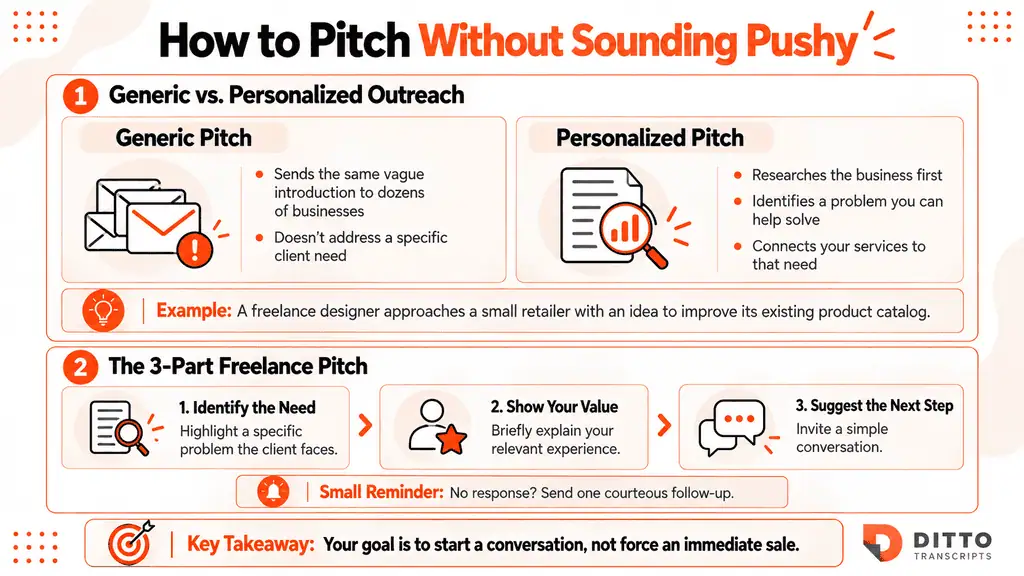
Keep your message brief and relevant. If you don’t hear back, one courteous follow-up is reasonable. Remember, your goal is to start a conversation, not force an immediate sale.
Offer a Small Trial Without Undervaluing Your Work
A limited demonstration can sometimes reduce a new client’s uncertainty. A designer could provide a short website audit; a writer might share a relevant sample or propose a paid trial assignment.
However, unpaid projects can quickly eat into time you need for paid work. Define the scope and avoid giving away a complete deliverable as a trial. Show what you can do while protecting your time and expertise.
Why Choose Ditto Transcripts for Professional Transcription?
Freelancers know reliability matters when building trust. Businesses choosing transcription support face a similar decision: they need accurate documents without reviewing every recording themselves.
At Ditto Transcripts, we prioritize professional, human-produced transcripts and careful handling of client files. Our approach includes:
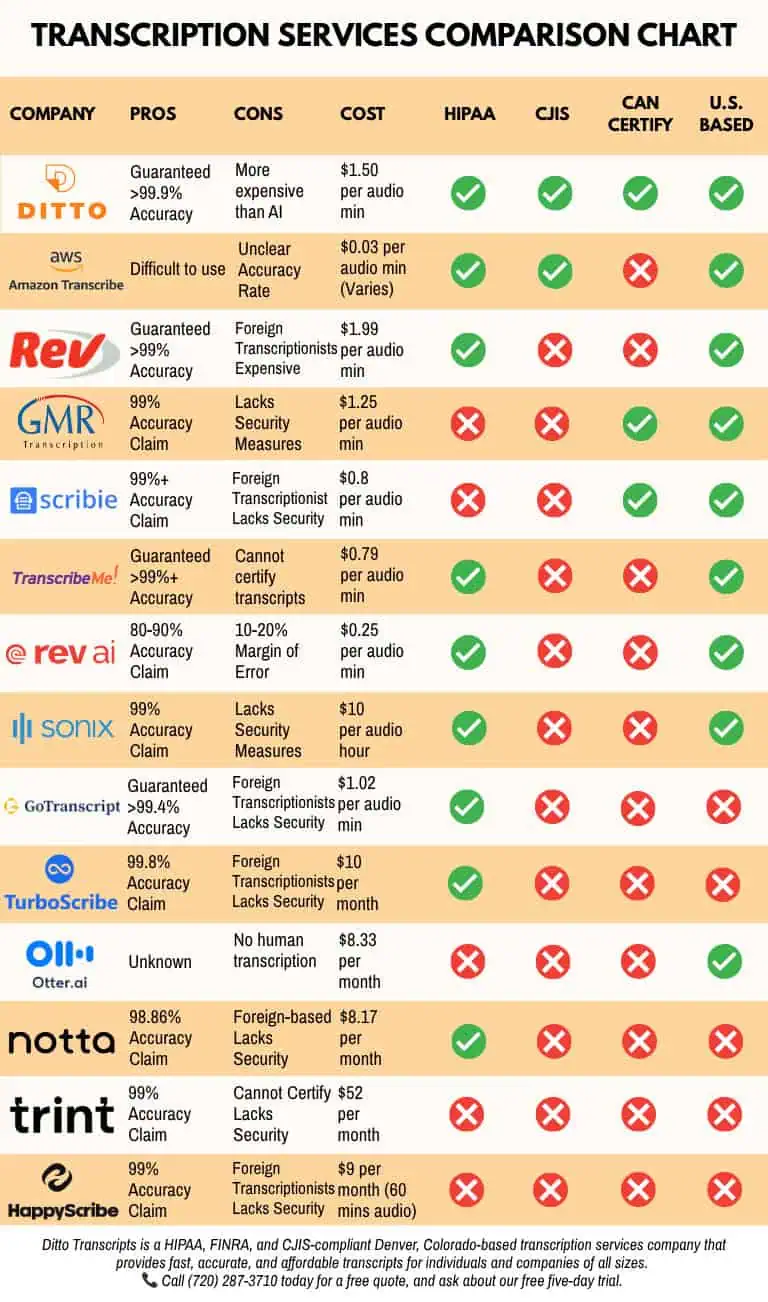
- Human transcription: U.S.-based professionals handle recordings, backed by Ditto’s stated 99% accuracy guarantee.
- Industry experience: Our team works with legal, medical, academic, business, and government recordings.
- Challenging audio: We provide human attention to multiple speakers, background noise, accents, and specialized terminology.
- Security and formatting: Ditto describes its services as HIPAA- and CJIS-compliant. Clients can also request speaker labels, timestamps, and customized layouts.
- Pricing and client experience: Our legal transcription prices explain how complexity and turnaround affect cost, while our testimonials show what clients say about working with us.
Start Small and Build on What Works
Finding clients rarely happens through one perfect pitch or social media post. It’s a process of making your work visible, meeting the right people, delivering well, and earning their confidence.
Start with a credible portfolio and a clear description of whom you help. Then choose a few consistent ways to reach them. You don’t need every marketing tactic to succeed; you need a manageable approach you can improve as real clients respond.
Ditto Transcripts is a Denver, Colorado-based transcription services company offering fast, accurate, and affordable transcripts with flexible turnaround options for individuals and organizations of all sizes. Our FINRA-, HIPAA-, and CJIS-compliant services provide dependable transcription solutions across various industries. Call (720) 287-3710 today to discuss your project and request a free quote.