


Your latest podcast was published, and it went as usual. Or so you thought.
In one part, you said, “I don’t think everyone needs a college degree to succeed, although that doesn’t mean education isn’t important.”
Suddenly, you see a spliced version going viral that says only, “I don’t think everyone needs a college degree.” What you said has been taken out of context, and now, you’re replaying a 60-minute conversation, trying to find that specific part.
This is one of many problems podcasters face. Listeners and viewers will always find a way to make something controversial; if there isn’t one, they try to create one – disrupting the intended message and destroying one’s character. That is why, in podcasting, podcast transcription services are sought to ensure a record that provides an accurate, full context of the conversation.
In this article, you’ll know:
- How transcripts help preserve context and make specific quotes easier to find.
- How written episode content can support search visibility and accessibility.
- How to turn one transcript into show notes, blog posts, social clips, and newsletters.
- Why transcription errors can spread across repurposed content and damage credibility.
- How to build a repeatable workflow for transcribing and repurposing each episode.
Make Your Podcast Discoverable Beyond Audio Platforms
Publishing content that is meant to reach a wide range of people requires proper planning and strategy. The recommendations you receive when searching for something aren’t random – they are optimized.
Search Engine Optimization (SEO) is what many businesses do to increase traction. This is where transcripts on your website become relevant, as they give search engines readable text that explains what the episode covers – and it could match your content to a user interested in that topic.
Even Google suggests putting important information in text because videos alone rarely appear in public searches. Instead, including text helps search engines understand the page and match it to users through keyword matches.
However, a transcript only creates an SEO opportunity; it’s not a ranking guarantee. Simply because the whole dialogue is published doesn’t mean it will be more discoverable. The content needs a clear title, effective and concise introductions, and other elements designed to improve visibility.
One Transcript, Several Useful Pieces of Content
Now that you have repurposed your video content into a publishable text, there’s still one more thing to do: customization.
Even though it all comes from the same content, you should introduce it differently on different platforms, since each platform serves a different purpose.
Here’s a quick guide on how you should align them accordingly:
| Content format | What to pull from the transcript |
| Show notes | Key topics, guest insights, and useful timestamps |
| Blog post | One question or idea expanded into a readable article |
| Social posts | Short quotes, surprising observations, and practical tips |
| Video clips | Strong moments paired with checked, synchronized captions |
| Email newsletter | A takeaway with context and a link to the full episode |
For example, a podcast episode about workplace burnout could be translated into a blog post on warning signs, a clip highlighting one coping technique, and a newsletter that shares practical advice. It’s still the same podcast episode being promoted, though it is communicated differently based on what works best. Dissemination isn’t only about copy-and-pasting a quote; it is about how effectively those quotes can be translated to pique interest.
Podcasts aren’t solely entertainment. They could be interview-led content too. Many universities and researchers use them, highlighting the role of academic transcription services in accurately capturing interviews.
Make Your Episodes Easier to Access
SEO is about making the podcast discoverable. It is an entirely different topic from making it accessible.
Many followers may not have the time or ability to listen to an hour or two hours of recording. These people are:
- Followers who are commuting without headphones
- People who are working in offices
- Fans who prefer reading
- Deaf and hard-of-hearing audiences.
Transcripts make it possible for audio/video content to reach a wider audience. Similarly, captions are an effective way to help viewers follow what was said. These two features deliver the message without requiring viewers to manually go back and forth through a long video to find or replay a specific part.
Why Accuracy Matters Before You Repurpose Anything
The most common way to repurpose a podcast is to use AI and automatic speech recognition platforms.
That is perfectly understandable because AI is capable of:
- Producing a transcript quickly
- Offering the cheapest transcription vendor
- Responding quickly to requests and edits
However, it cannot guarantee accuracy. It may have the fastest turnaround time, yet it also tends to stumble over unfamiliar names, jargon, multiple speakers, and other recording-related issues that affect audio quality. If these issues go unchecked and are repurposed by AI, they can cause major unwanted consequences that are harder to correct, especially after publication.
Imagine a podcast episode in which a doctor describes a medication. If the transcript substitutes the drug’s name with another similar-sounding term, it could lead to serious health consequences and also affect the credibility of the show and the doctor.
Verbatim transcription services help ensure those errors don’t occur. Unlike AI, these professional services ensure that the transcript provided is accurate, capturing the exact words the guest uttered.
Remember, if the source transcript is wrong, every piece built from it inherits that risk.
Build a Workflow You Can Repeat Every Week
You don’t need a large team. You need a repeatable process that saves you from starting over after each episode.
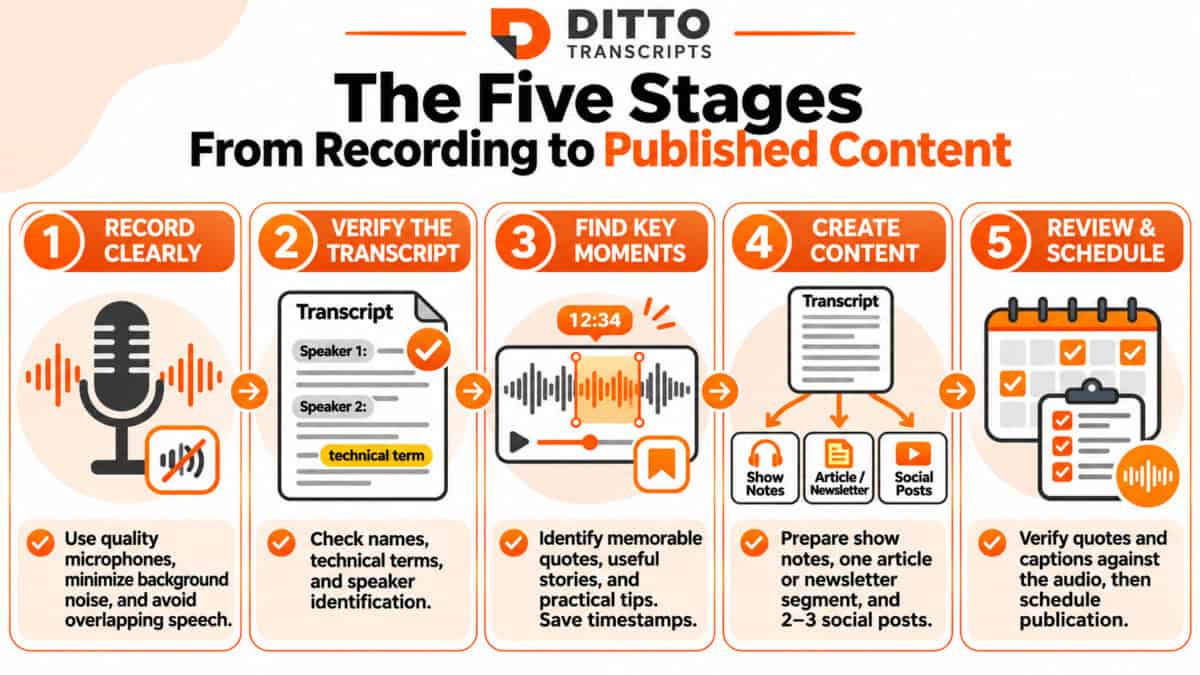
The key is a simple template that fits your podcast. Everything becomes easier after that.
Why Choose Ditto Transcripts?
At Ditto Transcripts, we understand that a podcast doesn’t always end when the recording stops. One transcription error can carry over into multiple pieces of content, affecting both credibility and accuracy.
Here’s what Ditto brings to the table:
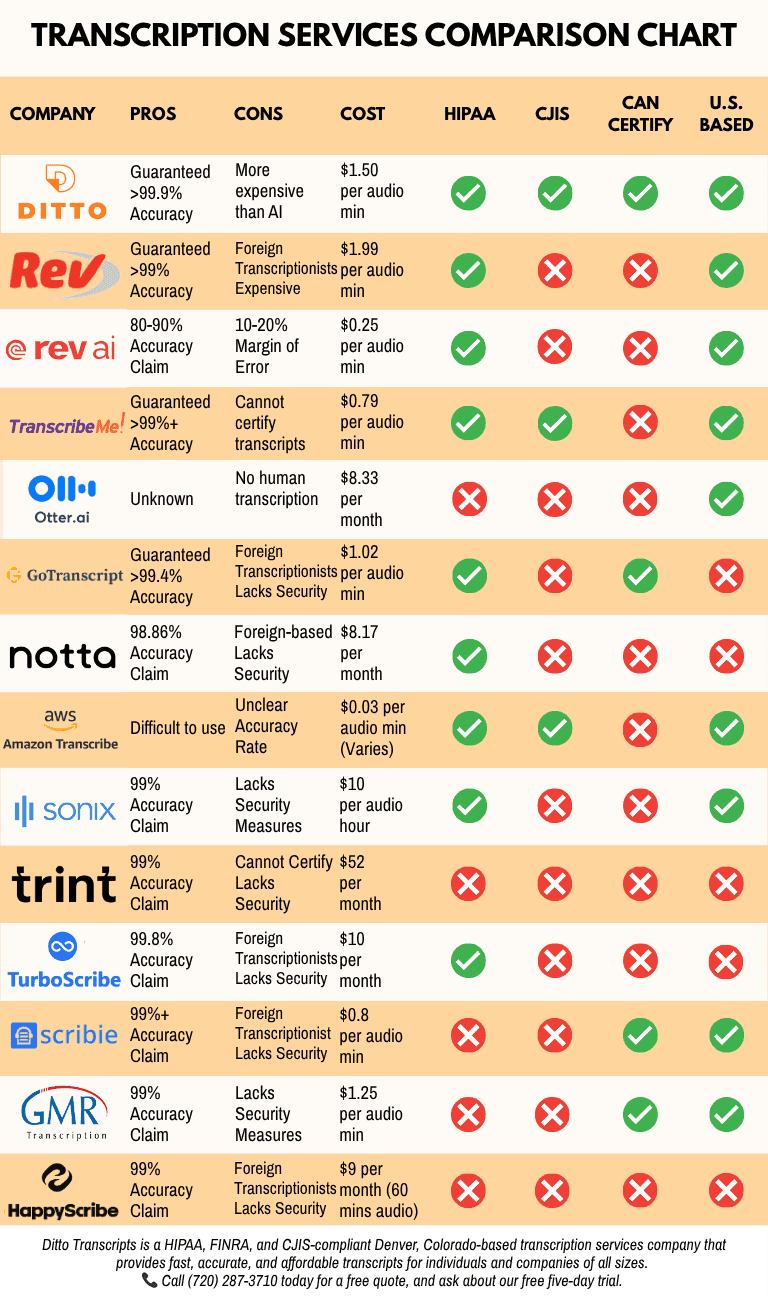
- Human accuracy: Our team of U.S.-based transcriptionists guarantees over 99% accuracy, helping preserve your conversations as intended.
- Experience with complex recordings: Our trained professionals handle poor audio, multiple speakers, and other nuances where AI usually struggles.
- Security: Transcripts must be prepared before the episode is released. At Ditto Transcripts, we understand and value security, and we are HIPAA-, FINRA-, and CJIS-compliant, reflecting our strict standards.
- Transparent legal transcription prices: Wondering about costs? We have an easy-to-use calculator that makes cost estimation easier and asks what add-ons you might need.
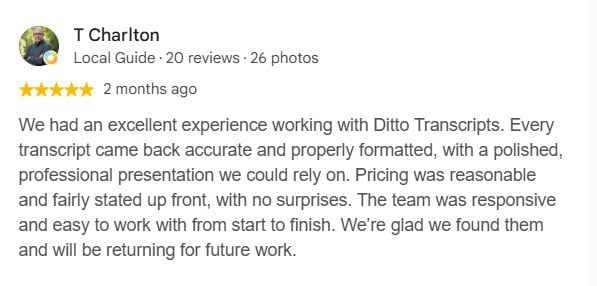
- Client testimonials: Don’t simply take our word for it. Our clients tell you everything you should know:
Let Your Best Conversations Keep Working
If you are looking into transcription now, know that you don’t have to convert all your previous episodes at once.
Start with one or two episodes, and make it a habit to have future episodes professionally transcribed. At first, it may not seem like much. However, later, the difference will be evident.
An episode may last an hour. However, its most useful ideas don’t have to disappear when the audio stops. A reliable transcript helps preserve the message’s relevance.
Ditto Transcripts is a Denver, Colorado-based transcription company providing accurate, secure, and affordable transcription services for schools, universities, researchers, and organizations nationwide. Call (720) 287-3710 today for a free quote.