
One recording can have two different transcript outputs, and neither of them contains an error.
You might be thinking, how is that possible?
One transcript captures literally every detail, including hesitation, repetition, and other nonverbal cues. Meanwhile, the other only contains the “clean” version, making the output easier to read.
So, which is better?
Well, it depends on the intended use – both of these types have their own place, and it’s why legal professionals use legal transcription services to distinguish between full verbatim and clean verbatim transcription.
In this article, you’ll learn:
- The key differences between full verbatim and clean verbatim transcription.
- What each transcription type includes or removes and how it affects meaning.
- Why transcription accuracy and formatting matter in legal proceedings.
- How to choose the right transcription approach for different recordings.
What Is Full Verbatim Transcription?
Conversations are almost always full of nuances. Whether casual or professional, the spontaneity of the exchange and the thought process can lead to pauses, repetition, or stumbles.
Unless you are delivering a memorized line, there will always be slip-ups, which is totally normal – and that is where full verbatim transcriptions become critical. In many cases, these fillers, changes, or mannerisms mean something and add context to what is actually said.
Full verbatim transcriptions capture the following, depending on the chosen standard:
- Every spoken word, including grammatical errors
- “Um” and “uh”; all filler words
- “B-but”, “I’m so-sorry, w-what” – repetitions, stutters, and false starts
- Relevant nonverbal sounds, such as laughter or sighs
- “Your honor…”Significant pauses and interruptions, when required
It may not make sense at first; however, here’s a useful example of why full verbatim transcription matters. In this case, consider a witness describing a vehicle:
Full verbatim: “I, I thought the car was blue. Um, I’m not sure.”
It is hard to read, yes. However, that is exactly the point. It preserves the witness’s uncertainty and hesitation, which the opposing party could later challenge or that investigators could question. In situations like this, a verbatim transcription makes it easier for all parties to be on the same page during probing.
What Does Clean Verbatim Transcription Remove?
Another type of verbatim transcription exists. It captures all spoken words, minus nuances like repetitions and fillers that full verbatim transcription includes. This is called clean verbatim or intelligent verbatim.
Now, using the similar example earlier, here’s what it would look like:
Clean verbatim: “I thought the car was blue. I’m not sure.”
That is way easier to read, right? And that is the exact point. It is the preferred, effective method for fields like meetings, research, and other contexts that benefit more from simplicity than from documenting every speech pattern.
The statement becomes easier to read. The repeated word and filler disappear, while the witness’s uncertainty remains.
However, there is a limitation. Removing “um” is one thing; removing “I’m not sure” is another because it changes the intended meaning of the conversation.
Clean transcription removes unnecessary speech, not important information.
And that distinction becomes especially important when a transcript enters the legal process.
Why Transcript Type Matters in Legal Proceedings
A transcript is an effective tool for how attorneys review testimony. So, those inconsistencies and formatting in a document? It matters more than many realize.
A transcript can influence how attorneys understand testimony, identify inconsistencies, and prepare questions.
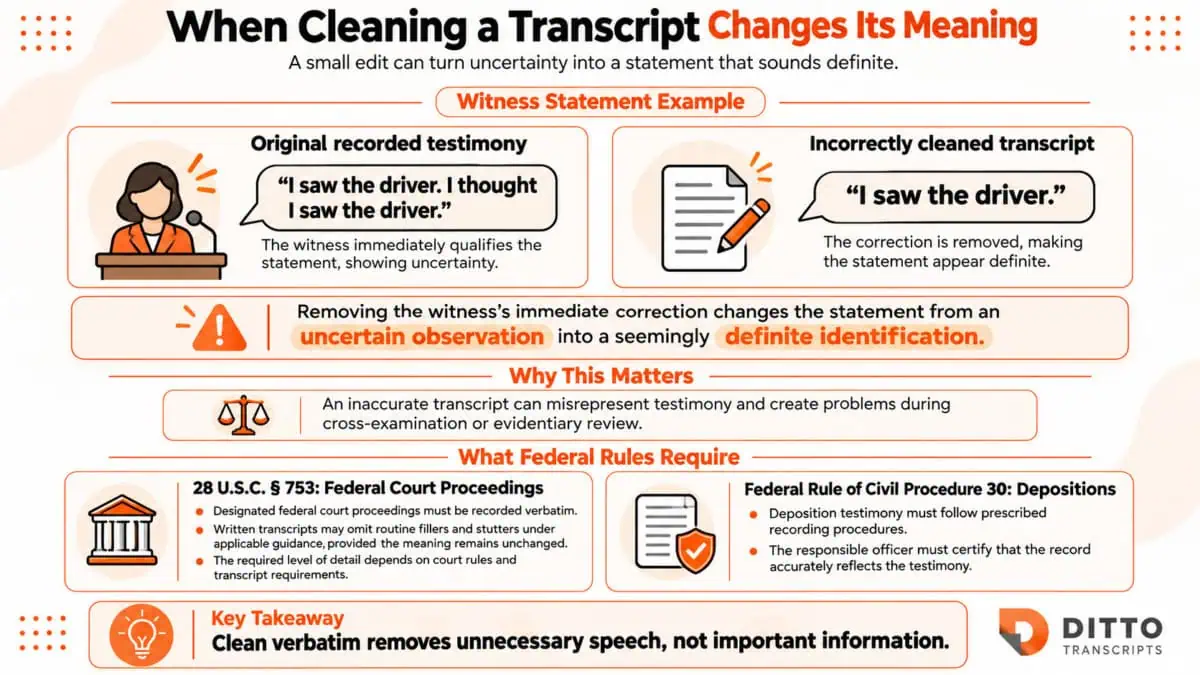
Professional deposition transcription services can help prepare accurate written records from recordings, subject to the applicable procedural and certification requirements.
Where Human Judgment Makes a Difference
Transcription sounds straightforward, even though it isn’t.
First, conversations are messy. Here are some of the common problems:
- People often interrupt each other
- Some speak too quietly, so the recording doesn’t capture it well.
- Nonverbal cues to point, confirm, or reject.
- “Uh-huh” and other sound fillers to show they are listening
That is where challenges arise. An experienced professional transcriptionist trusts what they hear, not assumptions. Meanwhile, AI can be useful, though only to a certain extent. Humans may struggle, yet they can still deliver an accurate transcript (if you choose the right services). AI may not look like it’s struggling, but its output may show otherwise.
Here are non-negotiable responsibilities that a transcription provider must meet:
- Handling unclear audio: There are no excuses – a transcript must be accurately recorded from audio, regardless of its quality.
- Identifying speakers: Overlapping speech must be identified, and speakers must be labeled consistently throughout the recording.
- Preserving meaning: Zero hallucinations; the transcript must reflect only what the speakers said.
- Following instructions: In some areas, transcription formats must be followed.
Humans are not perfect, though. Output accuracy largely depends on audio quality. Nevertheless, professionals still have a significant edge in accuracy, after-service, and responsibility.
Full Verbatim vs. Clean Verbatim: Which Should You Choose?
The right choice depends on how you’ll use the transcript.
| Recording type | Recommended approach | Why it matters |
| Witness or investigative interviews | Full verbatim, when speech details may matter | Preserves hesitation, corrections, and other potentially relevant details |
| Depositions | Applicable legal or reporting standard | Ensures compliance with procedural requirements |
| Court hearings and trials | Court-prescribed format | Meets the required standard for official records |
| Internal legal meetings | Clean verbatim, generally | Improves readability while retaining substantive discussion |
| Business meetings | Clean verbatim | Makes discussions and decisions easier to review |
| Research interviews | Depends on research objectives | Speech patterns may be important to the analysis |
Professional court transcription services don’t just create transcripts. Instead, they follow the relevant court’s requirements for the jurisdiction.
There’s also a practical question worth asking before ordering:
Here’s a general rule of thumb: if there’s a hesitation, repetition, or correction that could matter later, you probably need a full verbatim approach.
Also, remember, transcription is only part of the requirement. You must also preserve the source audio, as it could later become part of the record.
Why Choose Ditto Transcripts for Verbatim and Clean Transcription?
At Ditto Transcripts, we understand that legal recordings serve different purposes. A deposition, witness interview, and internal legal meeting may contain similar conversations, though they don’t necessarily require the same transcription approach.
Here’s what Ditto brings to the table:
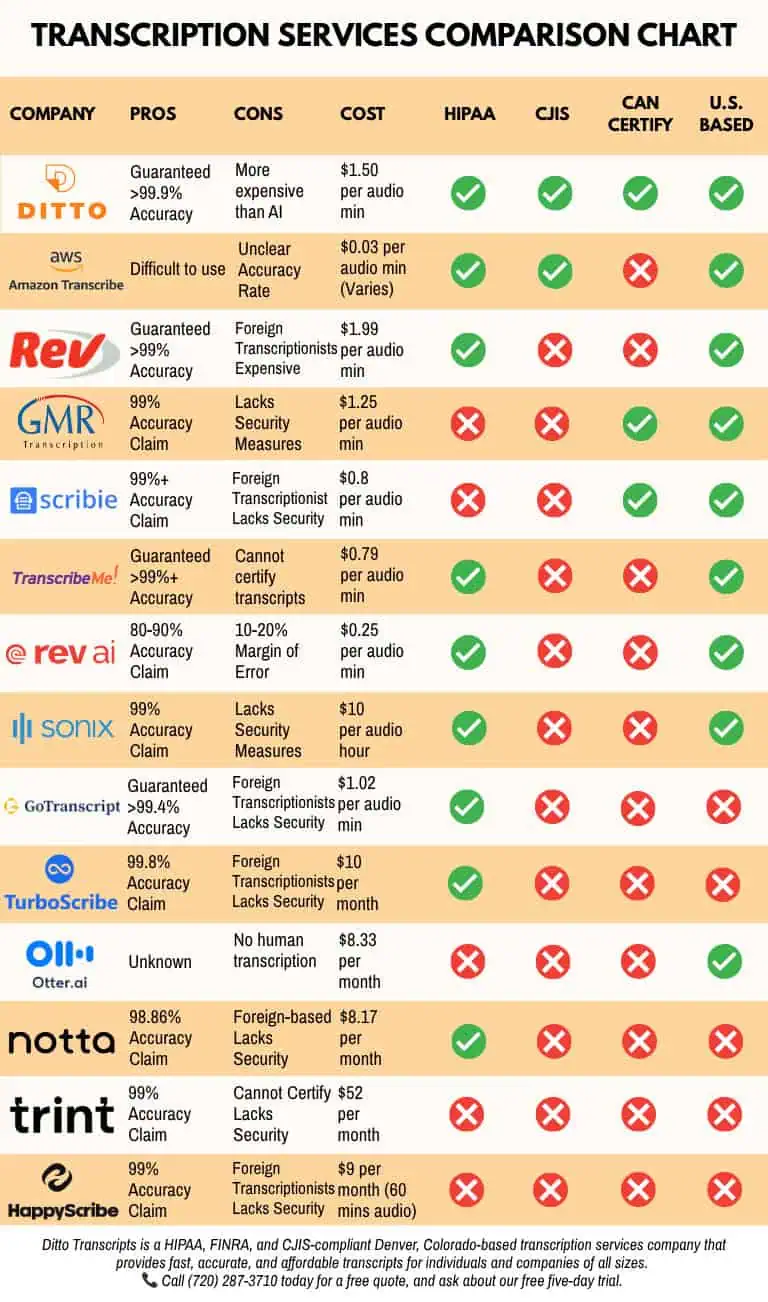
- Human accuracy: Our team of U.S.-based transcriptionists guarantees>99% accuracy for our transcripts.
- Flexible transcription formats: Clean or Full Verbatim transcript? No problem. We also specialize in medical, government, business, academic, and more.
- Legal transcription experience: Depositions, hearings, interviews, and other legal recordings are core specializations, and we discuss formatting and certification requirements before work begins.
- Security: We understand security and take it very seriously. Ditto uses CJIS- and HIPAA-compliant workflows.
- Transparent legal transcription prices: Our legal transcription prices page explains rates, turnaround options, additional features, and everything you need to know before you commit.
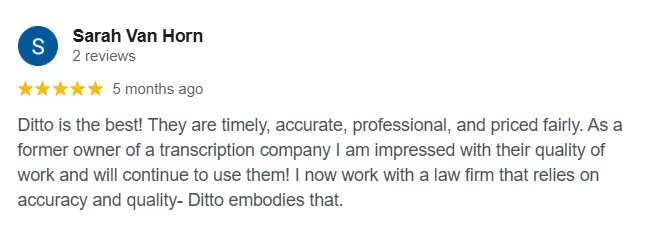
- Client testimonials: If you’re still not convinced, you may want to hear testimonials about customers’ experiences
The Right Transcript Preserves the Right Details
Full verbatim and clean verbatim transcription serve different purposes.
One preserves the audio in its rawest state, while the other makes it easier to read. The better choice depends less on taste than on how you’ll use each transcript. For legal proceedings, however, never choose convenience alone. The applicable rules and the record’s purpose must come first.
Ditto Transcripts is a Denver, Colorado-based transcription company providing accurate, secure, and affordable transcription services nationwide—call (720) 287-3710 to discuss your recording or request a free quote.