


Subtitles and closed captions are often treated as interchangeable or ignored altogether. Ask a casual internet user about the difference, and they might say there is none, or admit they have never thought about it. For viewers, that gap in understanding is usually harmless.
For content creators and video producers, however, the distinction can affect resource allocation, regulatory compliance, accessibility, and audience engagement.
That is why today I will compare subtitles versus closed captions and explain how a reliable captioning company, including those offering legal transcription services, can help creators meet technical, legal, and accessibility requirements while reaching a wider audience.
This comparison is especially relevant for audiences researching transcription companies or looking to expand their understanding of transcription and captioning best practices.
In This Article, You’ll Know How:
- Subtitles and closed captions differ in purpose: subtitles focus on spoken dialogue, while closed captions include nonverbal audio cues to support accessibility for deaf and hard-of-hearing audiences.
- Closed captions are often legally required under regulations like the ADA, FCC, and WCAG, while subtitles help expand reach, engagement, and global accessibility.
- Professional human captioning and transcription services outperform AI by delivering higher accuracy, better synchronization, and compliance-ready results that improve accessibility, SEO, and viewer retention.
Subtitles vs Closed Captions: What Is the Difference and Why It Matters
While subtitles and closed captions are often mentioned together, they serve distinct functions depending on audience needs, platform requirements, and accessibility goals. Understanding these differences helps creators make informed decisions about how their content is presented and who it reaches.
The comparison below highlights how subtitles and closed captions differ in purpose, format, and use cases, offering a practical reference for selecting the right option based on accessibility standards, regulatory obligations, and viewer experience.
| Category | Subtitles | Closed Captions |
| Definition | Text that displays spoken dialogue to help viewers understand video content | Text that displays spoken dialogue plus audio context |
| Primary audience | Viewers who can hear but may not understand the language | Viewers who are deaf or hard of hearing |
| Audio elements included | Spoken words only | Spoken words, sound effects, music, and nonverbal cues |
| Speaker identification | Rare | Common |
| Synchronization | Timed to dialogue and visuals | Timed to all relevant audio |
| Common file formats | SRT, VTT | SCC, SRT, VTT |
| Accessibility purpose | Language comprehension | Hearing accessibility and compliance |
| Legal or platform requirement | Usually optional | Often required |
| Best use cases | Multilingual content, global distribution, non native audiences | Accessibility, noisy or silent environments, and regulatory compliance |
Understanding how subtitles and closed captions differ allows creators and organizations to make more intentional decisions about accessibility, compliance, and audience experience. When applied correctly, each format supports clearer communication and broader reach across platforms.
Working with a reliable captioning and transcription company helps ensure these standards are met consistently and supports specialized needs, such as deposition transcription services, where accuracy and context are essential.
How To Get Closed Captions Or Subtitles?
The most common ways to caption or subtitle videos include:
- Manual Transcription: Typing out spoken dialogue and relevant sound effects by hand. This method offers high accuracy and customization but requires significantly more time and effort.
- Automatic Speech Recognition (ASR): Using AI or software to generate captions automatically from audio. ASR is fast and convenient, but often contains errors and typically requires manual review and correction.
- U.S.-Based Professional Transcription Services: Working with experienced transcriptionists and captioners to produce accurate, high-quality captions and subtitles. This option is commonly used in professional and regulated environments and supports customization, multiple languages, diverse accents, strict confidentiality standards, and secure handling of sensitive content.
- Built-in Platform Tools: Using captioning features provided directly by video platforms. These tools are convenient for quick results but are often less accurate and less customizable.
Ditto Transcripts: We Provide 100% U.S.-Based Human-Powered Subtitles
The difference between automatic captioning and professional human captioning is immediately noticeable. It is similar to the difference between a perfectly synchronized caption line and one that lags behind the audio by an entire second. Even small timing or wording errors can disrupt comprehension and reduce viewer trust.
While AI transcription and captioning platforms are often marketed as fast and inexpensive, they remain highly inaccurate. Even the best-performing systems achieve only 61.92% accuracy on recordings that trained human transcriptionists can transcribe with near-perfect precision. The time required to review and correct these errors often outweighs the initial cost savings.
For organizations evaluating providers, trial transcription services offer a practical way to experience the quality difference firsthand. Human-generated captions are especially important in high-stakes environments such as legal proceedings, educational content, and compliance-driven media, where even minor inaccuracies can lead to confusion, misinterpretation, or legal risk.
What are the Benefits of Subtitles and Closed Captions?
Studies have found that captions and subtitles can increase viewership by an average of 40%. Any investment toward professional transcription, closed caption, or subtitle providers will likely pay dividends if you play your cards right. Beyond that, quality subtitles and captions offer a lot more, including:
| Benefit Area | Description |
| Improved Accessibility | Captions and subtitles make video content accessible to deaf and hard-of-hearing audiences, viewers watching without sound, and non native speakers. They also help native speakers better understand unfamiliar accents, improving overall comprehension. |
| Increased Engagement | Captioned videos consistently outperform uncaptioned videos in completion rates. While viewers watch an average of 66% of uncaptioned videos, captioned videos reach completion rates as high as 91%. Higher watch time improves visibility on platforms like YouTube and Facebook, where algorithms prioritize viewer retention. |
| Platform Growth and Monetization | Watch time is a key metric for ranking and monetization. Subtitles and captions help creators meet thresholds such as YouTube’s 4,000-hour Partner Program requirement, increasing eligibility for monetization and broader exposure. |
| Legal Compliance | Accessibility laws and regulations require captions for certain content. This includes ADA-related guidance for public sector content and FCC requirements for broadcast television, which mandate accuracy, synchronization, completeness, and proper placement of captions. |
| Content Repurposing | Captions and subtitles can be converted into transcripts, allowing video content to be repurposed as blog posts, courses, training materials, e-learning modules, or searchable content libraries. This maximizes the return on existing content investments. |
| SEO and Search Visibility | Search engines rely on text to index content. Transcripts make video content searchable, improve keyword coverage naturally, and help pages rank higher through stronger relevance and EEAT signals. |
Multi-Pronged Benefits You Cannot Ignore
Subtitles, closed captions, and transcripts do more than enhance video content. They support accessibility, improve engagement, strengthen search visibility, and help organizations meet evolving compliance standards. For businesses, educators, and public institutions alike, working with a reliable captioning and transcription provider ensures these benefits are realized consistently. This is especially important for organizations that require government transcription services, where accuracy, security, and adherence to accessibility regulations are essential.
Subtitles vs Closed Captions? Don’t Sweat It With Ditto
Ditto Transcripts provides the best closed captioning and subtitling services money can buy. We offer the following:

- Accuracy: A 99% accuracy guarantee supported by experienced, human transcription experts.
- Affordability: Competitive legal transcription pricing that balances cost efficiency with consistent quality.
- U.S.-Based Experts: All transcription work completed by 100% U.S.-based professionals.
- Security: Strong data protection measures and strict confidentiality standards.
- Turnaround Time: Fast and reliable delivery to meet tight deadlines.
- Scalability: Flexible service options designed to support projects of any size
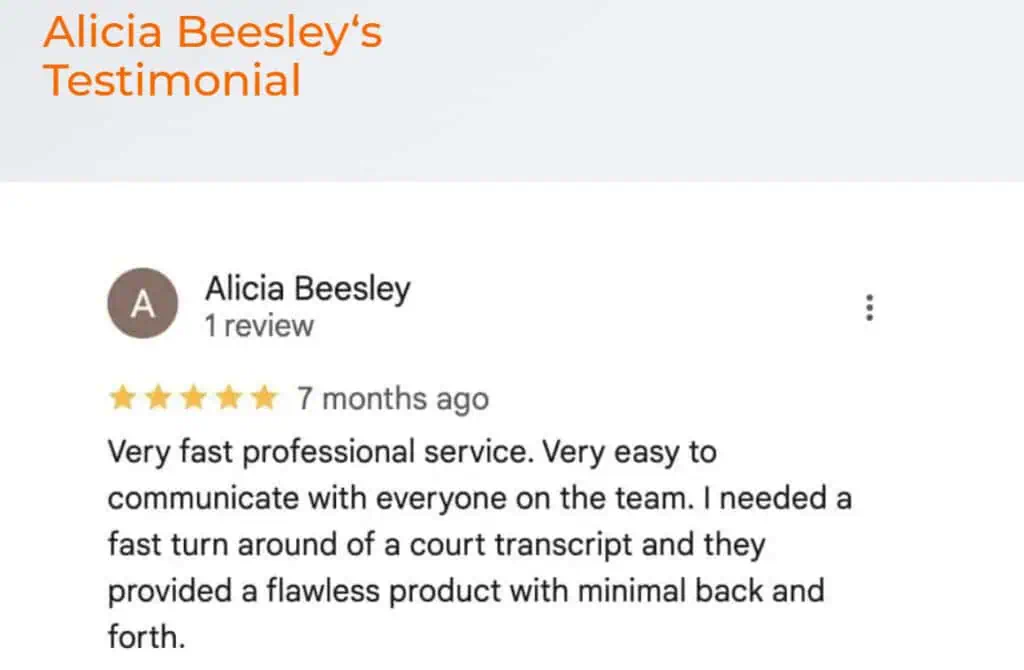
Still don’t believe us? Here’s what client testimonials say:
Ditto Transcripts is a Denver, Colorado-based FINRA, HIPAA, and CJIS-compliant transcription services company that provides fast, accurate, and affordable transcripts for individuals and companies of all sizes. Call (720) 287-3710 today for a free quote.