


Investigators have mountains of documents to handle—recordings that go on forever, handwritten notes piled sky-high. They’re stranded in an ocean of paperwork. With all that information, it’s easy to miss the important clues that could blow the lid off a case. Thankfully, specialized tools, like investigation transcription and legal transcription services, can help immensely.
Having a written version of an audio and video recording can be a turning point in specific cases. Suddenly, investigators can quickly scan through interviews, surveillance tapes, wiretaps—anything with audio. They can zero in on the crucial moments and easily spot patterns that might otherwise get lost in the shuffle.
In this article, you’ll learn how:
- Transcription services streamline evidence analysis by turning interviews, wiretaps, and investigative notes into searchable, organized, and reliable written records.
- Agencies from law enforcement to journalists and auditors benefit from transcriptions that ensure accuracy, clarity, and accessibility.
- Best practices for transcription management, including using secure platforms and detailed verbatim transcripts, enhance investigative efficiency and data security.
What is Investigation Transcription?
It’s easy to record everything these days. Law enforcement and other investigative organizations have fully embraced that ease by allowing their investigators to utilize recording or dictation equipment and software. Video and audio equipment capture everything said while investigators focus on tasks such as interviewing witnesses or reviewing cases.
Investigation transcription involves converting video, audio, or text files from various sources into digital or physical text. These can be video files, telephone recordings, or wiretaps, surveillance recordings, forensic audio or video evidence, conversation tapes, respondent statements, witness interviews, footage of motor accidents, and more.
Who Needs Investigation Transcription Services?
Though investigations are typically tied to law enforcement agencies, they are not strictly limited to them. Here are examples of agencies and individuals that conduct investigations in official capacities:
| Investigators | Examples |
| Law Enforcement Agencies | Police, FBI, federal agencies |
| Private Investigators | Private individuals, investigative firms, and detectives |
| Government Agencies | Regulatory bodies, government agencies |
| Corporate Investigators | In-house corporate investigators, attorneys, and external law firms |
| Journalists | Investigative journalists |
| Independent Researchers | Academics, researchers, independent experts |
| Auditors | Auditing firms |
| Human Rights Organizations | NGOs, human rights organizations |
| Cybersecurity Experts | Cybersecurity professionals |
| Insurance Investigators | Insurance companies, claims investigators |
No matter who conducts the investigation—law enforcement, corporate investigators, or independent researchers—accurate documentation is essential. Deposition transcription services play a vital role in this process, ensuring that every spoken word from interviews, testimonies, and legal proceedings is precisely captured and easily accessible for review and analysis.
Importance of Transcription in Preserving Evidence
Anyone who needs to keep the record straight should have law enforcement transcriptions in their corner. Transcription takes all the “he said, she said” from a court case and turns it into a written account that will withstand even the toughest scrutiny. It’s all about nailing down the crucial details or raw emotions that might otherwise slip through the cracks.
A reliable transcript on hand is a massive advantage for investigators who need to dissect the information presented. Legal professionals and researchers can thoroughly scan the text while connecting the dots or cross-checking details to build an airtight case that can weather any storm.
Another critical factor is that transcripts help ensure that the information is readily available for anyone with the right to access it.
How to Utilize Transcription in Investigative Processes
Law enforcement transcriptions can be used in many ways. Here are some common types specific to the legal field.
Transcribing Witness Interviews and Depositions
One way to get the most out of investigative recording is to transcribe witness interviews and depositions. It captures every word from witnesses, suspects, and anyone involved in the case—a surefire way.
At the same time, these transcripts contain much for investigators to focus on in detail or discover leads that might have slipped by during the original conversation. Transcribed statements can also be easily cross-checked against other evidence, which is crucial for building a rock-solid case that supports the investigative team’s findings.
Case Example: In Paula Jones v. Bill Clinton, Bill Clinton’s deposition transcript was pivotal. During his deposition, President Clinton was asked under oath whether he had “sexual relations” with Monica Lewinsky and denied it. Later evidence (including the Lewinsky “blue dress”) contradicted that sworn statement, and the deposition transcript became a key piece of material in the impeachment and perjury inquiry.
This shows how having a clear, accurate transcript of a deposition can expose inconsistencies, support cross-referencing with other evidence, and strengthen an investigative or prosecutorial strategy.
Transcribing Phone Calls and Wiretaps
During investigations, phone call recordings and even wiretaps can be crucial sources of information. Converting those audio recordings into readable documents allows investigators to really sink their teeth into the conversations, potentially uncovering evidence that might have gone unnoticed if they were listening to the recordings.
Also, investigation transcription can help save time and resources, which are always in short supply, by making it relatively easy to search for specific keyword phrases.
Sharing these transcripts with the entire team keeps everyone in the loop. If necessary, transcripts can be lifesavers in court, as they contain an unassailable record of the conversations. In addition, government transcription services ensure that official reports, hearings, and inter-agency communications are accurately documented and properly formatted, supporting transparency, accountability, and efficiency across investigations.
Investigative Notes and Dictations
Although it may not seem obvious, investigators often write notes or record their thoughts on the fly. The problem is that those scribbles and audio files can be a pain point to work with, especially when time is tight. Fortunately, turning those into digital text can solve those issues for the whole team.
Why? Transcripts of notes ensure that crucial details are not lost in the shuffle due to messy handwriting or damaged paper records. At the same time, transcribed dictations let investigators quickly skim through their insights without sitting through hours of recordings like a madman. Similarly, court transcription services ensure that official proceedings, hearings, and testimonies are accurately documented, giving investigators and legal professionals a reliable written record to reference when building or supporting a case.
Transcriptions As A Tool for Evidence Analysis
Here’s how investigators can use transcripts as equipment for analyzing crucial evidence.
| Purpose | Description |
| Converting Recordings to Searchable Text | Audio recordings may contain evidence that can be transcribed into text files. Investigators can quickly locate specific keywords within the file once recordings are transcribed. This allows for proper analysis and cross-referencing of information, saving time for everyone involved. |
| Organizing Information | Transcribed audio can be categorized by topic or speaker, making it easier to navigate the information. This organization also helps identify patterns or inconsistencies within the evidence, leading to a clearer understanding of the case. |
| Enabling Efficient Review | Multiple investigators can review the transcribed document simultaneously, significantly reducing analysis time. They can quickly scan the text, focus on relevant sections, and make annotations directly within the transcripts. Investigators can revisit any part of the recording without having to listen to the entire file again. |
| Maintaining a Permanent Record | Detailed transcription provides a lasting record of witness testimonies and other critical conversations. Small details—such as pauses or specific word choices—are preserved, offering more profound insights into credibility and intent. These records can be securely stored and referenced long after the events have occurred. |
Strategies for Effective Transcription Management
Sure, transcriptions are essential for investigations. However, it is equally important to manage these documents properly.
Request Verbatim Transcripts with Labels and Timestamps
A verbatim transcript is always the first option for law enforcement transcription. Legal professionals often request that every word, speaker, and timestamp be accounted for so there is no room for mix-ups.
Speaker labels are like name tags for your transcript, letting you know exactly who said what. And timestamps? They’re like little signposts that help you navigate the transcript and sync it up with the audio or video.
Trust me, you’ll be thanking yourself later when you can easily pinpoint that crucial moment in the proceedings.
Use a Secure Platform for File Management
Anyone handling sensitive legal info should opt for a secure, cloud-based platform. These digital vaults use encryption, access controls, and regular security check-ups to protect your data from prying eyes or cyber threats.
With a few clicks, you can upload or share files with the right people, all while keeping a tight grip on who can access what. Plus, most of these platforms have your back with version control and audit trails, so you can track every change made to your documents and hit the undo button if needed.
Choose a Secure, Experienced Law Enforcement Transcription Service
Investigative professionals collaborate with a transcription service like Ditto Transcripts, which can keep their data locked tight. We’ve got your back with top-notch security measures.
Although I can’t speak for other law enforcement transcription companies, Ditto Transcripts is 100% FINRA, HIPAA, and CJIS-compliant, so you can sleep well at night knowing your data is safe and sound.
When professionals have a reliable transcription partner, they can focus on what they do best while we churn out high-quality transcripts like it’s nobody’s business.
Why Choose Ditto As Your Law Enforcement Transcription Partner?
Because you won’t have to settle for low-quality speech-to-text transcription software, the best transcription company in the industry will complete your verbatim transcription tasks for the lengthy recordings, with all the specialized productivity tools that we have, so you won’t have to.

Let’s discuss why you should choose Ditto Transcripts as your law enforcement transcription partner.
Our services include:
- High Accuracy: Our professional human transcription service delivers the highest possible accuracy. Transcripts are over 99% accurate as they come.
- Flexible Turnaround Times: Depending on the project, we can provide rush transcripts within one or two days for those who need things done quickly.
- Stringent Security Measures: Every evidence obtained is highly safeguarded. Our CJIS compliance and encryption protocols will optimally protect your confidential information. We’ll answer any questions you have about our security and will be more than happy to provide proof of certification.
- U.S.-Based Company: We are based in America. All of our transcriptionists are native speakers, so that we can transcribe interviews or recordings with the strongest accent.
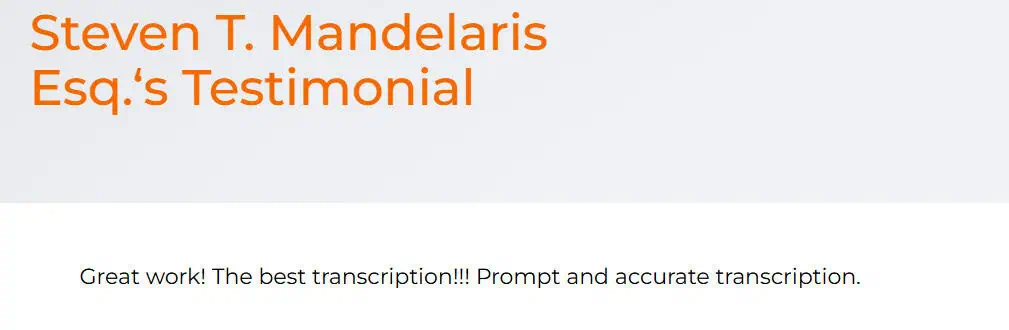
- Proven Track Record: We’ve provided high-quality transcription services to the law enforcement industry since 2010. So, rather than relying on untested providers or fancy AI tools, put your trust in our long, proven history. Don’t believe us? Our client testimonials speak for themselves.
- Flexibility: Need timestamps or verbatim transcripts? Say the word, and we’ll get it done.
- No Long-term Contracts: Pay for what you need, and when you need it. With us, you won’t be tied up with long-term service commitments. Not sure about the costs? Check our legal transcription prices to know more.
Need Assistance With Transcribing Investigation Recordings? We’ll Cover You
Get Ditto’s accurate, high-quality investigation transcription service today and see why we’re at the top of the industry.
Ditto Transcripts is a Denver, Colorado-based FINRA, HIPAA, and CJIS-compliant transcription services company that provides fast, accurate, and affordable transcripts for individuals and companies of all sizes. Call (720) 287-3710 today for a free quote.