


Healthcare has shifted into a digital landscape where many services and records can now be accessed online. However, that convenience comes with risks, as easier access has made protecting medical privacy more complex. Healthcare professionals must now address ethical considerations across many parts of their operations, including medical transcription. While organizations work with reliable medical transcription companies and legal transcription services, not every provider follows the same privacy and data protection standards.
So, what are the ethical considerations in medical transcription that everyone involved should understand, and how can they impact patient care and the overall state of healthcare?
In this article, you’ll learn how:
- Ethical medical transcription protects patient privacy and trust, requiring strict confidentiality when handling sensitive health records and personally identifiable information.
- Accuracy in transcription directly affects patient care, since even small errors in medication dosage or treatment details can lead to serious medical consequences. Likewise, strong data security practices safeguard digital medical records, including encrypted file transfers, role-based access controls, secure storage systems, and strict user authentication.
- Choosing a reputable, HIPAA-compliant transcription provider like Ditto ensures reliability, transparent processes, and high accuracy standards that help prevent costly medical or legal errors.
Why Ethics is a Must for Medical Transcribers
Medical transcription may seem like a straightforward process. A medical professional dictates patient details and information, sends the recording, and a medical transcriptionist converts the audio into a structured text document in the required format.
However, this seemingly simple task carries significant responsibility. At every stage where patient data is handled, transcriptionists must follow strict ethical standards to protect confidentiality and maintain trust in the healthcare system. This expectation is similar across other fields that handle sensitive records, including legal and court transcription services.
Medical transcriptionists often have access to highly sensitive patient information such as birth dates, Social Security numbers, financial details, and records of past medical procedures. If mishandled, this information could expose patients to risks like identity theft or unauthorized disclosure. For this reason, transcription professionals must treat all records with strict confidentiality and secure handling practices.
Regulations also exist to protect patient information. In the United States, laws such as the Health Insurance Portability and Accountability Act (HIPAA) set standards for safeguarding medical data and require healthcare organizations and their partners to follow strict privacy protocols.
Beyond privacy concerns, transcriptionists must also maintain a high level of accuracy. Whether documenting complex medical terminology or simple instructions like medication dosage, precision is critical. In healthcare documentation, even small transcription errors can affect clinical decisions, patient care, and communication among healthcare professionals.
Legal Consequences You Can Expect For Being Unethical
Let’s face it: medical transcriptionists who fail to uphold ethical standards are a liability. They also risk consequences that can permanently impact their careers and the careers of the doctors they’ve transcribed for. Here are the potential legal implications of being unethical in medical transcription.
- HIPAA Violations: Fines can reach up to $1.5 million, with possible jail time in cases of serious or repeated breaches of protected health information.
- Civil Lawsuits: Patients may file lawsuits against transcription professionals or organizations for harm caused by transcription errors or privacy violations.
- Professional Certification Loss: Industry credentials or certifications may be revoked, making it extremely difficult to continue working in the field.
- Employment Termination: Violations of privacy or documentation standards can lead to immediate dismissal and potential blacklisting from healthcare facilities.
- Criminal Penalties: Deliberate disclosure of protected health information may result in criminal prosecution under applicable privacy laws.
- Financial Penalties: Individuals may face significant personal fines and may also be responsible for legal expenses associated with lawsuits.
Because transcription records often serve as official documentation in healthcare and legal proceedings, maintaining strict ethical standards is essential. This responsibility becomes even more critical in areas such as medicolegal transcription services, where accuracy, confidentiality, and compliance directly affect both patient care and legal outcomes.
Ethics Guidelines for Medical Transcribers
Many ethical considerations fall within the purview of medical transcription. Some cover operations and processes, while others cover people and professionals. All of them are important. So, let’s discuss each in turn.
Keeping Private Information “Private”
Under the Health Insurance Portability and Accountability Act (HIPAA), personally identifiable health information related to a patient’s past, present, or future medical condition, treatment, or payment must be protected.
For medical transcriptionists, this means treating every patient data item as confidential. Even small details can help identify a patient when combined with other records. Protecting this information safeguards patient privacy and maintains trust in healthcare documentation.
Organizations involved in transcription must implement policies that ensure protected health information is accessed only when necessary and handled in accordance with privacy regulations.
Digital Information Protection
As healthcare documentation increasingly relies on digital systems, protecting electronic records has become essential. Medical data often moves across multiple platforms, making strong cybersecurity practices a priority.
Common safeguards used by transcription providers include:
- Activity monitoring and reporting systems
- Role-based user access controls
- Unique user credentials with restricted permissions
- Secure network infrastructure and redundancy systems
- Virtual Private Network (VPN) connections
- Secure or dedicated data storage environments
- Encrypted data transmission using industry-standard protocols
- Employee background checks and confidentiality agreements
These measures help protect patient information while supporting regulatory compliance.
Always Maintain a Professional Distance
Medical transcriptionists may occasionally encounter records belonging to someone they know personally. When this happens, the ethical response is to inform a supervisor and request reassignment whenever possible.
If reassignment is not feasible, the transcriptionist must maintain strict professional boundaries and ensure confidentiality throughout the documentation process.
Respect People From Different Backgrounds
Cultural awareness is another important ethical consideration in medical transcription. Dictations may include unfamiliar cultural practices, treatments, or terminology.
When transcriptionists encounter unfamiliar terms, they should verify the correct spelling and meaning before finalizing the document. Research and clarification help ensure the transcript accurately reflects the provider’s dictation without assumptions or bias.
Documenting Informed Consent
Informed consent is a key part of medical documentation. Patients must understand the nature of a treatment, potential risks, and available alternatives before agreeing to care.
Although transcriptionists do not obtain consent themselves, they help ensure these discussions are accurately recorded. If a dictation appears incomplete or unclear, clarification may be needed to ensure the medical record accurately reflects the conversation.
Accurate consent documentation supports patient rights, clinical transparency, and legal accountability.
How to Choose an Ethical Medical Transcription Company
There are many medical transcription providers today, making it difficult to determine which follow strong ethical and professional standards. However, several key factors can help healthcare organizations identify reliable partners.
First, confirm that the provider follows HIPAA regulations and implements strict data security practices. Agencies handling protected health information must ensure that privacy safeguards, secure file handling, and proper access controls are in place.
It is also important to verify that the company operates as a legitimate business. Look for agencies with verifiable addresses, government registrations, and active business licenses in good standing.
Another important factor is the workflow used to complete transcription projects. Reputable providers typically follow a structured process that includes file submission, transcription, quality assurance review, report delivery, and secure file storage.
Turnaround times should also be clearly defined. Many transcription providers offer delivery windows such as 2, 4, 8, 12, 24, or 48 hours, depending on the complexity of the project. Some companies may also offer STAT or rush services when faster delivery is required.
Finally, accuracy remains one of the most important considerations. Many organizations rely on professional human transcriptionists who specialize in medical terminology and clinical documentation to maintain high accuracy levels.
Here’s a quick summary of what to look for:
- Verified business registration and contact information
- Government registrations or relevant certifications
- Transparent billing structures and payment options
- Clearly defined turnaround times and quality control processes
- Compatibility with audio files generated by your EMR system
- HIPAA and HITECH compliance
- Experience with specialized medical transcription services
- Strong accuracy standards supported by quality review
- Appropriate insurance coverage, such as general liability and cyber liability
Why Choose Ditto As Your Medical Transcription Partner?
Ditto’s medical transcription service delivers accurate, reliable medical dictation transcripts while maintaining strong privacy and security standards.
Our services include:

- High Accuracy: Our professional human transcriptionists focus on producing precise transcripts by carefully listening, editing, and quality reviewing to ensure specialized medical terminology and context are accurately captured. We also support detailed documentation needs, including verbatim transcription when recordings require word-for-word accuracy.
- Flexible Turnaround Times: Depending on project requirements, we can provide standard delivery options as well as rush transcripts for clients who require faster turnaround.
- Stringent Security Measures: Our HIPAA compliance and encrypted data handling help safeguard confidential patient information. We can also provide documentation on security practices upon request.
- Proven Track Record: Since 2010, we have supported healthcare professionals with reliable transcription services, helping ensure accurate documentation for clinical records.
- Transparent Pricing: Our rates are designed to remain clear and competitive. Clients can review service costs upfront, including details related to legal transcription pricing, without hidden fees.
- No Long-Term Contracts: Clients can use our transcription services as needed without being locked into long-term agreements.
Looking For Ethical Medical Transcription? Ditto Has You Covered
Interested in seeing how our medical transcription services can help? Let’s set up a no-obligation call, so get in touch and learn more about what we can do for you.
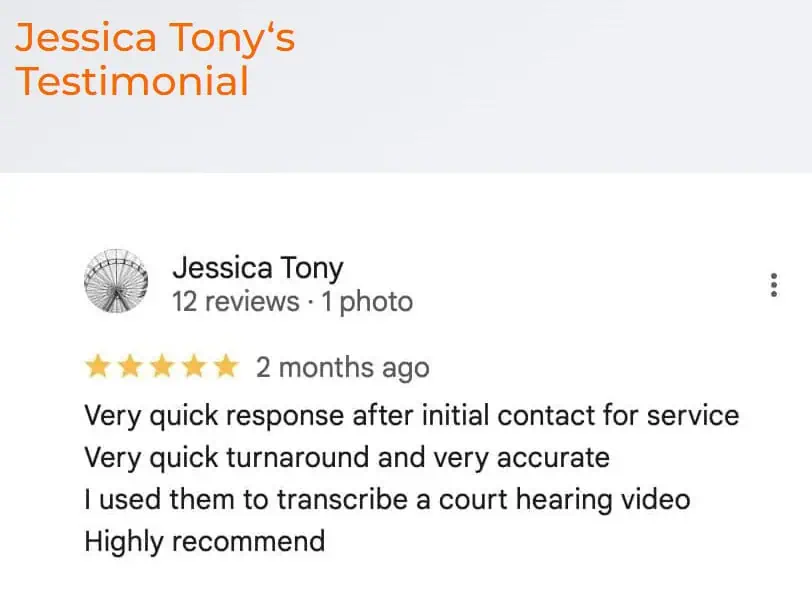
Still not convinced? Maybe a client testimonial could change your mind:
Ditto Transcripts is a Denver, Colorado-based FINRA, HIPAA, and CJIS-compliant transcription services company that provides fast, accurate, and affordable transcripts for individuals and companies of all sizes. Call (720) 287-3710 today for a free quote.