
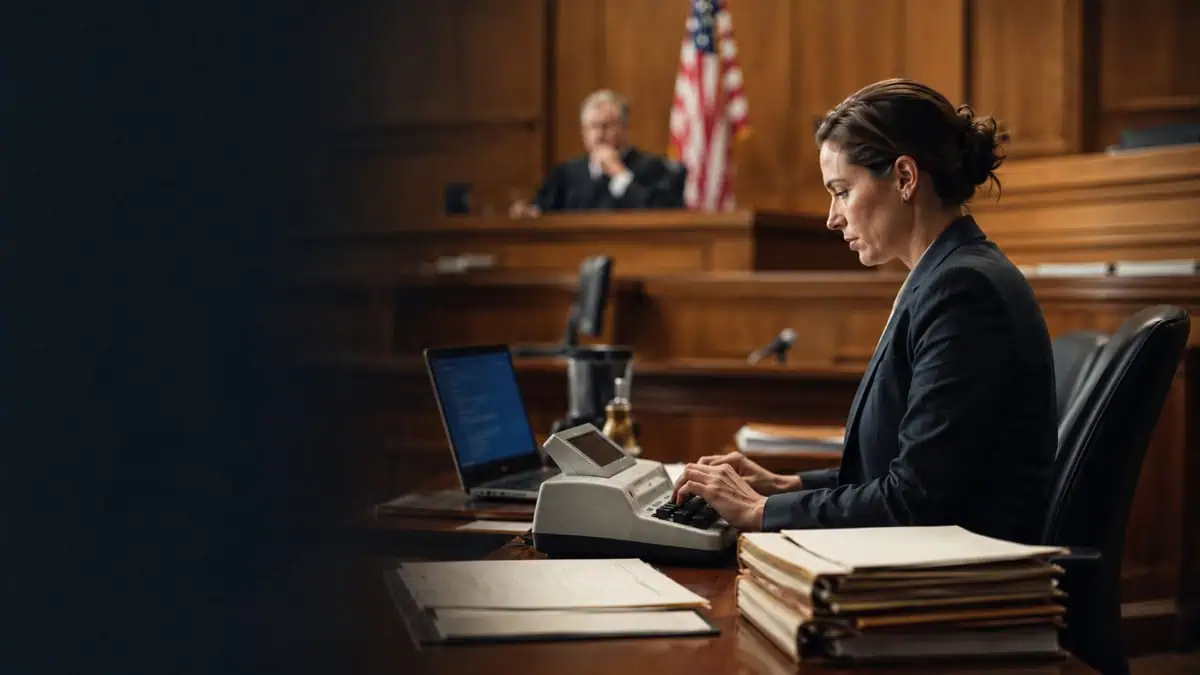
The legal field is experiencing a court reporter shortage, and no, it is not only because of a hiring problem. The justice system is always deemed slow, and a huge part of it is due to the tons of paperwork that needs to be processed. The problem is that the cases continue to pile up, while the experts who handle them do not keep up with the demand.
Specifically, the limited and shrinking number of stenographers is becoming a serious issue. In California, about 1.2 million hearings took place without a verbatim record. This highlights why alternative solutions, such as legal transcription services, are gaining popularity. Transcripts are important because they are used as the basis for assessing an event. Without these documents, what a party claims could amount to pretty much hearsay, and appealing feels impossible.
In this article, you’ll learn:
- Why the court reporter shortage is creating serious problems for the legal record.
- How human-reviewed legal transcription services can help courts and legal professionals preserve accurate records.
- Where AI can support transcription, and why human transcriptionists are still essential for final legal transcripts.
What Happens When There Is No Record?
Having no transcripts may seem unproblematic; however, that’s only during a legal event. Meaning, it’s not immediately realized.
Without a transcript, these questions become impossible to answer:
- What exactly did a witness say?
- What objection was made?
- What is the judge’s decision?
- Can the decision be appealed?
This is why court transcription services matter. The legal record needs to survive beyond the hearing itself.
The Shift: Record Now, Get a Human Transcript Later
The common practice is to have a stenographer sit in the room and capture the record live.
This role remains critical today. A shortage of stenographers leads to a lack of records, which is why the legal system is adopting a different workflow.
Specifically, it is to capture a digital recording, preserve the audio until it is passed to a human transcriptionist who will do (and review) the transcript, and deliver this transcript to be used as a formal legal record.
Anyone can attempt to create a transcript, though only professionals are authorized to certify it. That is because legal audio requires expertise. Legal terms, difficult audio, certain contexts, and formatting are only effectively and accurately recorded by a trained professional.
Why the Court Reporter Shortage Matters
Making legal transcripts is not as straightforward as it may seem because it requires expertise. For experts, accuracy is the standard and non-negotiable. Transcripts could be a case’s make-or-break. The lack of certified transcripts makes it almost impossible to appeal.
Those situations may have already happened. Due to a shortage of court reporters and the high cost of alternatives, many people are left with no choice except to proceed without a transcript.
To help you visualize what the field’s status is, here’s what the numbers actually look like:
- The stenographer workforce was reduced by 21% over the last decade.
- The estimated number of stenographers is 23,000, which is barely enough to cover all the cases.
- Student enrollment in stenographer school dropped by 74%
- About 50% of stenographer-related programs have closed
- California courts alone spent $25.2 million on transcripts in 2024-2025.
Where AI Fits, and Where It Does Not
AI innovation is also transforming transcription as courts and legal professionals seek to maximize their capabilities.
Sure, AI solutions are helpful, although they can only do so much. AI transcription is helpful, especially in the first draft, though not for the final legal transcript.
In terms of speed, AI is unmatched. However, speed does not equate to accuracy. Transcripts should be delivered in a timely and accurate manner, not at the expense of one another.
Further, here is where AI fails:
- Legal or professional terminologies
- Understanding human contexts
- Wrong numbers or names recorded
- Formatting
The list goes on; however, it only tells one thing: AI still has a long way to go when it comes to transcription. It can be used with the intent that the transcript be reviewed by a human.
Remember, “mostly accurate” is not enough.
Why Transcription Companies Are Becoming More Important
To address the shortage, legal professionals seek transcription companies to help with legal recordkeeping.
Legal professionals have a lot on their plates. Instead of transcribing audio recordings, they are better off preparing for a legal proceeding. Transcription companies fill this gap by processing the transcripts for the professional’s convenient use.
An example of this is deposition transcription services, which accurately capture speaker changes, objections, legal terminology, and practically everything that may later be used in court.
A strong legal transcription process should include:
- Trained human transcriptionists
- Speaker identification
- Review for unclear audio
- Secure file handling
- Legal formatting
- Turnaround options
- Verbatim transcripts
- Quality control before delivery
Why Clients Choose Ditto for Legal Transcription Services
By now, it is clear that transcripts are not only records that collect dust. Rather, these are documents that could change the life of a certain party.
At Ditto Transcripts, we help all kinds of professionals, and even for personal use, to have accurate and professional transcripts. When audio is captured, preserved, and intended for review, the best option for transcription is to engage an expert human transcriber.
Here is what we, at Ditto, offer:
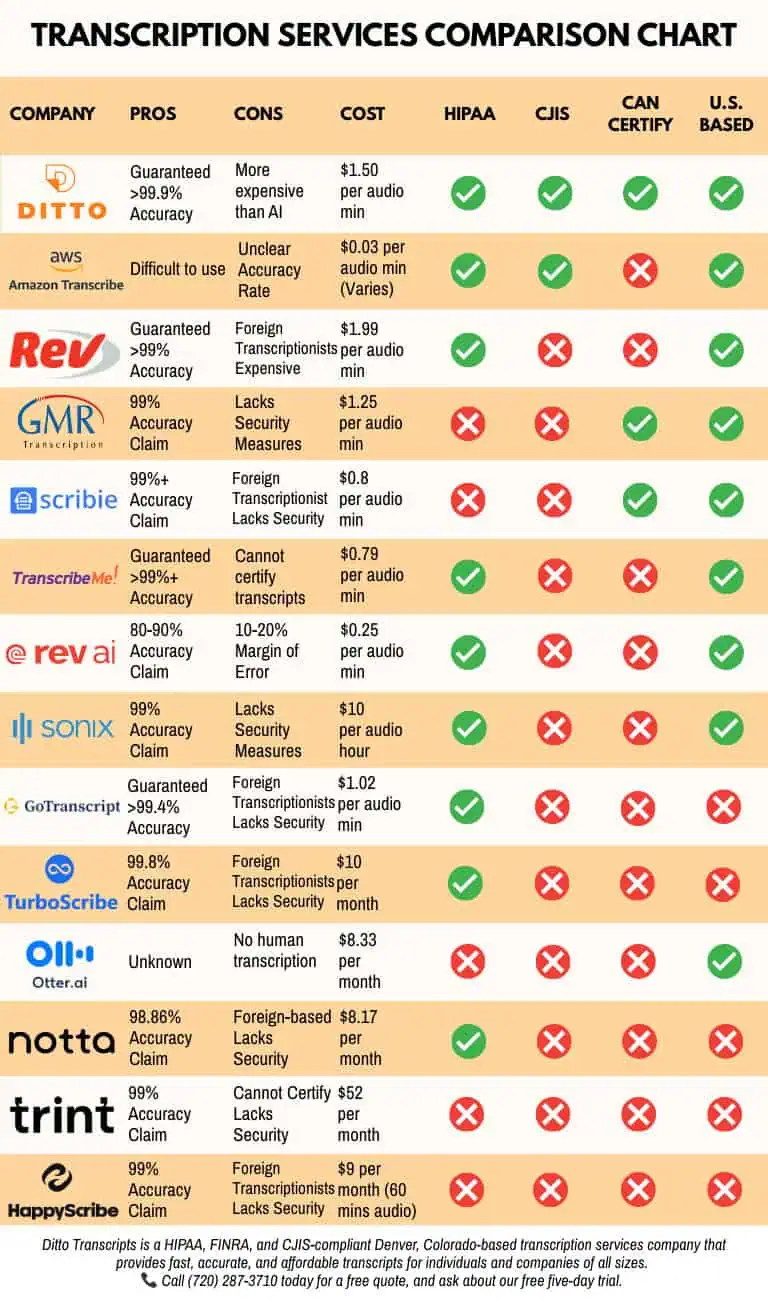
- Accuracy: Unlike AI-only alternatives, Ditto guarantees 99.9% accuracy in completed transcripts.
- Human transcriptionists: Ditto only employs trained professionals who can understand complex audio, legal terminology, and manage difficult recordings.
- Legal industry experience: Ditto supports a range of industries, including legal, law enforcement, government, medical, and more.
- Support for difficult recordings: Multi-speaker hearings, crosstalk, accents, unclear audio, and technical language that require human judgment and which AI alone cannot provide.
- Secure handling: Ditto Transcripts is HIPAA-, CJIS-, and FINRA-compliant. Rest assured that we take confidentiality and data protection seriously, up to the highest standard.
- Flexible legal transcription pricing: We allow clients to estimate their cost and offer an option for select add-ons that significantly lowers the price. Our easy-to-use calculator is here to help you.
- No long-term contract: At Ditto, we do not bind you with contracts that are confusing and often come with hidden costs. Send us the project, and we will give you the transcript, no minimum number of documents or minutes, and no strings attached.
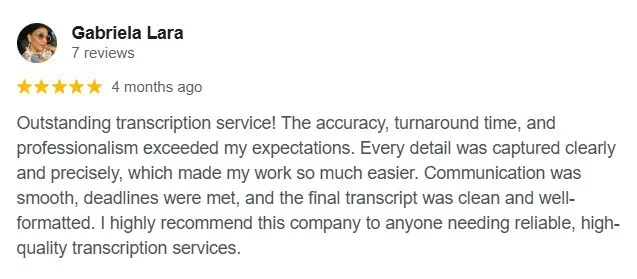
- Client testimonials: Our clients say everything you should know about our quality of work and service:
The Legal Record Still Needs Humans
The rise of AI “solutions” has raised concerns about job opportunities; however, one thing is certain: it still does not replace the value of humans.
The court reporter shortage is real, and a stenographer’s role in today’s world remains essential. The best way to solve this problem is to utilize all the resources that we have. Use AI to its full extent, maximizing its speed in making the first draft. Then, have it checked by a trained human transcriptionist to extract a usable transcript from the recorded audio.
It is never really about human versus technology. Rather, it should be technology supported by trained human review. In courts, that means the weakness exposed in the justice system by the shortage of stenographers can finally be addressed through the appropriate recording and processing of legal events.
That way, all parties involved can have the opportunity to review, appeal, and access a fair and reliable path to justice.
Ditto Transcripts is a Denver, Colorado-based transcription services company that provides fast, accurate, and affordable transcripts for individuals and companies of all sizes and is FINRA-, HIPAA-, and CJIS-compliant. Call (720) 287-3710 today for a free quote.