
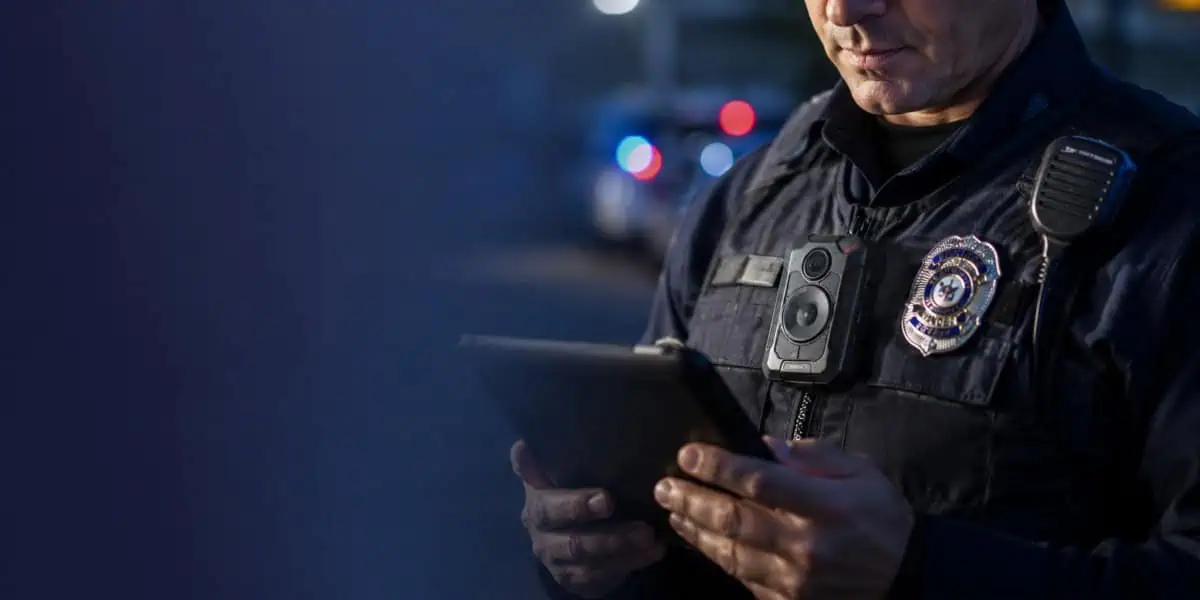
For many years, arrests and police encounters were “your word against mine,” heavily depending on conflicting accounts of officers, suspects, and witnesses. That is why, in 2015, law enforcement agencies began wearing body-worn cameras to preserve an objective record of the event.
One such bodycam is manufactured by Axon. The same manufacturer makes Axon Draft One, an AI tool that converts bodycam footage to a first draft of a police report.
The problem is that while it significantly reduces paperwork, who is responsible for the errors arising from the generated Axon Draft One output?
Unlike with law enforcement transcripts, AI drafts can’t guarantee accuracy. That is crucial, especially as a single mistake in the transcribed report could entirely change a person’s life.
In this article, you’ll learn how:
- AI can reduce police paperwork, but it cannot replace human verification.
- Preserving the evidence and audit trail is essential
- AI should assist accountable transcription, not become the official record.
The Tool That Writes the Report Before the Officer Returns
Axon is the primary supplier of body cameras and related security systems to thousands of law enforcement agencies nationwide. It innovated and integrated Draft One into its ecosystem to swiftly turn captured audio into a narrative report. However, this is only the beginning of the work, as the officer is expected to review and correct the draft before approving the final report.
That last part is critical because Draft One can’t guarantee what was actually said. For example, if the bodycam recorded a person saying “He dropped the object”, the AI cannot determine what the object was or any of its specifics. In other words, the system can only write what it hears, and it cannot personally witness the event.
Why Police Departments Are Adopting It
According to a recent Axon report, officers spend an average of 10 to 15 hours per week solely preparing reports. Axon says its tech could significantly reduce that time – a benefit that is certainly attractive, especially for understaffed departments. Instead of working on reports, officers would be more available for other activities such as investigations, community contact, and required training.
However, the draft produced by Draft One is only half the story. While it improves efficiency, it does not automatically translate to reliability. Officers must still thoroughly review and approve the final document. Draft One creates a draft; it’s not the final transcription, or at least it shouldn’t be.
Recording the Audio Is Not the Same as Writing the Record
Having an audio recording is helpful for sure. But if one has to find a clip and then discovers the file is four hours long, we have a problem. Transcripts solve the problem by offering quick access to what was said, although their verification will require the source material.
Case in point: you need both an audio recording and a transcript, especially in legal proceedings. That is why many parties opt for court transcription services to preserve the source and create an admissible transcript.
Converting audio to transcripts is done in different stages. For example, to preserve the words that were actually spoken, verbatim transcription captures everything that was said in the recording, word for word. That includes listening, transcribing, reviewing, formatting, and finalizing the transcript.
Draft One, however, cannot automatically bridge every gap between those stages. It cannot describe visual information or provide context and is prone to errors when parts are inaudible. So, when using Draft One, officers must genuinely review the draft rather than signing off on it after it has been “looked at”. A recent case highlights what happens when this crucial step is ignored.
When the AI Hears Wrong
When officers are recording outside, their body cameras capture all kinds of sounds, including conversations, radio traffic, traffic, and practically everything else under the sun.
A recent example from the Heber City Police Department in Utah comes to light. Background audio from The Princess and the Frog was captured while officers were using automated report-writing tools. We are not kidding when we tell you that the results incorrectly stated that an officer had been transformed into a frog.
That kind of mistake is easy to spot. However, that’s not always the case. Some subtle errors that many could miss are:
- Omitted negative words (instead of “not guilty”, it may record “guilty”).
- Misidentified speaker
- Incorrect number recorded
- Uncertain language
When these errors occur and are left unchecked, they could completely change the trajectory of a party’s case.
In response, agencies are tapping into trial transcription services when recordings and reports are relevant to legal proceedings.
The Accountability Black Box
Now here comes perhaps the biggest problem. Draft One lacks any record of its original AI-generated narrative (the first draft), making the output untraceable. The Electronic Frontier Foundation (EEF) also shared a remark from an Axon representative stating that the company is intentionally not retaining the draft, as it did not want to create additional disclosure complications for agencies and prosecutors – which is a major red flag.
Accountability always matters when an officer’s testimony conflicts with the police report, making it impossible to dispute that the AI made an error, because there is no first draft to attest to that explanation. To address that dilemma, Axon added an original-draft retention feature, but it is turned off by default. While it looks “fixed”, agencies must ensure that records are completely preserved.
The Law Is Catching Up
AI-generated reports have become so commonplace that we are now enacting laws governing their use. For example, effective January 1, 2026, California’s Senate Bill 524 took effect, requiring agencies that use AI to create auditable official reports.
Under the statute:
| Requirement | What the agency must preserve or disclose |
| AI identification | Identify the AI program used and disclose the extent of AI involvement per page or within the report body. |
| Officer verification | A qualified officer signs it. |
| First-draft retention | The first draft (AI draft) must be retained as long as the official report |
| Audit trail | Identify who generated the report from the AI. |
| Vendor restrictions | Vendors face limits on sharing, selling, or repurposing agency information |
Under the law, a raw AI-created draft is not an official report unless the officer signs off on it.
That said, the practice of allowing AI in policing is not allowed everywhere. In Washington state, the King County Prosecuting Attorney’s Office, for example, will not accept police reports that used AI in any part of their creation due to concerns about errors, privacy, and legal reliability.
Regardless of their differences, one thing is the same: a police report must be signed off by a human.
What a Defensible Record Actually Looks Like
AI tech is an aid, not the solution itself. It is there to minimize the effort of police officers, not to free them from the burden of creating an accurate, verified report.
As AI-assisted platforms get more popular, it is important to ask the following:
Before adopting an AI-assisted reporting platform, agencies and prosecutors should ask:
- Is the original audio preserved?
- Can the agency identify every recording used to generate the draft?
- Is the first AI draft retained?
- Are officer changes traceable?
- Does the report disclose AI assistance?
- Who verifies sensitive information?
- Can a qualified person be tapped when needed to appear in court?
These are the very same standards for government transcription services. The third-party provider should be able to vouch for and certify the transcript, ensuring its legal admissibility.
Why Agencies Choose Ditto for Accountable Transcription
At Ditto Transcripts, recorded audio is treated as source material that must be carefully processed, not as an official record merely because software converted it into text.
Here’s what we offer versus the competition:
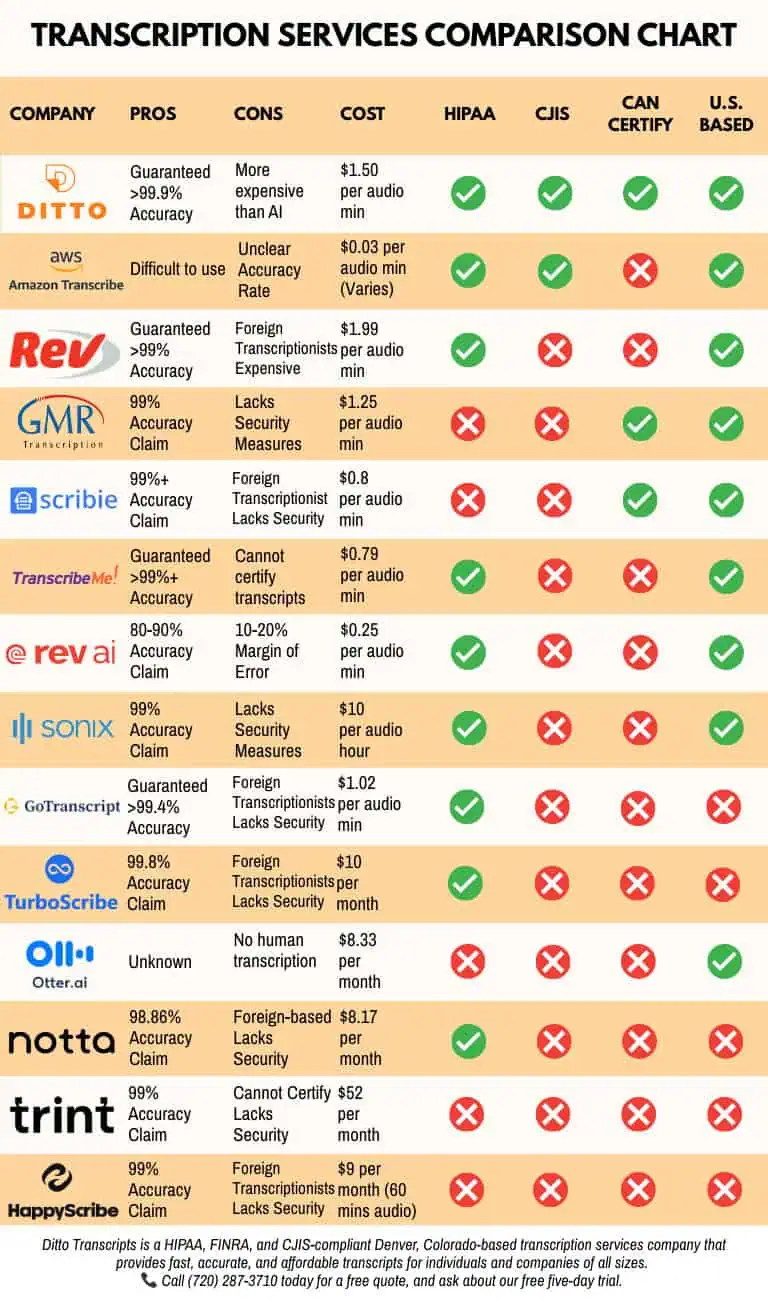
- Human-reviewed accuracy: Transcripts are reviewed by trained professionals, and a> 99% output accuracy is guaranteed.
- Experience with sensitive material: U.S.-based transcriptionists with experience working in the legal field.
- Clear source accountability: We vouch for our transcripts even after they have been completed and submitted to the client.
- Secure handling: Ditto strictly complies with HIPAA, CJIS, and FINRA standards.
- Transparent law enforcement transcription pricing: We offer flexible pricing for clients with diverse transcription needs.
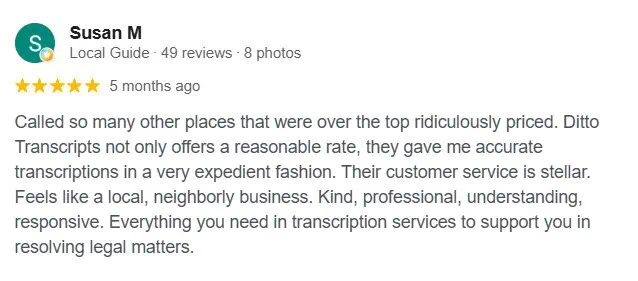
- Verified experiences: Ditto’s testimonials show how clients assess its accuracy, service, security, and turnaround time.
The Official Report Still Needs a Human Author
The final record cannot belong to an algorithm. It is not something we leave to chance to ensure accuracy.
AI-assisted programs are a godsend for many industries, including law enforcement agencies. However, it is not the sole solution for processing paperwork. AI can prepare the draft. A human must determine whether it is true and be prepared to stand behind every word.
Ditto Transcripts is a Denver, Colorado-based transcription company providing fast, accurate, and affordable transcripts for individuals and organizations of all sizes. Ditto is FINRA-, HIPAA-, and CJIS-compliant. Call (720) 287-3710 today for a free quote.