


The COVID-19 pandemic accelerated the adoption of transcription in virtual learning environments across higher education, prompting institutions to adopt technological solutions for advanced online courses. During that period, academic transcription became an invaluable tool, allowing students to consume educational content more efficiently. At the same time, the growing demand for accuracy and accessibility across sectors highlighted the broader value of transcription solutions, including legal transcription services, which follow the same standards of precision and reliability.
However, the impact of virtual learning on student skill development is a complicated discussion that deserves closer examination.
In this article, you’ll learn how:
- Virtual learning empowers students with flexibility, better accessibility, and enhanced efficiency using tools like transcription.
- Various online learning formats—from MOOCs to adaptive learning—support diverse educational needs and styles.
- Despite the benefits, students must manage challenges like isolation, technical issues, and screen fatigue.
- Leveraging transcription services, such as those from Ditto, can improve comprehension, documentation, and learning outcomes in virtual classrooms.
What is Virtual Learning?
Virtual learning has changed how students in higher education pursue degrees. Universities now offer a range of online programs—from certificates to doctoral degrees—so learners can study from anywhere as long as they have an internet connection. Many virtual schools use digital assignments, discussion forums, and video conferencing apps like Zoom or Google Meet to create an interactive learning experience.
Using cloud-based software, online learning environments also allow students to watch recorded lectures independently or collaborate with classmates on group projects. Professors, meanwhile, hold virtual office hours and provide feedback online. These same technologies have supported specialized transcription solutions, such as deposition transcription services, which emphasize accuracy and clarity and mirror the standards used to convert academic lectures into reliable written records.
Types of Virtual Learning For Higher Education
Now that we’ve tackled what virtual learning is, below are some types of learning methods, though not limited to them, that higher education often utilizes for its online students.
| Virtual Learning | Description |
| Asynchronous Online Courses | Students complete coursework at their own pace within a set timeframe using a learning management system (LMS). |
| Synchronous Online Courses | Classes meet in real time via video conferencing for live lectures, discussions, and group activities. |
| Blended/Hybrid Learning | Combines online coursework with face-to-face instruction, such as in-person classes or labs. |
| Massive Open Online Courses (MOOCs) | Free or low-cost online courses are open to large numbers of participants worldwide, and feature pre-recorded video lectures, quizzes, and discussion forums. |
| Competency-Based Education (CBE) | Students progress through online courses by demonstrating mastery of skills and knowledge rather than completing a set number of credit hours. |
| Adaptive Learning | A technology-driven approach that personalizes the learning experience based on a student’s performance and engagement using adaptive software. |
| Microlearning | Complex topics are broken down into small, focused units delivered online through brief videos, interactive quizzes, or gamified modules. |
| Virtual Labs | Digital tools that allow students to conduct experiments, practice skills, or explore systems in a virtual environment. |
In conclusion, as virtual learning continues to evolve through diverse formats like synchronous classes, microlearning, and virtual labs, accurate documentation remains essential. Reliable transcription solutions, including trial transcription services, support clarity, accessibility, and precise record-keeping across both educational and professional digital environments.
What Could Be the Impact of Virtual Learning on Higher Education?
If universities or colleges adopt virtual learning, many aspects of higher education will be affected. For example, educational institutions can reach a wider audience who may not be able to attend traditional on-campus courses—students in remote areas or working professionals alike.
Asynchronous learning also offers flexibility, allowing students to balance their studies with work and family obligations, while lower online class costs can result in more affordable tuition rates.
However, the shift to virtual learning also presents challenges, such as ensuring equitable access to technology and providing support services to students. Considering this factor, educational institutions should invest in the fundamental aspects of a high-quality online education for their learners.
Benefits of Virtual Learning for Higher Education Students
Now that we have a general idea of virtual learning’s impact on higher education, let’s focus on what it means for students.
- Enhanced Learning Efficiency: Virtual learning provides students with quick, centralized access to course materials such as textbooks, videos, and interactive resources, enabling them to learn more efficiently while accommodating diverse learning styles and improving knowledge retention.
- Increased Accessibility and Affordability: By eliminating the need for constant on-campus attendance, virtual learning reduces transportation, housing, and meal expenses, making higher education more accessible to students with limited financial resources.
- Better Attendance for Online Learners: Flexible schedules and location independence allow students to attend classes from anywhere, personalize their learning environments, and balance academics with work or social commitments, thereby improving attendance.
- Exposure to Technology: Online education familiarizes students with essential digital tools such as video conferencing platforms, project management software, and online research databases, helping build practical skills relevant to future careers.
- Interactive Learning Opportunities: Digital platforms encourage collaboration through discussion forums, live sessions, peer feedback, and direct communication with instructors, creating an engaging and connected learning experience.
What are the Common Downsides For Students?
Now that we’ve discussed the benefits of online learning for students, let’s consider the negative aspects of this new learning method.
| Challenge | Description |
| Feelings of Isolation | One notable disadvantage of virtual learning is the lack of in-person interaction, which can make some students feel detached from classmates, instructors, and the broader university community. While some learners thrive independently, others rely on social dynamics in the classroom for motivation. Although platforms attempt to address this through live sessions and engagement tools, questions about their effectiveness remain. |
| Potential Technical Issues | Virtual learning is vulnerable to technical issues, such as audio or video problems or connectivity issues, which can disrupt classes and negatively affect learning. Despite global improvements in internet access and devices, these technical risks persist and may compromise the overall effectiveness of online education. |
| Dependence on Self-Discipline | Without the structure of a physical classroom, students who struggle with self-discipline may find it harder to stay engaged and complete assignments. While live virtual classes, quizzes, and breakout rooms can improve accountability, their long-term effectiveness varies among students. |
| Too Much Screen Time Compared to Traditional Classrooms | Recent studies have shown that excessive screen time can contribute to health concerns such as obesity, depression, and reduced focus. The inherently digital nature of virtual learning increases screen exposure, raising ongoing concerns about its potential negative impact on students’ well-being. |
In conclusion, while virtual learning presents clear challenges such as isolation, technical issues, and increased screen time, these concerns highlight the importance of accurate documentation and accessibility across digital environments. Reliable solutions, including government transcription services, support clarity, accountability, and effective communication in structured online settings, helping institutions better serve diverse learning needs.
Tips for Students to Maximize the Benefits of Virtual Learning
Here are the ways to maximize the benefits of virtual learning.
| Tip | Description |
| Create a Dedicated Study Space | Establishing a comfortable workspace within your home can improve focus by minimizing distractions. |
| Develop a Schedule and Stick to It | Set a routine for attending classes, completing assignments, and studying to maintain discipline, a significant challenge of virtual learning. |
| Actively Participate in Discussions | Engage with classmates or instructors during live sessions by asking questions or contributing to discussions. This helps promote a sense of community. |
| Utilize Available Resources | Make use of all resources provided by the learning platform, such as recorded lectures, digital libraries, or online tutoring services, as they can make a significant difference. |
| Collaborate With Peers | Join virtual group projects and engage with peers beyond lecture sessions to promote teamwork, knowledge sharing, and social interaction. |
| Take Breaks and Prioritize Self-Care | Incorporate regular breaks, exercise, and relaxation techniques to prevent burnout and maintain a healthy study-life balance. |
| Add Transcription to Virtual Learning | Convert recorded lectures into text or add captions to videos using transcription services to improve comprehension and flexibility in learning. |
In conclusion, effective virtual learning relies on structure, engagement, and the smart use of tools like transcription. Whether for academic settings or professional needs such as court transcription services, accurate transcripts support better understanding, review, and long-term success.
Why Choose Ditto‘s Transcription Services for Your Virtual Learning Needs?
You won’t have to settle for anything less than the best when you work with us. With Ditto, you get to enjoy:

- 99% Accuracy: “Accurate enough” is not enough. Our human transcriptionists ensure precision, even for complex materials.
- Faster turnaround times: With Ditto, you can get your transcripts in 3-5 business days. If you need them sooner, we can get them within 24 hours.
- US-based Transcription: All our transcribers are American residents and native English speakers who can understand colloquialisms, cultural subtleties, and heavy accents.
- Subject Mastery: Our team understands complex academic terminology.
- Customization: Transcript format, labels, style, and verbatim transcription options, plus extra features tailored to your needs.
- Affordable Pricing: Fair pay-as-you-go service costs, including competitive legal transcription prices, designed to work on tight e-learning budgets.
- Secure Process: We protect sensitive course data. While not likely necessary for transcribing a course, it’s nice to know we are HIPAA, FINRA, and CJIS-compliant. Our transcribers also sign non-disclosure agreements for your peace of mind.
- Mobile App: Elevate ease of access to the next level through our mobile app integration.
The Best Virtual Learning Transcription Service Is Right Here
Whether on a tight schedule or budget, we’ve got you covered. Need something rushed? We can turn transcripts around faster than most. And we keep our pricing affordable, so quality transcription doesn’t break the bank.
99% accurate transcription isn’t something we “just say”; it’s our standard, no matter your chosen service.
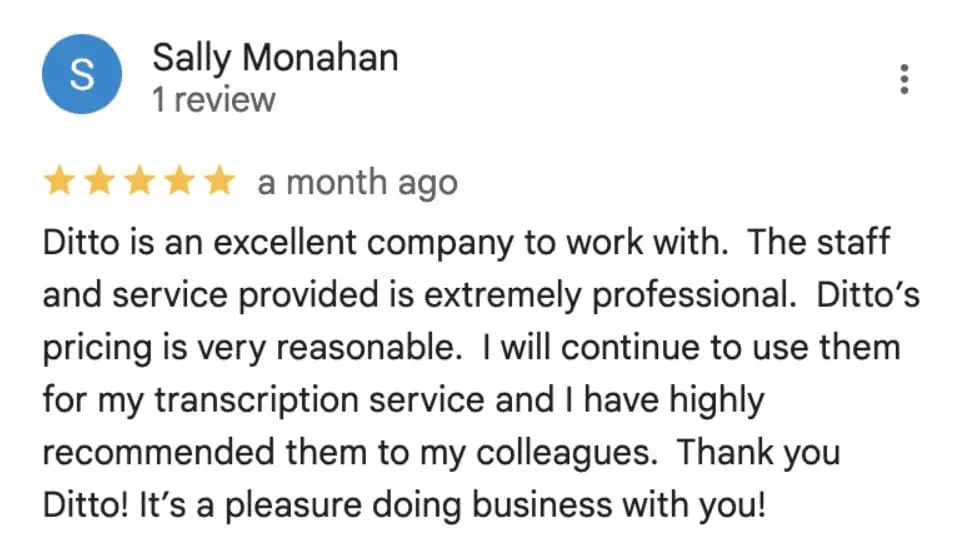
Our testimonials say it all – real clients, real results, and absolute confidence in the work we deliver:
Ditto Transcripts is a Denver, Colorado-based FINRA, HIPAA, and CJIS-compliant transcription services company that provides fast, accurate, and affordable transcripts for individuals and companies of all sizes. Call (720) 287-3710 today for a free quote.